← Back to all posts
AI Vow Generators: Brainstorm Authentic Wedding Vows

AI Vow Generators: Brainstorm Authentic Wedding Vows

Vows
A person looking thoughtfully at a laptop screen, with AI-generated text appearing as glowing lines on the screen, surrounded by scattered notes and personal photos, symbolizing the blend of technology and personal memories in crafting wedding vows. The setting is warm and inviting, perhaps a cozy home office.

How to Use AI Vow Generators to Brainstorm and Keep Your Vows Authentic

There is a special kind of terror that comes with staring at a blank page when you are supposed to be writing the most important words of your life. Your wedding vows should capture years of love, inside jokes, shared dreams, and promises for the future. But somehow, when you sit down to write them, your mind goes completely blank.

If you have felt this pressure, you are not alone. Writing vows can feel overwhelming, especially when you are balancing wedding planning, work, and life. The good news is that you do not have to do it alone. AI vow generators have emerged as a powerful tool to help you organize your thoughts, find the right words, and overcome writer's block. But here is the crucial part: AI works best as a co-creator, not a copy-paste shortcut.

This is not about letting a machine write your vows for you. It is about using technology to unlock what is already in your heart. Think of AI as a thoughtful friend who helps you structure your feelings into something beautiful and ceremony-ready. In this article, we will walk you through exactly how to use AI vow generators to brainstorm effectively while keeping your vows deeply personal and authentic.

Why AI Is Best Used as a Co-Creator, Not a Copy-Paste Shortcut

Let us address the elephant in the room. Using AI to help write your wedding vows might feel like cheating to some. But here is the truth. It is not. Using AI is no different from consulting a vow-writing book, asking a friend for feedback, or working with a wedding planner to organize your thoughts. The difference is that AI can process your specific memories and preferences faster and more efficiently.

The key is understanding the role of the technology. It is not a replacement for your heart or your voice. It is a tool that helps translate the jumbled emotions in your head into coherent, moving sentences. Think of it as a scaffold where you provide the building blocks of your memories, feelings, and promises, and AI helps you arrange them into a structure that flows beautifully.

When used correctly, AI becomes your brainstorming partner. It helps you overcome the paralysis of the blank page by giving you something to work with. From there, you edit, personalize, and refine until the vows sound exactly like you. The final product is still yours because AI just helped you get there faster and with less stress.

Real statistics on AI use in weddings

You might be surprised to learn just how common AI assistance has become in wedding planning. According to research findings, approximately 1 in 4 couples now use AI for wedding inspiration and writing help. This includes everything from vows and speeches to planning timelines and vendor communications. The technology has become a normalized part of modern wedding preparation, much like online registries or digital invitations.

However, public attitudes towards AI reveal an interesting nuance. While people are increasingly open to AI assistance, there is still caution around using it for deeply personal tasks. Most individuals want to ensure that AI enhances rather than replaces the human element in meaningful moments. This is exactly why the co-creator approach matters so much. You are not outsourcing your emotions. You are getting help articulating them.

The trend data shows that couples who use AI for vows tend to report higher satisfaction with their final product, primarily because the technology helps them avoid common pitfalls like rambling, repetition, or overly generic language. But the satisfaction only comes when couples take the time to personalize and edit the AI-generated content thoroughly.

Step-by-Step: From Brain Dump to Ceremony-Ready Vows

Now let us get practical. How do you actually use an AI wedding vows generator to create something authentic and moving? The process breaks down into three main phases: preparation, generation, and refinement. Each phase is crucial, and skipping any of them will result in vows that feel hollow or impersonal.

The beauty of using a platform like ToastPal’s dedicated vow generator is that it guides you through each of these phases with thoughtful prompts and intuitive design. But regardless of which tool you use, the fundamental approach remains the same.

What to include in your pre-generation brain dump

Before you even open an AI tool, you need to gather your raw materials. AI cannot read your mind or access your memories. It can only work with what you give it. This is where the brain dump comes in. It is a messy, unfiltered collection of everything you want to say.

Grab a notebook or open a document and start jotting down answers to these questions.

  • The Spark: What was the exact moment you knew they were "the one"? Try to remember sensory details like what you were wearing, what the weather was like, or what song was playing.
  • The Quirks: What quirky habits do they have that you secretly love? Maybe it is the way they hum while cooking or their obsession with organizing the pantry.
  • The Journey: What challenges have you overcome together? Think about specific instances like a job loss, a move to a new city, or a family crisis.
  • The Admiration: What do you admire most about them? Go beyond saying "they are kind" and get specific. How do they show kindness? What actions demonstrate this quality?
  • The Promises: What are your specific promises for the future? Instead of vague statements like "I will always support you," think about concrete actions.
  • The Language: What inside jokes or shared references are meaningful to you? These details are gold for making your vows feel uniquely yours.

Do not worry about grammar, structure, or whether any of this makes sense. This is just for you and the AI. The messier and more detailed your brain dump, the better the AI can work with it. Remember that AI brainstorming for vows starts with giving the technology real, specific material to shape and organize.

Example prompts (short, story, humorous, emergency)

Once you have your brain dump ready, it is time to craft your prompt. The way you phrase your request to the AI will dramatically affect the output you receive. Here are some proven AI vow generator prompts for different styles and situations.

1. The Storyteller

Prompt: "Write wedding vows that tell the story of our relationship, starting from when we met at a coffee shop in college. Include how we bonded over our shared love of hiking and how we supported each other through grad school. The tone should be warm and narrative, around 2 minutes long."

Why it works: It anchors the vows in real timeline beats, which makes them memorable and gives the AI a clear narrative arc to follow.

2. The Humorous

Prompt: "Create wedding vows that are funny but heartfelt. Mention his obsession with fantasy football (he checks his lineup during family dinners), my terrible cooking skills (I once set off the fire alarm making toast), and how we balance each other out. Keep it light but end with a sincere promise."

Why it works: It sets humor guardrails. Humor should feel like affection, not a stand-up set. It ensures the jokes land softly and transition into sincerity.

3. The Short and Sweet

Prompt: "Write concise, powerful wedding vows under 90 seconds. Focus on three main themes: loyalty through difficult times, patience with each other's growth, and commitment to building a life together. Make every word count."

Why it works: It gives length, tone, and specific themes, ensuring the AI cuts the fluff and focuses on impact.

4. The Emergency

Prompt: "I am getting married tomorrow and need help structuring my vows quickly. I want them to sound classic and timeless, focusing on traditional promises of love, honor, and partnership. Include a personal touch about how she makes me want to be a better person."

Why it works: It acknowledges time pressure and asks for a structure that is hard to mess up, reducing panic.

Notice how each prompt gives the AI clear direction on tone, length, and content. The more specific you are, the more tailored the output will be. Do not be afraid to include seemingly small details because they are what make your vows memorable.

How to edit and localize AI output

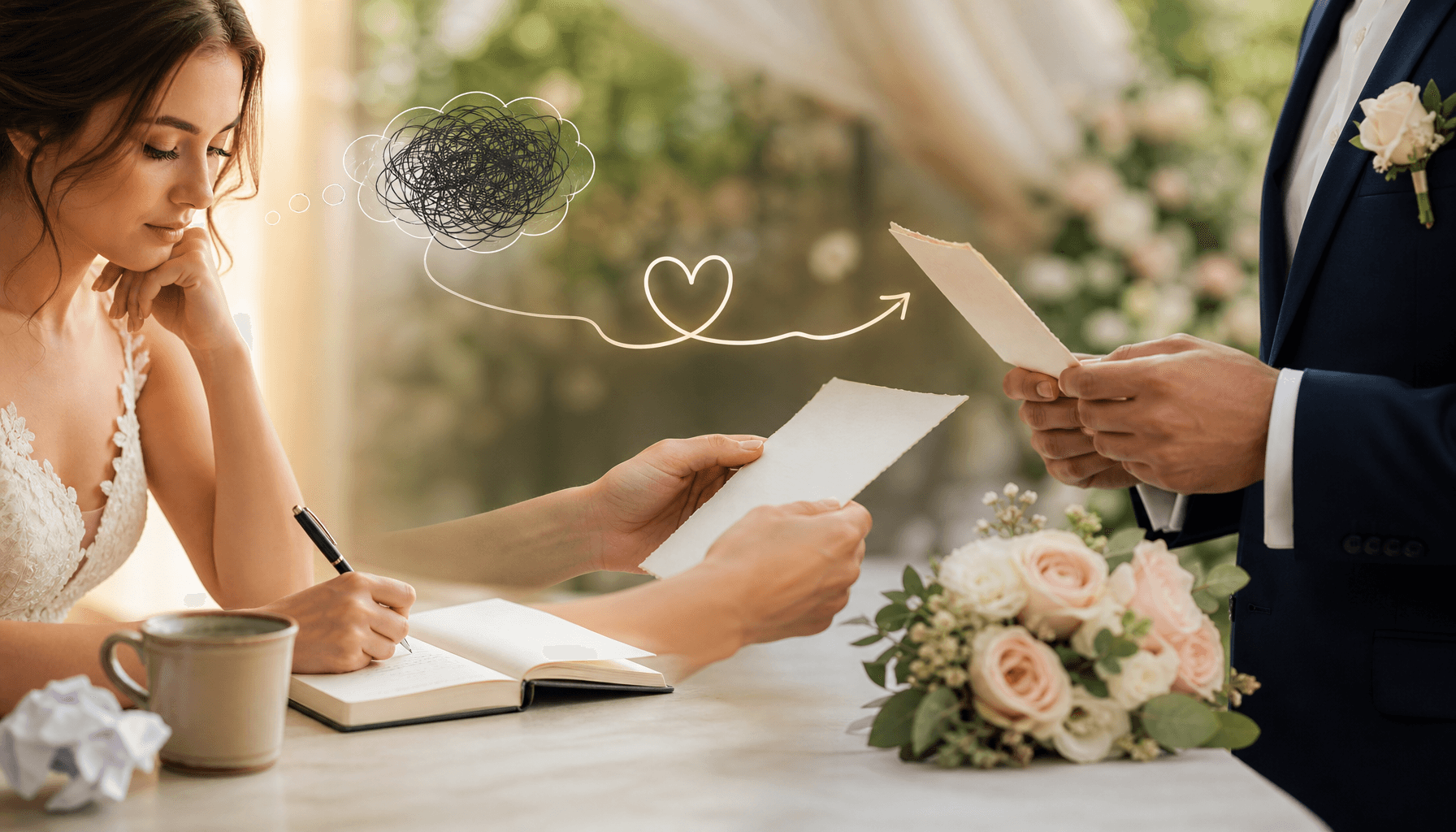
Here is where the magic really happens. Once the AI generates your vows, your job is to transform them from good to unforgettable. This is the editing phase, and it is arguably more important than the generation phase itself. Personalized wedding vows tips often focus on this crucial step of humanizing the text.
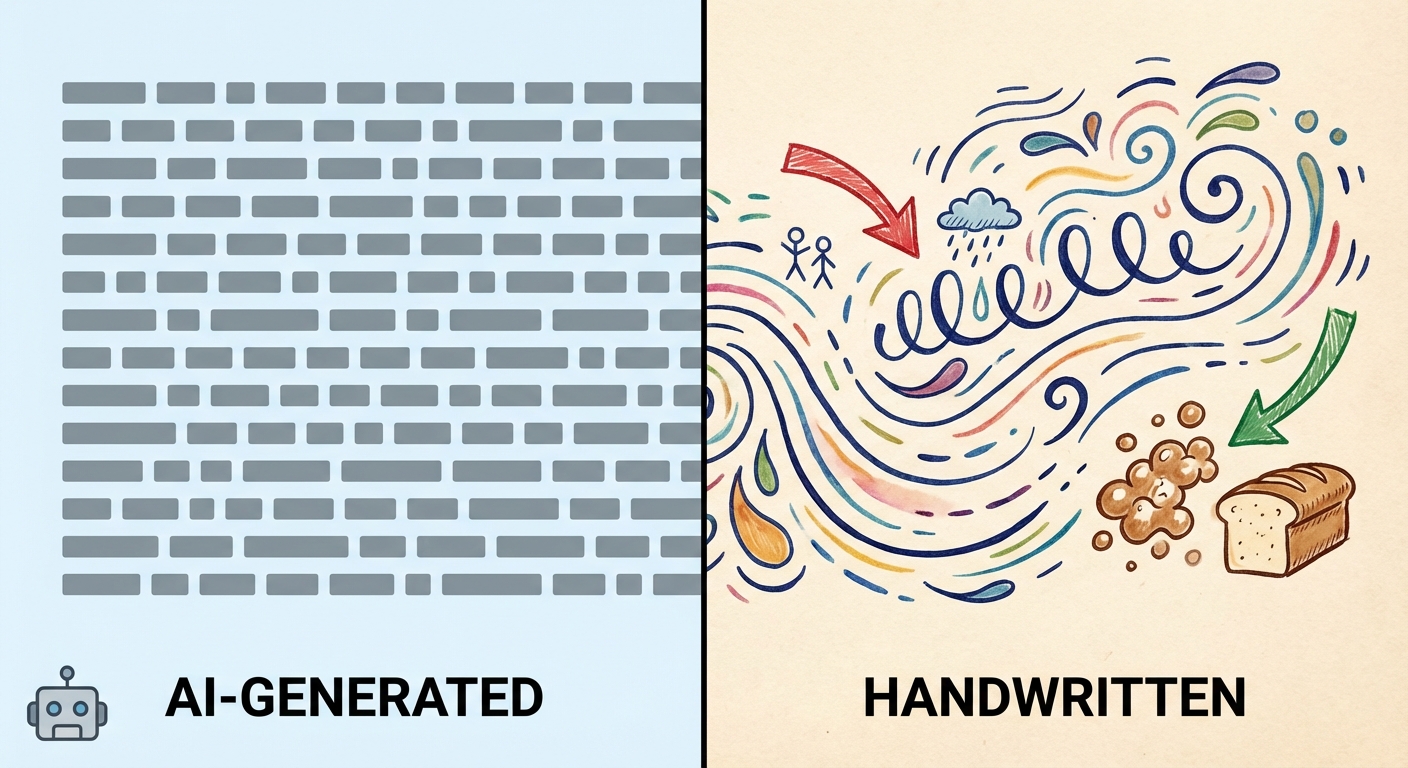
A split image: on one side, a generic, templated wedding vow text; on the other, the same vow text transformed with specific, personal details (e.g., 'our first date at the old bookstore,' 'your laugh when I tell a bad joke'), highlighting the contrast between AI-generated and human-edited authenticity. The personal side should feel vibrant and unique.

Let us look at a concrete before-and-after example.

Raw AI Output:
"From the moment we met, I knew you were special. You have brought so much joy into my life. I promise to always be there for you, to support your dreams, and to love you unconditionally. You are my best friend and my partner, and I cannot wait to spend the rest of my life with you."

Edited Final Version:
"I knew you were different the night we met at Sarah's party, when you spent twenty minutes explaining why The Empire Strikes Back is the superior Star Wars film. Most people's eyes glaze over when I start talking about movies, but you leaned in. You have been leaning in ever since. I promise to keep leaning in too. I promise to listen when you need to vent about work, to taste-test your experimental recipes even when they look questionable, and to always DVR your favorite shows when you are working late. You are not just my partner. You are the person who makes me want to be curious about everything. I cannot wait to spend the next fifty years debating movie rankings with you."

See the difference? The edited version replaces generic phrases like "you are special" with specific memories and details. It uses real shared experiences. The promises are concrete and actionable rather than abstract.

Here are actionable tips for editing AI output:

  1. Replace generic terms with specifics. Change "partner" to their actual name. Swap "our relationship" for "our three years together."
  2. Add sensory details. What did things look like, sound like, or smell like? These details make memories vivid.
  3. Use your actual speaking voice. If you would not normally say "henceforth" or "evermore," do not use those words in your vows. Read them aloud and adjust anything that sounds stiff or formal.
  4. Include inside jokes. These moments of intimacy are what make vows special.
  5. Make promises specific and behavioral. Instead of "I will always support you," try "I promise to proofread your work presentations, even the boring ones."
  6. Check for clichés and remove them. Phrases like "you complete me" or "my better half" are overused. Find your own way to express these sentiments.
  7. Is the length appropriate? Aim for 1 to 2 minutes when read aloud. Anything longer risks losing the audience's attention.
  8. Have I practiced delivering them? Vows that look great on paper might be hard to say out loud. Practice multiple times.

The goal is to make the vows sound like they came from your heart, not a template. If someone who knows you well heard these vows without context, they should immediately think that it sounds exactly like something you would say.

The Case for Personalization: Emotional and Practical Benefits

Personalization is not just a nice extra. It is the difference between vows that float above your relationship and vows that land inside it. Beyond just sounding more authentic, personalized wedding vows actually serve a deeper psychological and practical purpose in your marriage.

Emotional benefits: why specific vows hit deeper

First, specific vows make your partner feel seen. When you mention a tiny detail only you know, it communicates that you pay attention and that you cherish the small moments as much as the big ones. Second, they create a shared emotional anchor. When life gets hard later, the vows become more than a performance. They become a reminder of what you chose and why. Finally, they calm the fear of not being enough. Many people worry they will not sound eloquent, but personalized details are eloquence. You do not need fancy words to be deeply moving.

Practical benefits: vows that support a real marriage

Meaningful vows are not just romantic. They are relational. Psychological research suggests that commitments grounded in supporting your partner's goals and specific behaviors create more durable commitments than generic promises. When you make concrete, behavioral promises, you are creating a roadmap for how you will actually show love in your daily life.

Generic vows like "I promise to love you forever" are beautiful in theory, but they do not give you much to hold onto when marriage gets hard. What does "love" look like on a Tuesday when you are both exhausted and arguing about whose turn it is to do the dishes? Specific, personalized vows give you concrete actions to return to during difficult times.

Authentic wedding vows examples often include humor, vulnerability, and specific promises. They acknowledge that marriage is not always easy but commit to showing up anyway. They celebrate the weird, wonderful, specific things that make your relationship yours.

Etiquette: Should You Tell Your Partner or Your Guests?

This is one of the most common Wedding vow etiquette AI questions, and there is no one correct answer. What matters is trust, alignment, and how you both want the moment to feel.

First, let us talk about your partner. Some couples prefer to keep their vows completely private until the ceremony, while others collaborate on the process. If you are in a relationship where you discuss everything openly, you might want to mention that you are using AI as a brainstorming tool. This can actually be a bonding experience where you both use the same tool and compare notes on your process.

However, if you and your partner have agreed to keep your vows secret until the wedding day, you do not need to disclose your method. What matters is that the final vows are authentic and true to your feelings. Using AI to help organize your thoughts does not make your vows less genuine, just like using spell-check does not make your love letter less sincere.

Here is a practical framework we call the "Partner Agreement" approach.

  • Option A: Full Transparency. You tell your partner you are using AI to brainstorm and organize thoughts. You might even do it together.
  • Option B: Process Privacy. You use AI as a tool in your writing process but do not specifically mention it, focusing instead on the emotional truth of what you are saying.
  • Option C: Collaborative Approach. You agree to both use the same tool to ensure your vows are roughly the same length and tone.

There is no right or wrong answer here. The key is being honest with yourself about why you are using AI and ensuring that the final product genuinely reflects your feelings.

As for telling your guests, the consensus among wedding etiquette experts is that guests do not need to know the behind-the-scenes process of how your vows were written. What they care about is the authenticity and emotion of the delivery. Think about it this way. If a speaker works with a speechwriter or uses note cards, guests do not consider that inauthentic. They are focused on the sentiment and delivery. The same applies to your vows.

Tools, Templates, and Further Reading

You do not need more pressure. You need support that makes the process lighter, clearer, and more you. Here are practical tools you can use right now.

The Vow Audit Checklist

Before you finalize your vows, run them through this quick audit to ensure they are perfect.

  • Does it sound like me? Read your vows aloud. Do they use words and phrases you would actually say in conversation?
  • Is there at least one specific story or detail? Generic vows are unforgettable. Make sure you have included something unique to your relationship.
  • Did I make actual promises? Vows should include concrete commitments, not just descriptions of how great your partner is.
  • Are my promises specific and behavioral? "I will always love you" is vague. "I will bring you coffee in bed every Sunday" is specific.
  • Have I removed all clichés?? Search for phrases like "my other half" or "my soulmate" and replace them with original language.
  • Is the length appropriate? Aim for 1 to 2 minutes when read aloud. Anything longer risks losing the audience's attention.
  • Have I practiced delivering them? Vows that look great on paper might be hard to say out loud. Practice multiple times.

Cross-support for the wedding party

Vows are not the only words that carry weight. If your wedding party is also feeling the pressure, ToastPal can help them keep their messages personal and well-structured too. Whether that is a maid of honor speech that balances heart and humor, or support to help the best man organize his toast without awkward stories or rambling, the right tools make a difference.

The beauty of having a consistent tool across your wedding party is that everyone gets the same level of support and structure, while still maintaining their individual voices and stories.

Conclusion

If you take one thing from this guide, let it be this. How to write wedding vows with AI is not about replacing your voice. It is about empowering it. Let AI help you brainstorm, outline, and find words. Then bring it home with what only you can provide. The real memories, the specific promises, and the voice your partner fell in love with.

When you are ready to turn your brain dump into vows that sound like you, ToastPal is here to help you go from a blank page to a ceremony-ready moment. Your vows do not need to be perfect. They just need to be true, and yours.


Frequently Asked Questions

Q: Is using an AI vow generator considered cheating?

No, using an AI vow generator is not cheating any more than consulting a vow-writing book, asking a friend for feedback, or working with a wedding planner would be. AI is simply a modern tool that helps you organize and articulate your thoughts more effectively. What matters is that the final vows reflect your genuine feelings and are personalized with your specific memories and promises. Think of AI as a brainstorming partner or a helpful editor, not as a replacement for your own voice and emotion. The authenticity comes from the personal details you add and the sincerity with which you deliver the vows.

Q: How do I make AI-generated vows sound like me?

The key to making AI-generated vows sound authentic is in the editing and personalization phase. Start with a detailed brain dump that includes specific memories, inside jokes, quirky details about your partner, and concrete promises. When the AI generates the initial draft, go through and replace any generic language with your own words and phrases. Add sensory details, use your partner's actual name instead of terms like "partner," and include references that only you two would understand. Read the vows aloud multiple times and adjust anything that does not sound natural in your speaking voice. The more specific details you include, the more the vows will sound uniquely like you.

Q: Can AI write vows for specific tones, like funny or religious?

Yes, AI can generate vows in virtually any tone you need, but the key is being specific in your prompt. If you want humorous vows, explicitly tell the AI to include funny anecdotes and lighthearted promises while maintaining sincerity. For religious vows, mention your faith tradition and any specific scriptures or values you want incorporated. The more detailed your prompt about the desired tone, style, and content, the better the AI can tailor the output. You can request traditional, modern, poetic, casual, spiritual, or any combination of tones. Just remember to edit the output to ensure it aligns perfectly with your intentions.

Q: What should I do if my partner writes their vows manually and I use AI?

This is completely fine and more common than you might think. What matters is not the method you used to write your vows, but whether the final product is authentic and true to your feelings. If you and your partner have agreed to keep your vow-writing process private, you do not need to disclose your use of AI. However, if transparency is important in your relationship, you might mention that you used a tool to help organize your thoughts. Either way, make sure your final vows are thoroughly edited and personalized so they genuinely reflect your voice and your commitment. The audience, including your partner, will respond to the sincerity of your delivery, not the tool you used to draft the words.

Q: How long should my wedding vows be?

The ideal length for wedding vows is typically between 1 to 2 minutes when read aloud, which translates to roughly 150 to 300 words. This length is long enough to be meaningful and include specific details, but short enough to maintain your guests' attention and keep the ceremony flowing smoothly. If your vows run longer than 2 minutes, you risk losing emotional impact and making guests restless. AI can be particularly helpful in trimming down rambling thoughts to fit this timeframe while maintaining the emotional core of what you want to say. When using an AI vow generator, you can specify your desired length in your prompt to get output that is appropriately sized from the start.