Eulogy for Grandfather: Honoring History, Wisdom & Legacy

Honoring a Legacy: How to Write a Heartfelt Eulogy for a Grandfather
Writing a eulogy for grandfather is often one of the most tender responsibilities a person can carry. You are not only grieving a beloved family member but also saying goodbye to a living link to your history, a source of steady wisdom, and often the person who made the world feel safe and grounded. When the blank page feels impossible to fill, remember that you do not have to face this task alone. Many families find that ToastPal’s eulogy service serves as a compassionate partner in this process, helping to turn scattered memories into a respectful and polished tribute when grief makes it difficult to think clearly.
A grandfather’s life usually spans decades of profound change and quiet moments. His story is shaped by world events, family milestones, hard-earned lessons, and the simple rituals that became the rhythm of your childhood. The goal of a funeral speech for grandfather is not to summarize every single date and detail of his existence. Rather, it is to help everyone present feel the weight and warmth of what mattered most to him.
This guide walks you through a grounded approach to writing a eulogy for grandpa that celebrates a long life through three powerful themes: living history, practical wisdom, and family legacy. You will find a clear structure to follow, methods to navigate writer’s block, and advice for delivering your words with grace.
The Unique Role of a Grandfather
Grandfathers have always held a significant place in the family, but the shape of that role has evolved and deepened in modern life. For some, Grandpa was the storyteller at holiday dinners or the calm presence at the edge of a chaotic room. For others, he was a daily caregiver, a mentor, and a co-pilot in raising the next generation.
This shift is supported by data showing that grandparents are increasingly integral to the daily function of the home. Recent coresident household arrangements highlight how often multiple generations share a home and responsibilities, making the loss of a grandfather a disruption to the very foundation of daily life. When a grandfather who offered rides, fixed broken toys, or simply provided a listening ear is gone, the silence is felt in every corner of the home.
Furthermore, the cultural understanding of this bond is expanding. Research into grandparenting roles reveals that grandparents are increasingly active and influential, viewing their role as central to their identity. This matters for your speech because it gives you permission to speak about him not just as a distant relative, but as a formative architect of your family’s world. A strong eulogy names this truth plainly: he was a pillar, and your words help everyone recognize the strength he provided.
Three Core Themes to Celebrate a Long Life
The most memorable grandfather eulogy themes do not sound like a biography or a résumé. They feel like a portrait. A helpful way to paint that picture is to build your speech around specific themes and then choose stories that prove them. Three themes that consistently create a powerful tribute are living history, practical wisdom, and family legacy.
A Living History: Connecting Generations
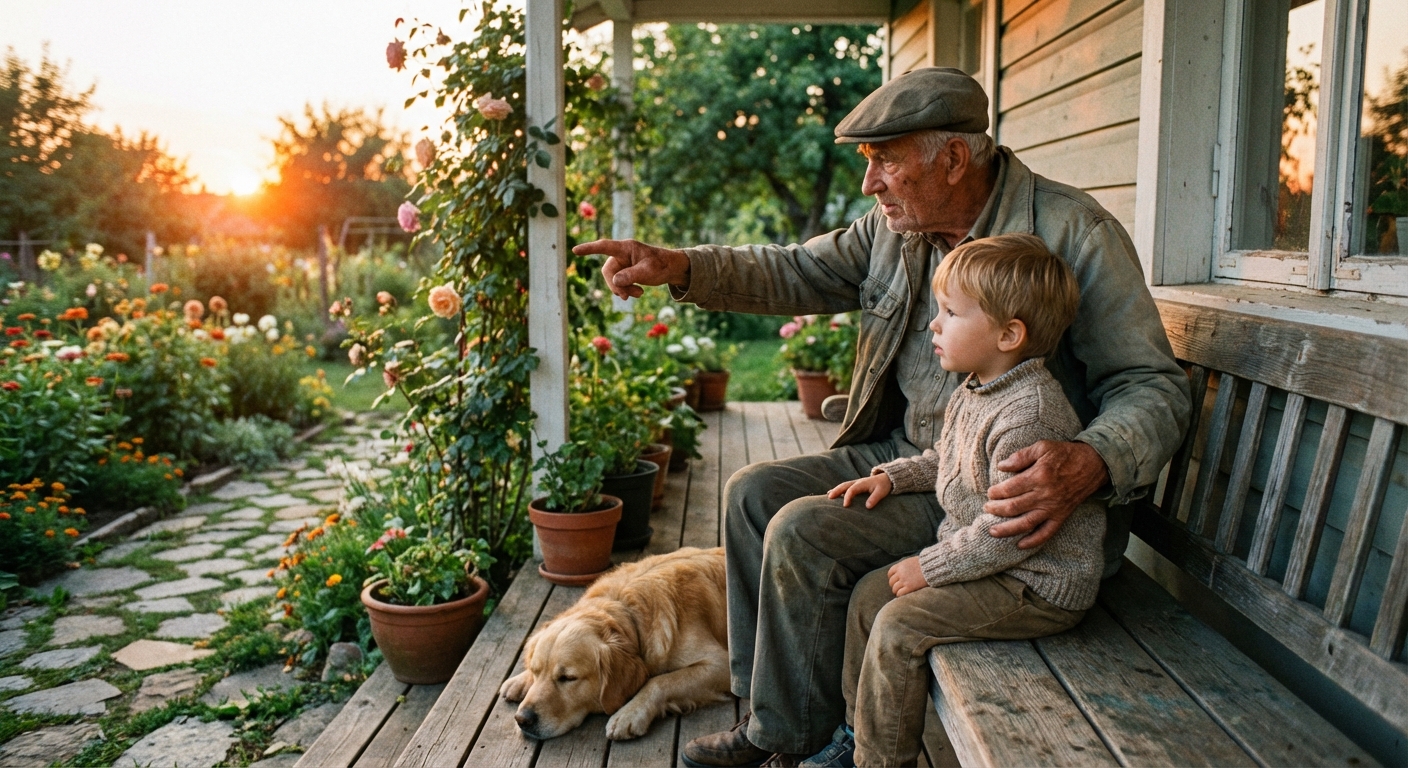
Grandfathers often serve as living bridges to the past. They lived through eras that younger generations only know through textbooks or movies. He knew what life looked like before the internet, before the neighborhood changed, and perhaps before the family established its current roots. Even if he did not talk constantly about the past, his life quietly carried it.
To write this section, consider the major events he witnessed. Did he serve in the military? Did he immigrate to a new country to build a better life? Did he work with his hands in an industry that has since disappeared? These are not just facts; they are evidence of resilience.
You can personalize a eulogy honoring the unique journey of your loved one by focusing on his timeline, which allows you to honor the specific era he represented.
The Gift of Wisdom: Lessons Learned
Grandfathers are often the source of usable, practical wisdom. This is not abstract philosophy but guidance that shows up when a tire goes flat, when a job is lost, or when a difficult decision must be made.
Practical wisdom often appears as:
- The way he handled conflict without raising his voice.
- His dedication to his craft or career.
- The advice he gave that you did not fully understand until you were older.
- How he treated his neighbors and strangers.
This is the perfect place to include "Grandpa-isms." If he had a favorite saying, a repeated joke, or a stubborn belief, share it. These specific phrases ground the speech and make it sound undeniably like him. For example, if he always said, "Measure twice, cut once," share a story about a project you built together where that lesson saved the day. These small details bring him back into the room for a moment.
Building a Family Legacy
Legacy is not about financial inheritance; it is about the emotional imprint a person leaves behind. A meaningful eulogy for grandfather lands with the most impact when it identifies the values he passed down and shows how they are alive in the family today.
Maya Angelou famously said that people will never forget how you made them feel.
Apply this to your grandfather. Did he make you feel safe? Did he make you feel capable? Did he make the family feel united?
Legacy can be seen in:
- Generosity toward those with less.
- A sense of humor that lightened heavy moments.
- Unwavering loyalty to family.
- Quiet patience during storms.
When you speak about legacy, you are offering a promise to the room that his influence has not ended. You might say, "Because of him, we know how to forgive," or "Because of him, we know the value of a hard day's work." This transforms grief into gratitude and gives the audience something to carry forward.
How to Structure a Eulogy for a Long Life
When you are grieving, having a structure is a relief. It reduces decision fatigue and helps you speak with confidence. Most eulogies are effective at a length of roughly three to five minutes, or about 800 to 1,000 words.
For a detailed breakdown, you can follow this How to Structure a Eulogy guide which aligns with standard funeral etiquette. Below is a simplified framework to get you started.
The Opening
Start by grounding the room and yourself.
- Greeting: Thank everyone for being there to honor him.
- Relationship: State clearly who you are (e.g., "I am John, his eldest grandson").
- The Hook: Begin with a defining truth or a short, warm memory. "To me, Grandpa was the strongest man in the world, not because of his muscles, but because of his heart."
The Life Sketch
Keep this section concise. It is a tribute, not a biography.
- Mention his origins and early life briefly.
- Highlight his career or vocation.
- Celebrate his marriage and the family he built.
- Note his passions, whether that was fishing, woodworking, or reading.
The Stories and Qualities
This is the core of the speech where you weave in the themes of history, wisdom, and legacy. Select two or three powerful stories that illustrate his character.
- Show, Don't Tell: Instead of saying he was kind, tell the story of him helping a stranger change a tire in the rain.
- Humor: If he was a funny man, include a lighthearted story. Laughter is a powerful release during a funeral and honors his spirit authentically.
The Closing
End on a note of enduring love.
- Summarize what he meant to the family.
- Offer a final goodbye or wish for peace.
- Thank the attendees again for their support.
Tips for Delivering an Emotional Speech
Even a beautifully written speech can feel daunting to deliver. The goal is not a perfect performance but a sincere offering of love. It is okay to cry. It is okay to pause.
To help manage your nerves:
- Print Large: Print your speech in a large font size with double spacing so it is easy to read through tears.
- Hydrate: Bring a bottle of water to the podium. A sip can help reset your voice if it cracks.
- Backup Plan: Ask a sibling or cousin to stand ready to finish reading the speech if you become too overwhelmed.
- Focus: Look at a supportive face in the crowd or just above the heads of the audience if eye contact is too difficult.
For more specific advice on managing the physical and emotional aspects of speaking, these Tips for Delivering an Emotional Speech can help you prepare for the moment. Remember, the audience is on your side. They are there to love and support you, not to judge your public speaking skills.
Overcoming Writer’s Block Amidst Grief
It is important to acknowledge that grief creates a "brain fog" that can make organizing thoughts incredibly difficult. You may feel a pressure to be perfect, which leads to paralysis. This is a normal reaction to loss. The cognitive load of grief can manifest as symptoms of complicated grief such as lack of focus or emotional numbness.
If you are staring at a blank page, try these techniques:
- Voice Recording: Talk out your memories into your phone instead of typing. It often flows more naturally.
- List Making: Simply list his favorite things, his sayings, and his habits before trying to write full sentences.
- Ask for Help: Ask other family members for their favorite stories to spark your own memory.
This is also where technology can offer a compassionate hand. ToastPal acts not just as a writer but as a listener. By asking gentle questions about his life and personality, the platform helps do the heavy lifting of organization and tone. It ensures the speech sounds professional yet deeply personal, relieving the pressure so you can focus on being with your family.
Conclusion: Honoring His Memory with ToastPal
Writing a eulogy for grandfather is a final act of love. It is an opportunity to solidify his history, wisdom, and legacy in the minds of those he left behind. Do not aim for perfection; aim for authenticity. A few real stories told with love will matter more than any flowery language.
If you are feeling overwhelmed by the blank page, let us help you find the right words to honor him. By focusing on the truth of who he was, you offer a gift to everyone present—a moment to remember, to smile, and to say goodbye together. Honoring His Memory with ToastPal means ensuring his legacy is told with the dignity it deserves.