← Back to all posts
Father of the Bride Speech Tips: How to Write, Deliver and Stay Composed

Father of the Bride Speech Tips: How to Write, Deliver and Stay Composed
Wedding
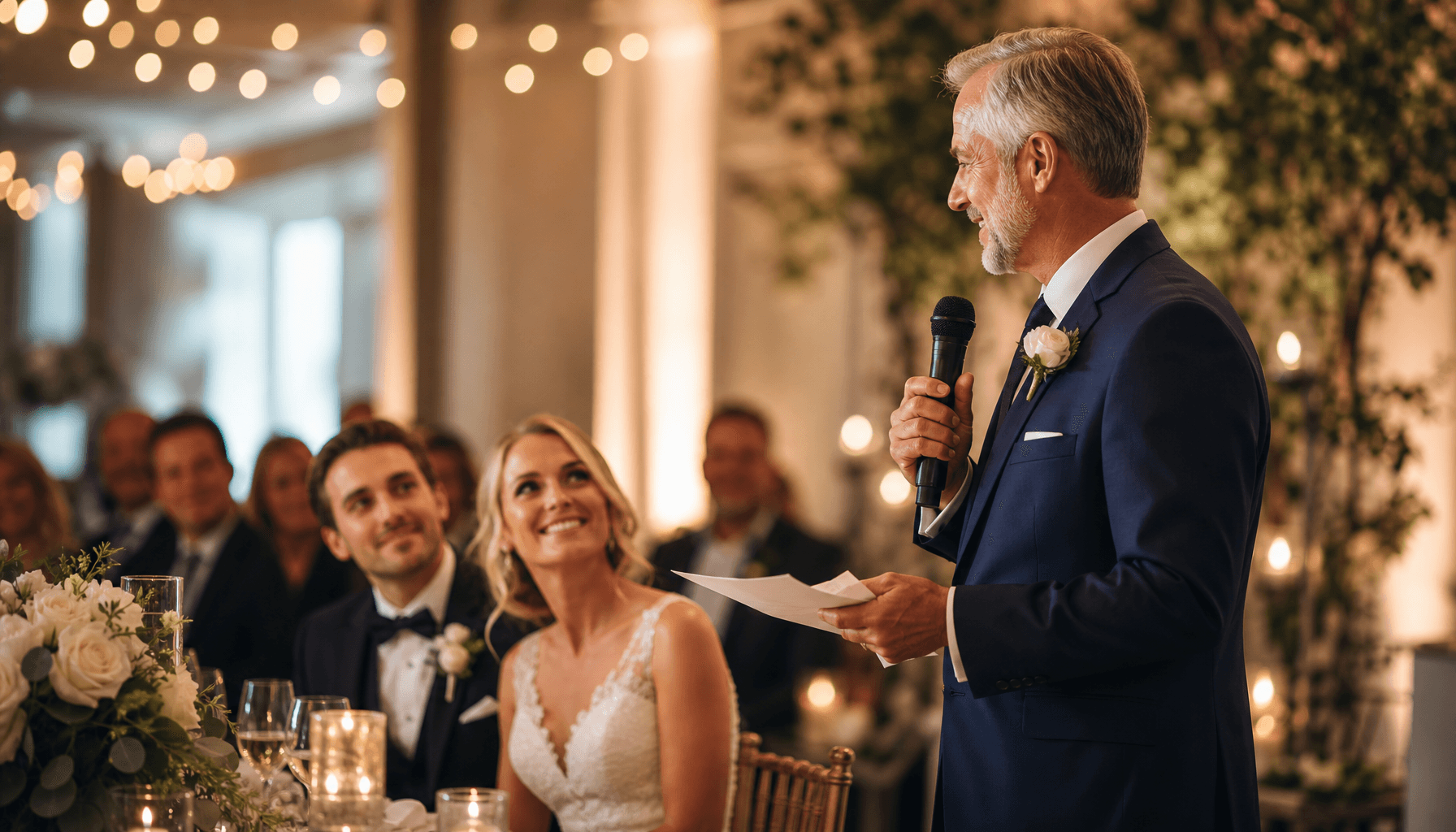
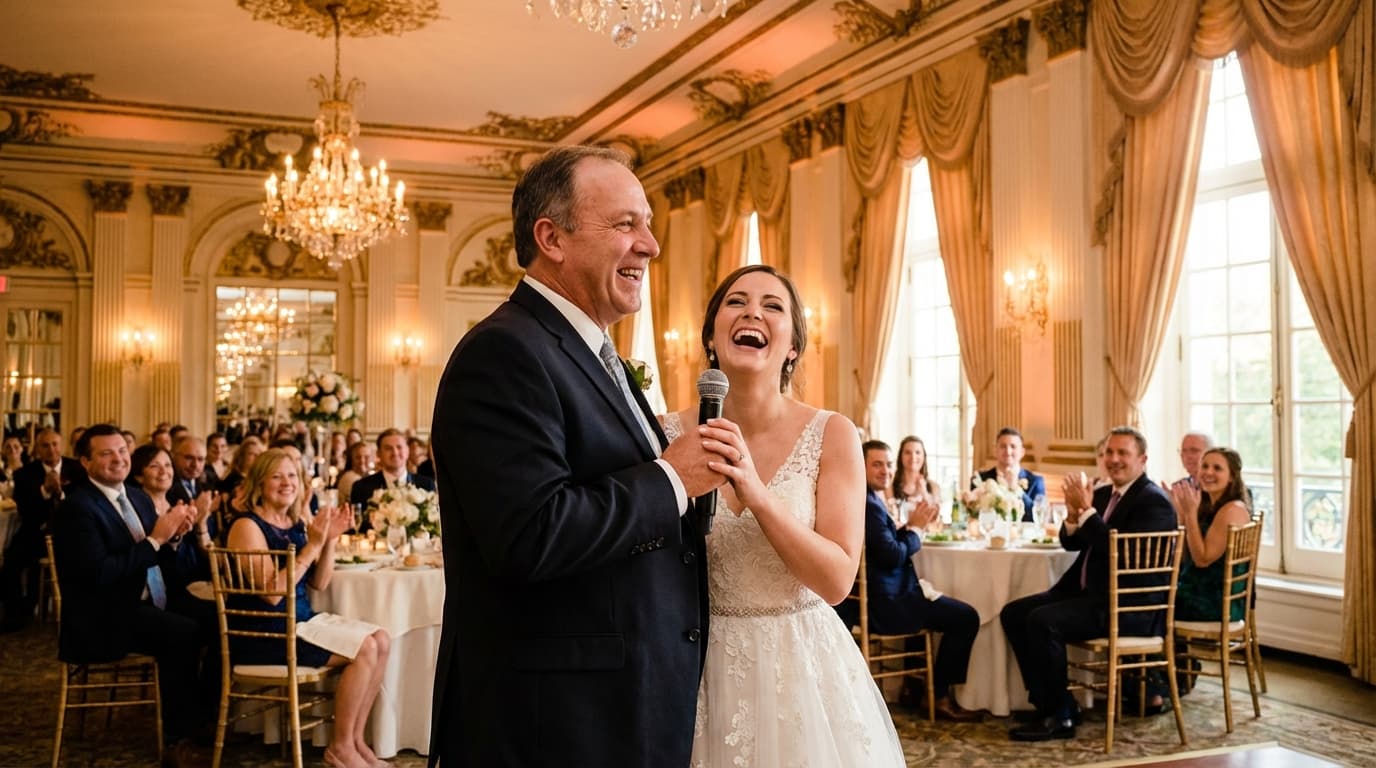
Father of the bride delivering a heartfelt speech, looking proudly at his daughter and her new spouse.

Father of the Bride Speech Tips: How to Write, Deliver and Stay Composed

Walking your daughter down the aisle is one of the most profound moments of your life. It is a day filled with pride, joy, and perhaps a bittersweet realization that your little girl is all grown up. But for many fathers, the anticipation of the ceremony is matched only by the anxiety of the reception. Standing up in front of family, friends, and new in laws to deliver a speech can make your heart race and your palms sweat. You are not alone in feeling this way. The father of the bride speech carries emotional weight, public scrutiny, and the pressure to honor your daughter in a way that feels authentic and memorable.

The good news is that you do not need to be a professional speaker or a natural wordsmith to deliver a toast that moves people. What you need is clarity, structure, and a few practical techniques to keep your nerves in check. Most dads worry about the same three things. They worry they will not know what to say. They worry they will get too emotional to finish. They worry they will ramble or freeze when the microphone is handed to them. These are valid concerns, but they are entirely manageable with the right approach.

You simply need a clear roadmap. By breaking the speech down into manageable pieces and understanding the logistics of delivery, you can transform this daunting task into a highlight of the evening. If you are staring at a blank page and feeling stuck, you can lean on our father of the bride speech generator to turn your memories and relationship with your daughter into a polished narrative. It is designed to make the writing feel effortless while keeping your unique voice front and center.

Ideal Length & Timing: Setting the Stage for Success

One of the most common questions fathers ask is regarding the length of the speech. If you only remember one number, let it be this: aim for three to five minutes. That translates to roughly 500 to 750 words if you are writing it out. This length is the sweet spot because it is long enough to say something meaningful and personal, but short enough to hold everyone's attention.

Wedding receptions are complex events with many moving parts. Guests are eager to eat, the couple wants to enjoy their evening, and the timeline is often tight. A speech that drags past seven minutes can lose momentum, no matter how heartfelt the content is. Even guests who adore you will start thinking about dinner or the dance floor if you go on too long. A simple way to self check is to read your speech out loud at a slow, conversational pace. If you are over five minutes, look for places to trim. Do not try to speed up your delivery to fit more words in. A calm pace feels confident, while rushing sounds nervous.

As for timing, the father of the bride typically speaks first during the reception toasts. This usually happens before dinner is served or just before the father daughter dance. It is wise to confirm the exact slot with your wedding planner or MC ahead of time. Knowing exactly when you will speak helps you mentally prepare and ensures the event flows smoothly. Understanding how wedding speeches fit into the overall timeline allows you to coordinate with other speakers and avoid overlapping content.

Two reliable options usually present themselves. Speaking before dinner is served means guests are seated, attentive, and not yet drifting into loud conversations. The only downside is managing your hunger and nerves until that moment passes. Speaking before the father daughter dance capitalizes on the emotion already in the air, allowing your speech to set a beautiful tone for the dance. However, this can add pressure as it is a high emotion moment. Choose the slot that feels right for you and communicate it clearly to the vendors.

The Perfect Speech Structure: A Simple Outline to Follow

A great father of the bride speech is not a list of achievements or a family history lecture. It is a short story about love, pride, and welcome. It follows a structure that guides the audience from start to finish. Think of it as a journey where you welcome everyone, share stories, offer wisdom, and close with a toast.

The Introduction & Welcoming Guests

Start with a warm welcome. Even if everyone knows who you are, a short introduction helps ground the room and connects you to the guests who may be from the partner's side of the family. Acknowledge guests who traveled far to be there. This sets a gracious tone immediately.

You might say something simple like, "Good evening, everyone. For those who have not met me, I am John, Emma’s dad, and this is one of the happiest days of my life." Keep this part light and sincere. It serves as your icebreaker and allows you to get comfortable with the microphone before diving into the emotional content.

Stories About the Bride (The Heart of the Speech)

This is the part everyone is waiting for. The best approach is not to describe your daughter with adjectives, but to show her character through short moments. Pick one story from her childhood and one from her adulthood that illustrates who she is.

Avoid reading her resume. Guests do not need to hear about every grade she made or every award she won. They want to hear about her kindness, her humor, or her resilience. For example, you might share a memory of how she organized a neighborhood charity club when she was eight, showing her generous spirit. Or perhaps you share a story about how she handled a difficult situation as an adult with grace. These details make the speech personal and relatable.

Welcoming the Partner & The New Family

This section matters more than many fathers realize. It is the emotional handshake across families. It gives your daughter the gift of seeing you embrace the person she chose. Formally welcome your new son in law or daughter in law into the family.

Share a brief anecdote about when you knew this partner was the right match for your daughter. It could be a small moment, like watching them support her during a stressful week, or seeing how much they make her laugh. This "aha moment" validates their relationship to the entire room. Do not forget to nod to the partner's parents as well. A simple line thanking them for raising such a wonderful person creates a sense of unity and goodwill between the families.

Offering Advice & Wisdom

Here is where you can share a piece of advice that actually means something to you. Avoid clichés unless you truly live by them. Instead, offer wisdom that reflects your own experience with marriage and life.

You can mix a lighthearted tip with a serious one. For instance, "Always assume you are on the same team," is powerful advice. Follow it up with something lighter like, "And never watch the next episode of your favorite show without the other person." This balance keeps the speech from feeling like a lecture while still imparting fatherly wisdom. For more insights on effective communication, consider exploring resources on communication skills.

The Closing Toast

Your close should be short, clear, and uplifting. Signal to the room that it is time to raise their glasses. A simple blessing wishing the couple love, health, and happiness works beautifully. Make sure everyone has a drink in hand, then lead the toast with confidence. Once you say "Cheers," stop speaking. Do not add an extra paragraph after the toast. Let the moment land and enjoy the applause.

Balancing Humor and Emotion: Finding Your Voice

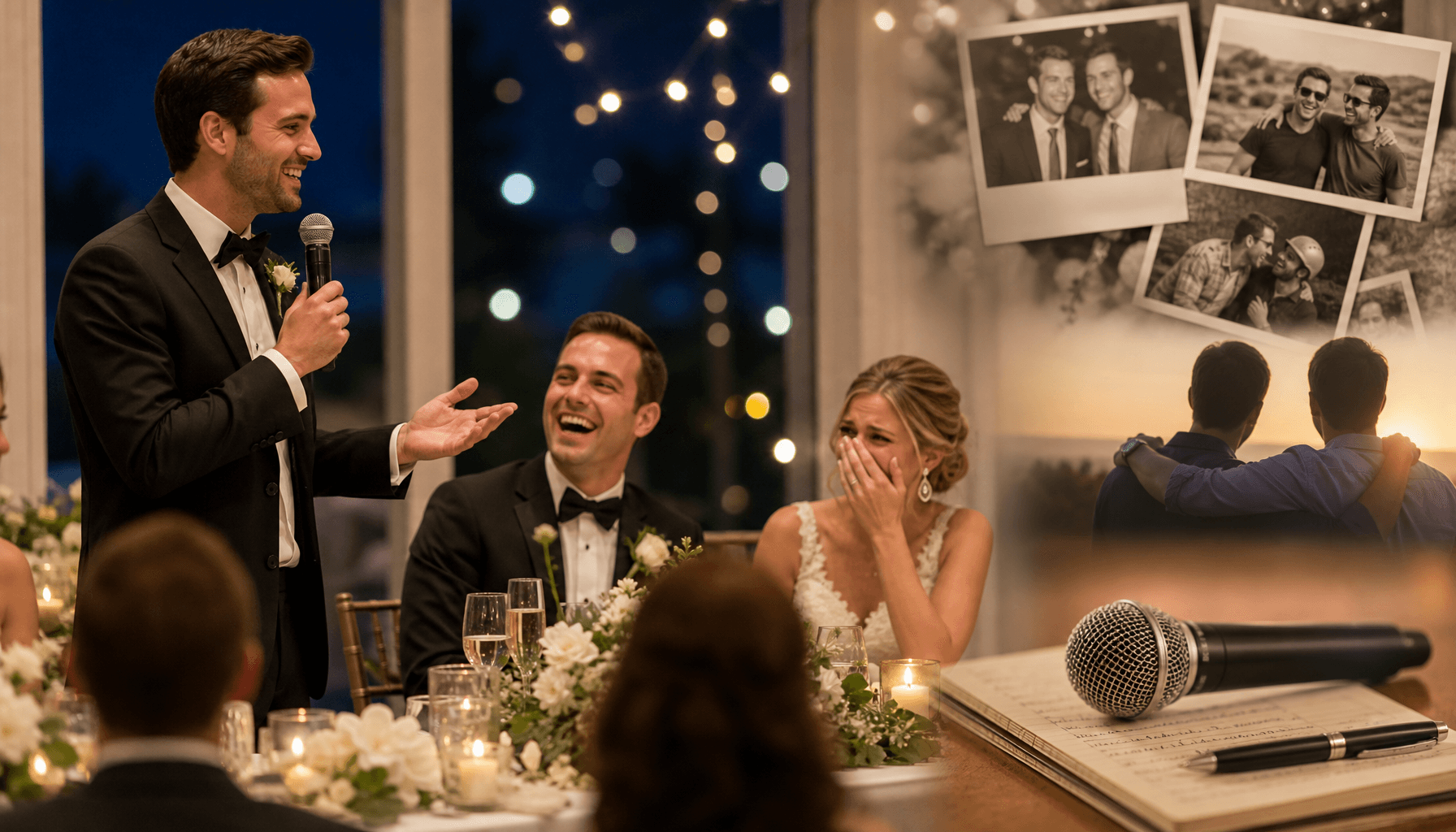
One of the trickiest parts of writing a father of the bride speech is striking the right tone. You want to be funny, but not at anyone's expense. You want to be emotional, but not so much that you cannot finish. The key is authenticity. Guests want to hear you, not a stand up comedian.

Humor should be used like seasoning, not the main course. Laugh with your daughter, not at her. A well placed joke about her stubbornness or a funny family habit can work, but avoid anything that embarrasses her or references past relationships. Inside jokes that only a few people understand will fall flat and alienate the rest of the room. Keep your humor inclusive and warm.

On the flip side, do not be afraid to show emotion. If your voice cracks or your eyes well up, that is perfectly okay. It is a sign of love, and the audience will appreciate it. The trick is balancing humor and emotion so the speech does not feel too heavy. A little levity can help reset the mood after a tearful moment.

The tone might also shift depending on the style of the wedding. A black tie affair might call for a slightly more formal delivery, while a backyard celebration allows for a relaxed, conversational approach. Read the room and adjust accordingly, but always stay true to your own voice.

Managing Emotions: Practical Techniques to Stay Composed

Let us address the number one fear for fathers. You are probably going to get emotional. That is normal. But with the right preparation, you can manage those feelings without losing your composure. The goal is not to be unfeeling. The goal is to stay steady enough to deliver your message.

First, write your speech down. Do not wing it. Having a script provides a safety net. You do not have to read every word, but knowing the words are there gives your mind permission to relax. Practice reading it aloud until the words feel familiar. When you practice, pay attention to the sections that make you choke up. Mark those spots in your notes so you are prepared for them.

Physical techniques can also help calm the surge of emotion. When you feel tears coming, take a deep breath. Breathe low and slow, inhaling through your nose and exhaling through your mouth. Relax your jaw, as tension there often tightens the throat. Plant your feet shoulder width apart to keep yourself stable.

If you do start tearing up, use a simple three step recovery. Pause. Sip some water. Say a reset line. A short, honest sentence like, "Excuse me, I am just very proud," is enough. It gives you a moment to collect yourself and lets the audience know you are okay. People are not judging you for crying. They are rooting for you. For more support on managing emotions and staying composed, additional resources can be helpful.

If you are worried about the emotional atmosphere affecting other speakers, sharing tips from our general wedding speech guide can help create a supportive environment for everyone involved. When the whole room feels cohesive and calm, it is easier for you to stay grounded.

Some fathers feel a sense of loss during the wedding, which triggers grief. If that resonates with you, try reframing the day. You are not losing a daughter. You are watching her build a life with someone she loves, and you are being invited to bless it. That is not an ending. It is an expansion of your family.

Microphone Etiquette: Technical Tips for Confidence
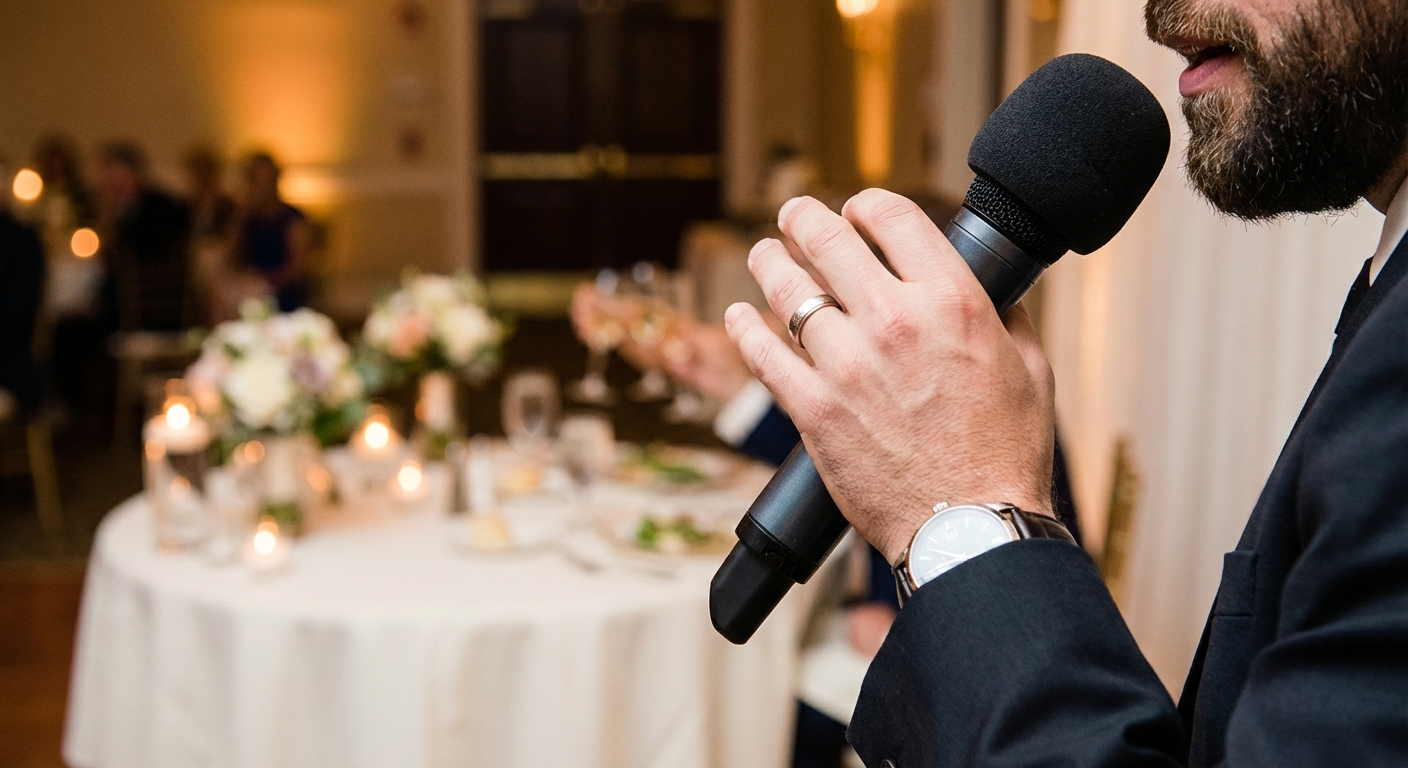
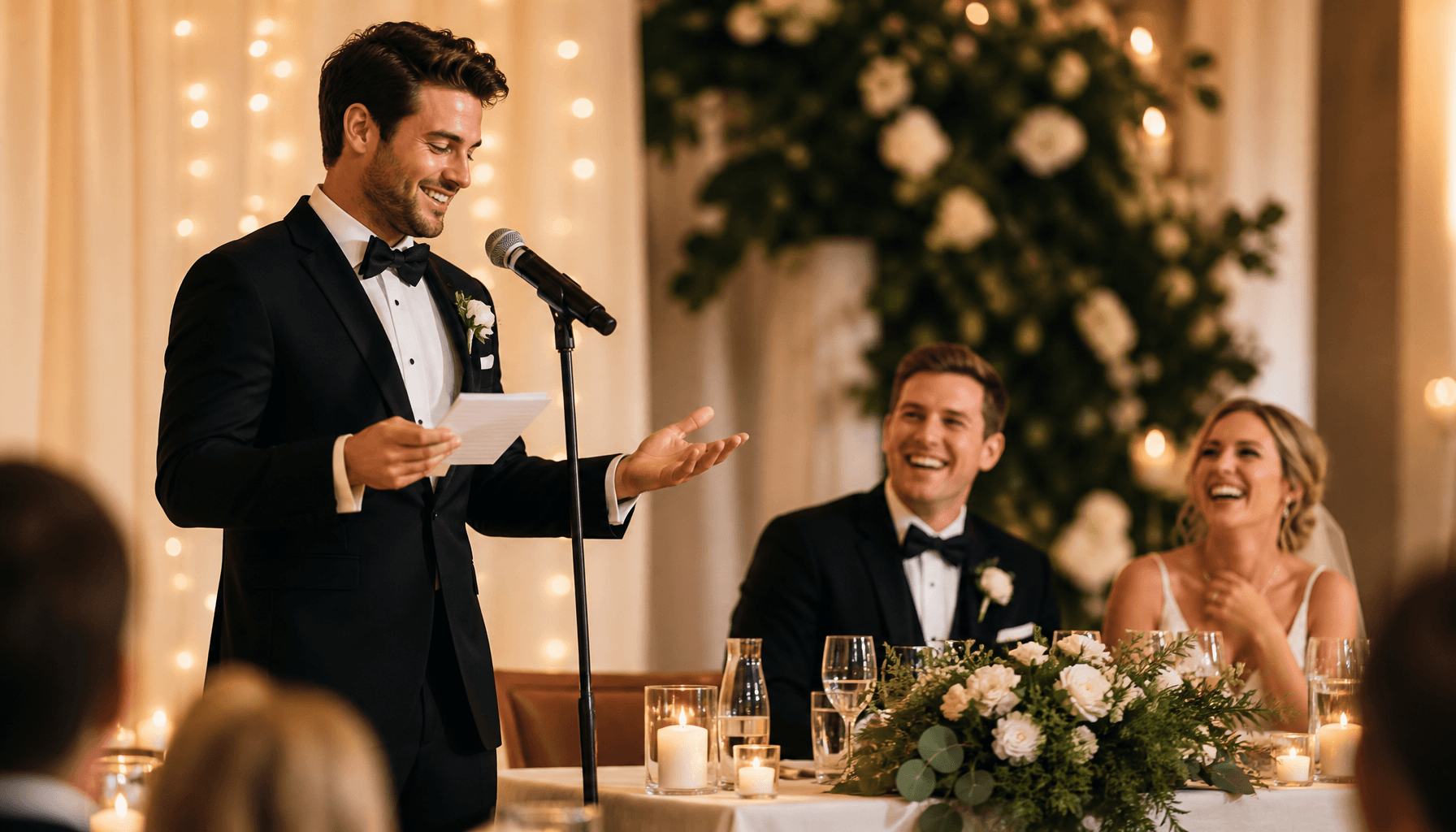
Close-up of a father's hands holding a microphone correctly during a wedding speech.

You might not think much about the microphone, but handling it correctly makes a huge difference. A microphone can make the difference between sounding warm and confident or sounding nervous and distant. Poor mic technique can muffle your voice or create feedback, and it has very little to do with your personality.

The 3:1 Rule and Distance

Hold the microphone two to four inches from your mouth. Imagine you are holding an ice cream cone and about to take a bite. That is the right distance. If you are too close, your voice will sound muffled or distorted with breath pops. If you are too far, no one will hear you clearly.

Another crucial tip is to keep the microphone level with your chin. If you turn your head to look at the couple, turn the mic with you. Otherwise, the room hears your voice fade in and out. This ensures consistent sound quality throughout your speech.

Sound Check & Handling

Before the reception starts, ask the MC or DJ for a quick sound check. This lets you test the mic and adjust your volume. When you hold the microphone, grip it around the middle handle, not the top. Covering the grill muffles the sound and can cause feedback.

Speaking of feedback, that screeching noise happens when the mic gets too close to the speakers. Stand in the designated spot and avoid wandering around. If you stay put, the sound team can manage the levels more easily. Following professional advice on microphone placement and sound best practices ensures that your heartfelt words are actually heard by the guests in the back of the room.

Troubleshooting: What to Do When Things Go Wrong

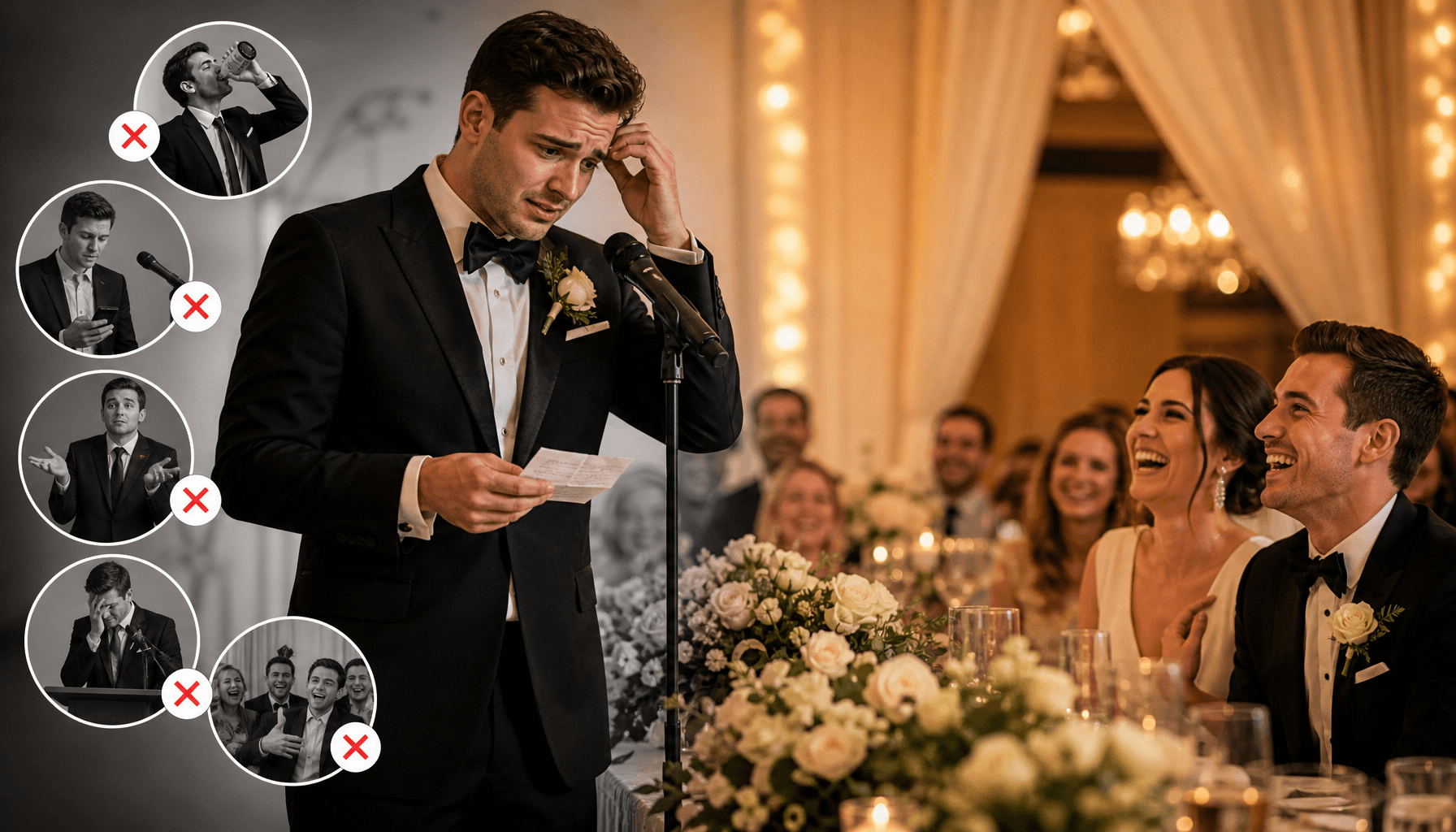
Even with perfect preparation, live events can be unpredictable. The mic might cut out. You might lose your place. A guest might interrupt. The difference between a stressful moment and a graceful one is having a plan.

If the microphone fails, stay calm. Do not panic or make a joke about the technology failing. Instead, project your voice and wait for the staff to fix it. If it takes more than a few seconds, step closer to the guests and continue without the mic by speaking louder and slower. Most reception venues allow for this, and your voice will carry if you project.

Losing your place in your notes is another common hiccup. This is why index cards or printed pages work better than reading from your phone. Phones can dim, lock, or receive notifications at the worst possible moment. Paper is reliable. If you lose your place, stop speaking. Look down at your notes, find your next bullet point, and start again calmly. The room will not mind the silence. Rushing and apologizing draws more attention than a quiet reset.

If someone interrupts or a noise distracts the room, acknowledge it with a smile and a brief pause. Humor can defuse tension. A simple, "Well, that was unexpected," followed by a return to your speech shows you are in control.

If you feel like your tone is off or you are struggling to find the right emotional key, look at the couple. Their joy can help realign you. If the couple shared their vows with you beforehand, reflecting on those promises can help ground you in the purpose of the day.

Real Examples & Templates

Sometimes the best way to learn is by seeing examples. Here are three templates to inspire your own speech, each with a different tone. You do not need to copy them word for word, but use them as a framework.

The Sentimental Template

"Good evening everyone, I am John, Emma’s dad. Thank you for being here to celebrate this incredible day.

When Emma was five, she told me she was going to marry a prince. I laughed, but looking at Alex today, I think she was right. Even back then, she had this way of seeing the best in people, and that has only grown stronger as she has become the woman we all admire today.

And Alex, welcome to our family. Watching you two together, I see Emma at her best. I knew you were right for her when I saw how you supported her during her career change. To Alex’s parents, thank you for raising someone who brings so much goodness into her life.

If I can offer one piece of advice, choose each other, especially on the ordinary days. Keep showing up with patience, laughter, and respect.

Please raise your glasses to Emma and Alex. May your marriage be full of love, health, and a home that always feels safe. Cheers."

The Lighthearted Template

"Hello everyone. I am John, father of the bride and official wallet opener for this wedding. Thank you all for being here.

I promised myself I would not cry, so I wore waterproof confidence today. Emma, you have always had expensive taste, but seeing you this happy makes every penny worth it. That determination is Emma in a nutshell, and it is one of the many reasons we love her.

Alex, good luck keeping up with her. But in all seriousness, you fit into this family in a way that feels natural, and I am grateful for the way you care for her.

My advice to you two is simple. Stay on the same team, keep laughing, and never stop being curious about each other.

Glasses up for Emma and Alex. May you always find your way back to joy. Cheers."

The Short & Sweet Template

"Good evening. I am John. Emma, you have made me proud every day of your life. I will always be in your corner.

Alex, welcome to the family. We are lucky to have you.

Please raise your glasses to the happy couple. May your life together be full of love and laughter. Cheers."

Conclusion

A father of the bride speech does not need to be perfect to be powerful. The parts guests remember are simple. They remember your love for your daughter, your welcome to her partner, and the sincerity in your voice when you offer a toast.

Keep it within three to five minutes, follow a clear structure, practice out loud, and give yourself permission to pause if you get emotional. The room is with you. You have the structure, the tips, and the love for your daughter. You are ready.

If writing still feels overwhelming, remember that you do not have to do it alone. Let technology assist you in organizing your thoughts. It captures your stories and your voice, effortlessly.

Frequently Asked Questions

How long should a father of the bride speech be?

A father of the bride speech should ideally be three to five minutes long, which is roughly 500 to 750 words. This length is perfect because it gives you enough time to share meaningful stories and advice without losing the audience's attention. Anything longer than seven minutes can feel drawn out, especially during a busy reception timeline.

Does the father of the bride speak first?

Yes, traditionally the father of the bride speaks first during the reception toasts. This usually happens before dinner is served or just before the father daughter dance. It is a good idea to confirm the exact timing with your wedding planner or MC to ensure everything flows smoothly.

What should the father of the bride leave out of his speech?

Avoid mentioning past relationships, controversial topics like politics or religion, or embarrassing stories that might make your daughter uncomfortable. Inside jokes that only a few people understand should also be skipped. The goal is to celebrate the couple and keep the tone inclusive and respectful.

Can I read my speech from a piece of paper?

Absolutely. Reading from a piece of paper or index cards is not only acceptable, it is recommended. It looks more dignified than reading from a phone, which can lock, dim, or run out of battery at the worst possible moment. Number your cards or pages to stay organized, and do not worry about glancing down. It is far better to read than to stumble through from memory.

How do I stop myself from crying during the speech?

Practice your speech multiple times so you know which sections are most emotional. During the actual delivery, if you feel tears coming, pause, take a deep breath, and sip some water. You can also acknowledge the moment with a simple, honest line like, "Excuse me, I am just really proud." The audience will appreciate your authenticity, and the brief pause gives you time to compose yourself. Remember, emotion is a sign of love, not weakness.