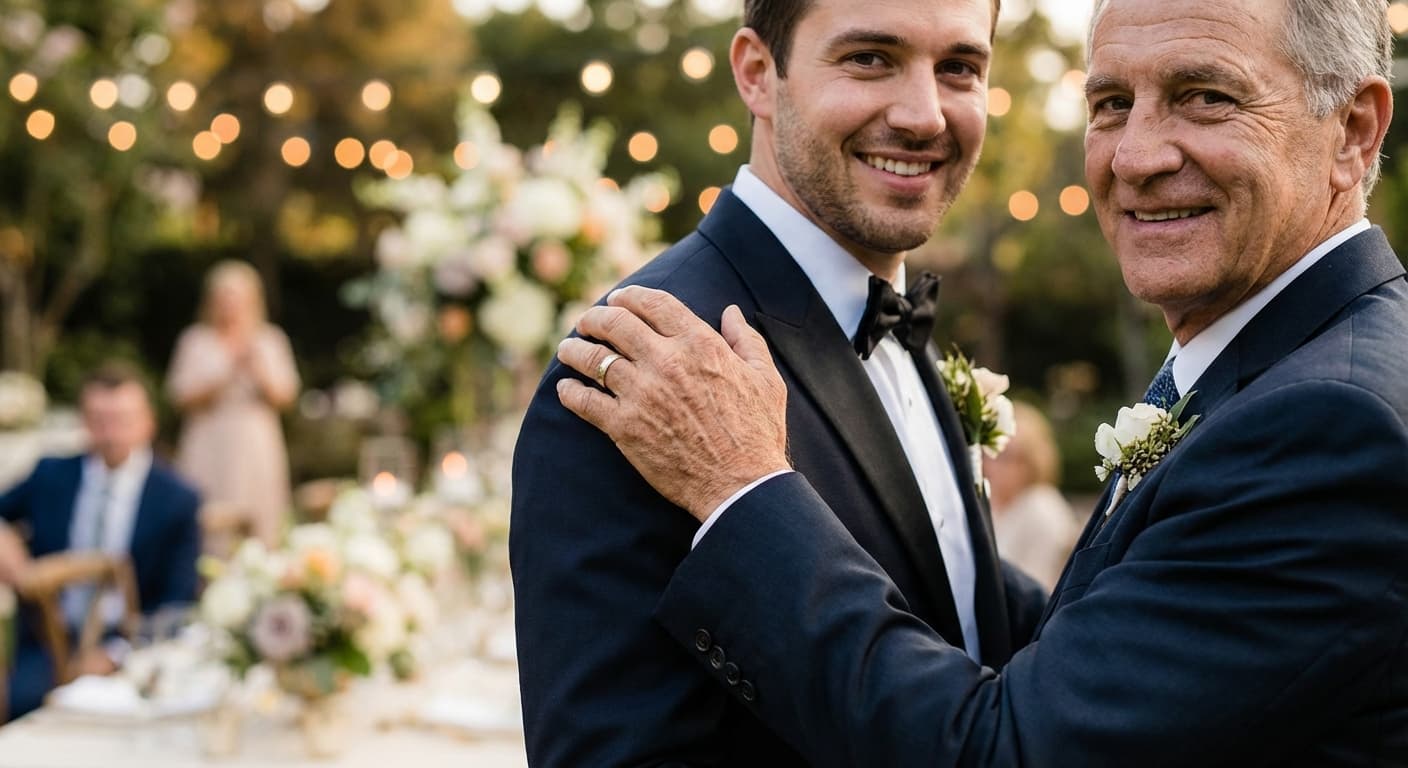
Father of the Groom Speech: Examples, Templates & What to Say
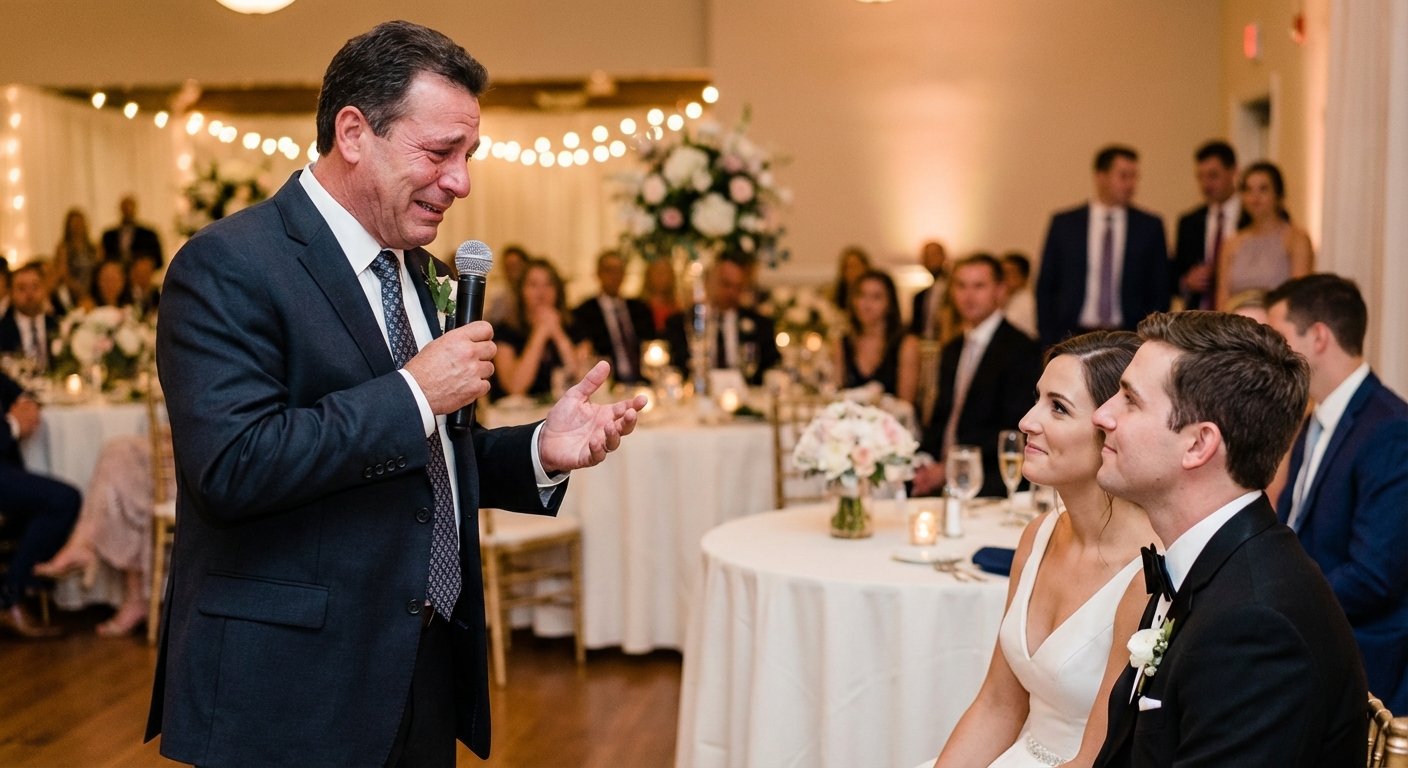
Father of the Groom Speech: Templates, Examples, Timing, and Delivery Tips
You don’t have to be a natural public speaker to deliver a father of the groom speech that feels warm, genuine, and memorable. If you’re a proud dad who’s a little nervous—or simply busy and short on time—this guide gives you clear steps, ready-to-use templates, and polished examples you can deliver with confidence.
ToastPal keeps the process simple. Build a personalized draft in minutes with our interactive builder, grab downloadable PDF templates, or book a light-touch edit with a human pro. Along the way, you’ll find father of the groom speech examples for short, 1‑minute, and 3–5 minute formats, a fill‑in‑the‑blank father of the groom speech template, delivery tips, and thoughtful variations for different family and cultural contexts.
What Is a Father of the Groom Speech? Timing, Etiquette, and Role
A father of the groom speech is a short, heartfelt moment to welcome guests, honor your son and his partner, and offer a warm toast to their future. It often appears during the rehearsal dinner or the reception toasts. Depending on the run-of-show, dads may speak before or after the wedding party toasts. Common run orders vary across weddings; many planners follow similar timing and etiquette guidance outlined by resources like The Knot.
Length wise, aim for 3–6 minutes. That gives you room for a welcome, one meaningful story, and a clear toast without drifting into long backstories. Most people speak at about 130–150 words per minute; we translate that into word counts a little later so you can time your draft precisely.
Core responsibilities to cover:
- Welcome and thanks for being part of the celebration.
- Introduce yourself briefly.
- A personal anecdote that reveals the groom’s character.
- A warm welcome to the partner and their family.
- A simple blessing or piece of advice.
- A clear, upbeat toast.
Common pitfalls to avoid:
- Overlong stories that need lots of context.
- Inside jokes that leave guests out.
- Embarrassing or overly personal details (exes, wild nights, private family matters).
- Drinking before you speak; save the celebration for after your toast.
How to Write Your Father of the Groom Speech (Template + Step-by-Step)
Start by choosing your tone—warm and grateful, lightly funny, or mostly heartfelt—and stick with it. Then use this simple structure that works in both rehearsal and reception settings:
- Welcome and thanks
- Greet guests and thank those who helped bring the day together. - Introduce yourself briefly
- One line is enough: “I’m [Name], [Groom]’s dad.” - A personal anecdote about the groom
- One short story that highlights a value: kindness, resilience, humor, loyalty. - Welcome the bride/partner and their family
- Extend warmth; acknowledge the families joining. - Advice or blessing
- Offer one simple idea couples can actually remember and use. - Toast
- Invite everyone to raise a glass and end on a clear, joyful note.
If you’re curious how other roles structure their remarks, the best man often follows a similar arc; you can compare approaches in our best man speech guide.
Fill‑in‑the‑Blank Template
Use this father of the groom speech template to move from blank page to first draft fast. Replace bracketed text with your details and adjust tone as you prefer.
- Welcome and thanks:
“Good evening, everyone. I’m [Name], [Groom]’s proud father. Thank you for being here to celebrate [Groom] and [Partner].” - Brief intro:
“Seeing so many people who’ve shaped their lives means the world to our family.” - Anecdote:
“When [Groom] was [age], he [short story—e.g., stayed late to help a neighbor/made us laugh through a tough time/showed perseverance during a challenge]. That moment showed me who he is.” - Welcome partner and their family:
“From the first time we met [Partner], we saw the same kindness and strength. To [Partner]’s family, we’re honored to join ours with yours.” - Advice or blessing:
“Marriage is teamwork. Keep listening, keep laughing, and choose each other every day.” - Toast:
“Please raise a glass to [Groom] and [Partner]—for a life filled with love, health, and shared adventures.”
Brainstorm Prompts
If you’re not sure which story to tell, these prompts help you find a concise, telling moment:
- A time you felt proud of your son (a challenge he handled, a kindness he showed).
- A small habit or quirk that reveals character (checking on grandparents, pitching in for neighbors, mentoring younger kids).
- The first time you met his partner—what stood out?
- A family value you hope they carry forward (loyalty, humor, generosity, faith).
- A simple piece of advice you’ve returned to in your own relationships.
Word Count Planning Using WPM
Set your speech length using words per minute:
- 3 minutes ≈ 390–450 words (130–150 wpm)
- 5 minutes ≈ 650–750 words
- 6 minutes ≈ 780–900 words
If you want exact timing for your draft, use a words‑to‑time calculator to estimate your read‑aloud length.
Father of the Groom Speech Examples (Short, 1‑Min, 3–5 Min; Funny & Emotional)
Choose your example based on the schedule and your comfort level. A short father of the groom speech keeps a tight program flowing; a 3–5 minute version lets you share a deeper story. If you’d like to spark a few laughs, lean on the funny father of the groom speech. If you want to go heartfelt, use the emotional father of the groom speech without letting it become heavy.
Short Father of the Groom Speech (30–60 seconds)
“Good evening, I’m [Name], [Groom]’s dad. Thank you for being here to celebrate [Groom] and [Partner]. [Groom], you’ve brought our family pride and laughter from the start, and seeing you with [Partner] doubles that joy. To [Partner]’s family, we’re honored to become one family with you. Please raise a glass—to love that’s steady, to kindness that lasts, and to a lifetime of choosing each other. To [Groom] and [Partner]!”
1‑Minute Father of the Groom Speech
“Hello everyone, I’m [Name], [Groom]’s father. I want to thank all of you for being here; it means so much to our family. When [Groom] was little, he [short anecdote—e.g., coached his stuffed animals, wrote elaborate lists before family trips, always checked on his grandparents]. Even then, he was thoughtful and all‑in. When he met [Partner], we saw those same qualities matched and magnified. [Partner], thank you for loving our son so well, and to your family, we’re thrilled to become one family. My wish is simple: keep laughing, be kind, and hold each other close through every season. Please join me in a toast—to [Groom] and [Partner], may your home be full of peace and your adventures never end.”
3–5 Minute Father of the Groom Speech
“Good evening, friends and family. I’m [Name], [Groom]’s dad. On behalf of our family, thank you for celebrating [Groom] and [Partner]. Many hands and hearts made today possible, and we’re grateful.
When [Groom] was [age], we had a rough week—the car broke down, the roof leaked, and the dog tried to ‘landscape’ the backyard. Saturday morning, I found [Groom] with a toolbox bigger than he was, handing me screws and holding the flashlight. He didn’t fix everything, but he showed up. That’s always been his way—steady, helpful, faithful in the little things.
Then came the day he said, ‘Dad, I want you to meet someone.’ We met [Partner], and it instantly made sense why he couldn’t stop smiling. [Partner] has a calm strength and a warmth that puts others at ease. To [Partner]’s family, we are thrilled to be joining ours with yours; thank you for welcoming us.
Here’s the advice I’ll offer: say ‘I’m sorry’ quickly, ‘I forgive you’ freely, and ‘Let’s get pizza’ often. Keep your hands busy building a life and your hearts open to grace. May your home be a place where friends feel welcome, where laughter lives, and where you two keep choosing each other.
Please raise a glass with me—to [Groom] and [Partner]: may your love be brave, your joy be deep, and your days be long and good. To the newlyweds!”
Funny Father of the Groom Speech (Tasteful Humor)
“Hello, I’m [Name], [Groom]’s dad. I’ve been asked to keep this short, which, if you’ve ever gone hardware shopping with me, you know is a challenge. When [Groom] was little, he believed any problem could be solved with duct tape. Thankfully, he’s upgraded to teamwork—and he found the best teammate in [Partner]. To [Partner]’s family, we promise to keep him well‑fed and mostly out of the garage. In all seriousness, marriage is less about grand gestures and more about showing up, laughing through the spills, and sharing the last slice of cake even when you don’t want to. Please raise a glass to [Groom] and [Partner]—may your love be the good kind of sticky.”
Humor dos:
- Keep jokes gentle and inclusive.
- If you poke fun, make yourself the target more than the couple.
- Keep references family‑friendly.
Humor don’ts:
- No exes, no crude jokes, no inside stories that require a five‑minute backstory.
Emotional Father of the Groom Speech (Warm & Heartfelt)
“Good evening, I’m [Name], [Groom]’s father. Today is a full‑circle moment. I remember bringing [Groom] home—tiny, loud, and stubborn in the best way. Watching him become the man he is has been one of my life’s great gifts. Then he met [Partner], and we saw a new joy in him. [Partner], you are kind, wise, and strong. We are honored to call you family. My blessing for you both: may you have the kind of love that listens first, gives generously, and never loses wonder. Please join me in a toast—to a lifetime of health, protection, and peace for [Groom] and [Partner].”
Closing Toast Lines (20‑second finishers)
Use one of these to close with clarity:
- “To a marriage full of ordinary days made extraordinary by love.”
- “To choosing each other, every day, in big moments and small.”
- “To a home where laughter is loud and grace is abundant.”
- “To two families becoming one—and many joyful dinners ahead.”
- “To [Groom] and [Partner]: may your love be steady and your adventures many.”
Download 10 templates (PDF) for these formats, plus ready‑made closing toasts and a timing checklist.
Tone, Cultural & Family Variations (Blended Families, Same‑Sex, Multilingual)
Every family is unique. Keep your father of the groom speech kind, inclusive, and centered on the couple.
Blended families and stepparents
- Acknowledge stepparents with care: “To [Step‑Parent Name], thank you for the love and stability you’ve brought to our family.”
- Avoid labels that divide; favor “our family,” “we,” and first names.
Same‑sex weddings
- Celebrate with the same warmth and joy you’d use for any couple. Favor names and “partner” where it feels natural. A simple line like, “We’re thrilled to welcome [Partner] into our family,” keeps the focus where it belongs—on love and commitment.
Multicultural or multilingual closings
- A short phrase can be deeply meaningful. Add a welcome or toast in a second language, then translate it. Examples:
- Spanish: “Salud y amor para siempre—cheers to a lifetime of love.”
- French: “À votre bonheur et à votre santé—wishing you joy and health.”
- Mandarin: “百年好合—may you enjoy a harmonious union.”
Sensitive histories
- If relationships are complex, keep it gracious and forward‑looking. Focus on the couple’s future and shared values.
If you’d like to compare tone and approach across roles, a maid of honor speech often balances humor and sentiment differently; reviewing those patterns can help you refine your voice.
Rehearsal Dinner vs. Reception: When to Speak and What Changes
Rehearsal dinner
- The mood is intimate; slightly longer stories are welcome, but still aim for 3–6 minutes.
- Add a beat of gratitude for those who traveled or pitched in.
- Speak conversationally and leave space for a few warm laughs or clinks.
Reception
- The schedule is tighter. Keep it polished and punchy: strong open, one crisp story, welcome to the partner and their family, one piece of advice, clear toast.
- Coordinate with the planner or MC on order and timing. Ask where you’ll stand, when the mic comes to you, and who you hand off to.
Delivery Tips: From Practice to Performance (Mic Use, Practice, WPM)
A thoughtful draft becomes a memorable moment with solid delivery. These pointers help you sound clear and confident.
Practice
- Do 3–4 full run‑throughs out loud. Time it once near final.
- Record yourself to check pacing and clarity.
- Print a clean copy in large font and bring backup glasses if you use them.
Mic technique
- Hold the mic 1–2 inches from your chin; speak past it rather than directly into it.
- Don’t tap or blow into the mic; if asked to test, a soft “check” at speaking volume is enough.
- Keep a handheld mic steady; if it’s on a stand, don’t lean away.
Pacing and pauses
- Aim for 130–150 words per minute. Pause after punchlines and after heartfelt statements to let the room react.
Notes vs. phone
- Small note cards beat scrolling. If using a phone, enlarge text and keep the screen awake so you’re not fumbling.
Eye contact
- Use the 80/20 rule: mostly the audience and couple, with brief glances at your notes.
Performance day checklist
- Water, printed notes, backup glasses, early arrival for a quick mic check.
Many speakers find it helpful to skim public speaking tips from seasoned coaches when fine‑tuning their delivery.
Tools & Resources to Make This Easy (Build, Download, or Get Coaching)
Save time, reduce nerves, and polish your delivery with tools designed for real weddings and real families.
- Build my speech
Microcopy: Create a personalized father of the groom speech in minutes with ToastPal’s AI—tone slider, cultural options, and performance tips included. - Download 10 templates (PDF)
Microcopy: Grab ready‑to‑use short, 1‑min, 3–5 min, funny, and emotional father of the groom speech templates. - Book a speech edit
Microcopy: Work 1:1 with our editors to refine your draft and boost confidence.
Fathers consistently point to how easy the process feels in their customer reviews.

Father of the Groom Speech Dos & Don’ts (Quick Checklist)
Dos
- Keep it 3–6 minutes; trim anecdotes to their essentials.
- Welcome families, express gratitude, and end with a clear toast.
- Practice aloud, time it, and print a clean copy.
Don’ts
- Don’t embarrass the couple or bring up past relationships.
- Don’t overdrink before speaking or rely on inside jokes.
- Don’t drag in politics, finances, or private family conflicts.
FAQs
How long should a father of the groom speech be?
Aim for 3–6 minutes. That’s enough time to welcome guests, share one meaningful story, offer a blessing or advice, and raise a clear toast without losing the room.
What should the father of the groom say in his speech?
Cover the essentials: welcome and thanks, a brief introduction, one personal anecdote about your son, a warm welcome to the partner and their family, a simple piece of advice or blessing, and a clear toast.
When does the father of the groom speak—rehearsal dinner or reception?
Both are common. Rehearsal dinners are more intimate and flexible; receptions are tighter and benefit from a punchy 3–5 minute version. Many timelines echo etiquette guidance for typical order, but always confirm with the planner or MC.
What are some great opening lines for a father of the groom speech?
- “Good evening, I’m [Name], [Groom]’s proud father. Thank you for being here.”
- “When [Groom] was little, he taught me [value], and today I see that same goodness in [Partner].”
- “To everyone who loves [Groom] and [Partner], we’re grateful you’re here to celebrate with us.”
How do I avoid embarrassing stories while still being funny?
Keep humor kind and inclusive. Make yourself the target of light teasing more than the couple. Avoid exes and anything crude. Stick to universal moments everyone can enjoy, like a harmless childhood quirk or shared family habit.
How many words are in a 3‑minute father of the groom speech?
Roughly 390–450 words if you speak at 130–150 words per minute. A words‑to‑time calculator can help you fine‑tune the length of your script.
What’s the best way to practice and time my speech?
Read it aloud 3–4 times. Record a run‑through and time it. Trim any parts that require lots of backstory. Print a clean copy in large font and bring backup glasses if needed.
Can I read from notes or a phone?
Yes. Note cards are easier to glance at than a phone and won’t tempt you to scroll. If you use your phone, enlarge the font and keep the screen awake so you’re not fumbling.
How do I welcome my son’s partner and their family?
Be warm and specific: “To [Partner]’s family, we’re honored to become one family with you,” or “We’re grateful for the love and strength you bring to [Partner] and now to all of us.”
Any tips for same‑sex weddings, blended families, or multicultural ceremonies?
Use inclusive language and focus on the couple. In blended families, honor stepparents by name. In same‑sex weddings, avoid gendered assumptions and favor names and “partner.” For multicultural settings, consider a simple phrase in a second language and translate it for the room.
What’s a simple closing toast I can use?
“Please raise a glass—to [Groom] and [Partner]. May your love be steady, your home be warm, and your days be full of joy.”
Primary CTA button copy for interactive builder
- Build my speech
Supporting microcopy: Personalized, polished, and ready in minutes.