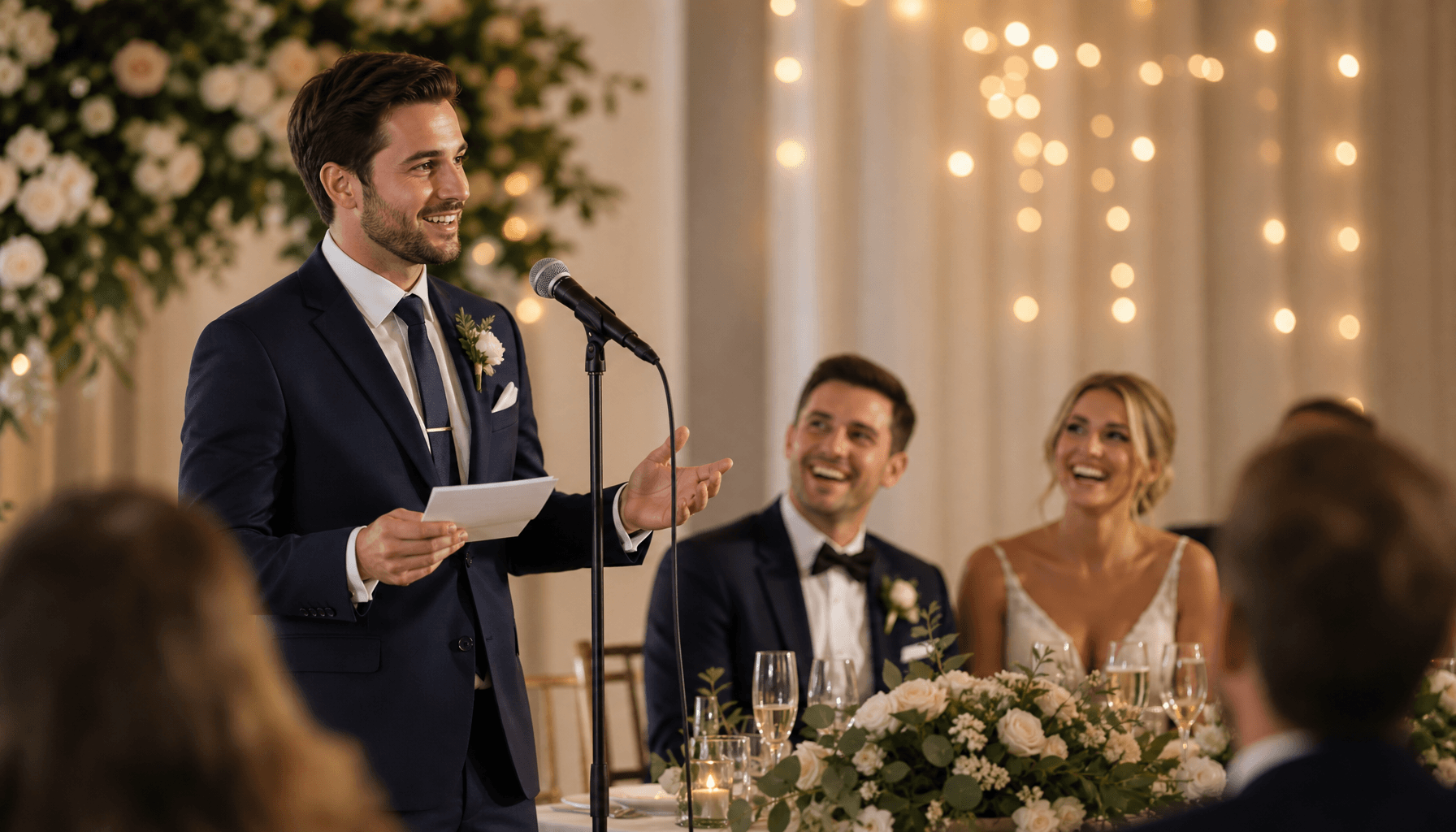
From Blank Page to Standing Ovation: Your Ultimate Guide to Writing a Killer Wedding Speech
From Blank Page to Standing Ovation: Your Ultimate Guide to Writing a Killer Wedding Speech
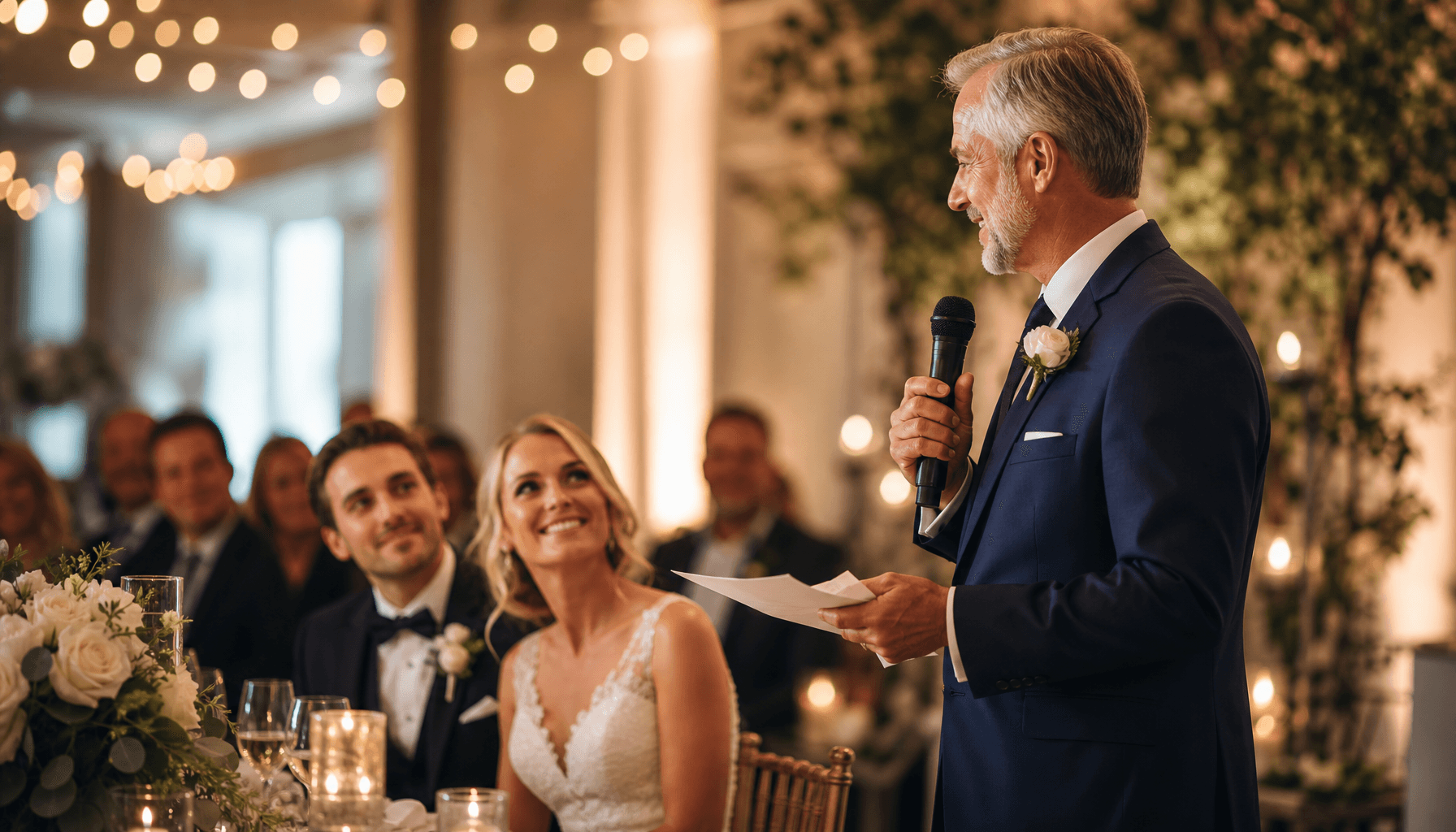
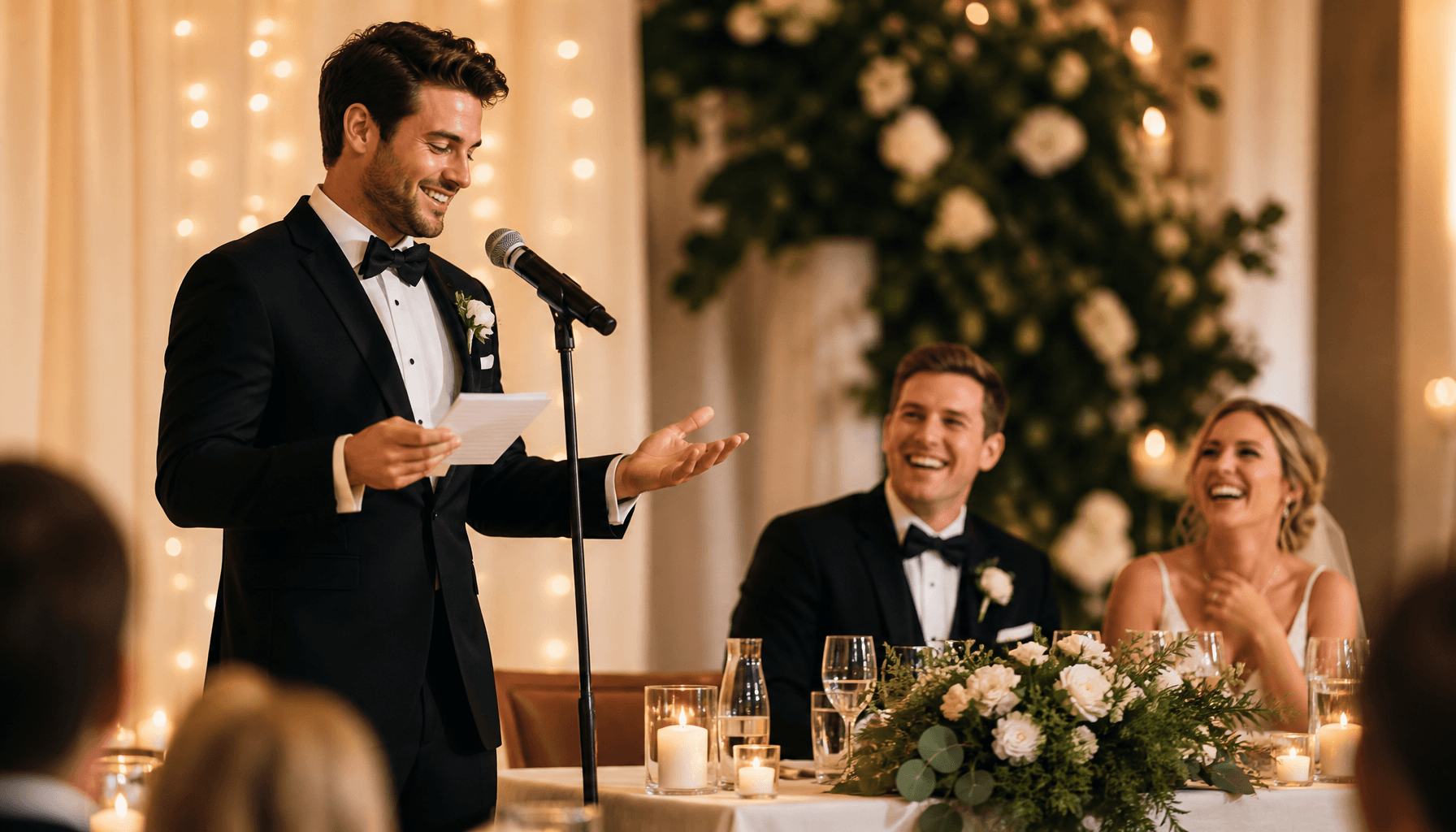
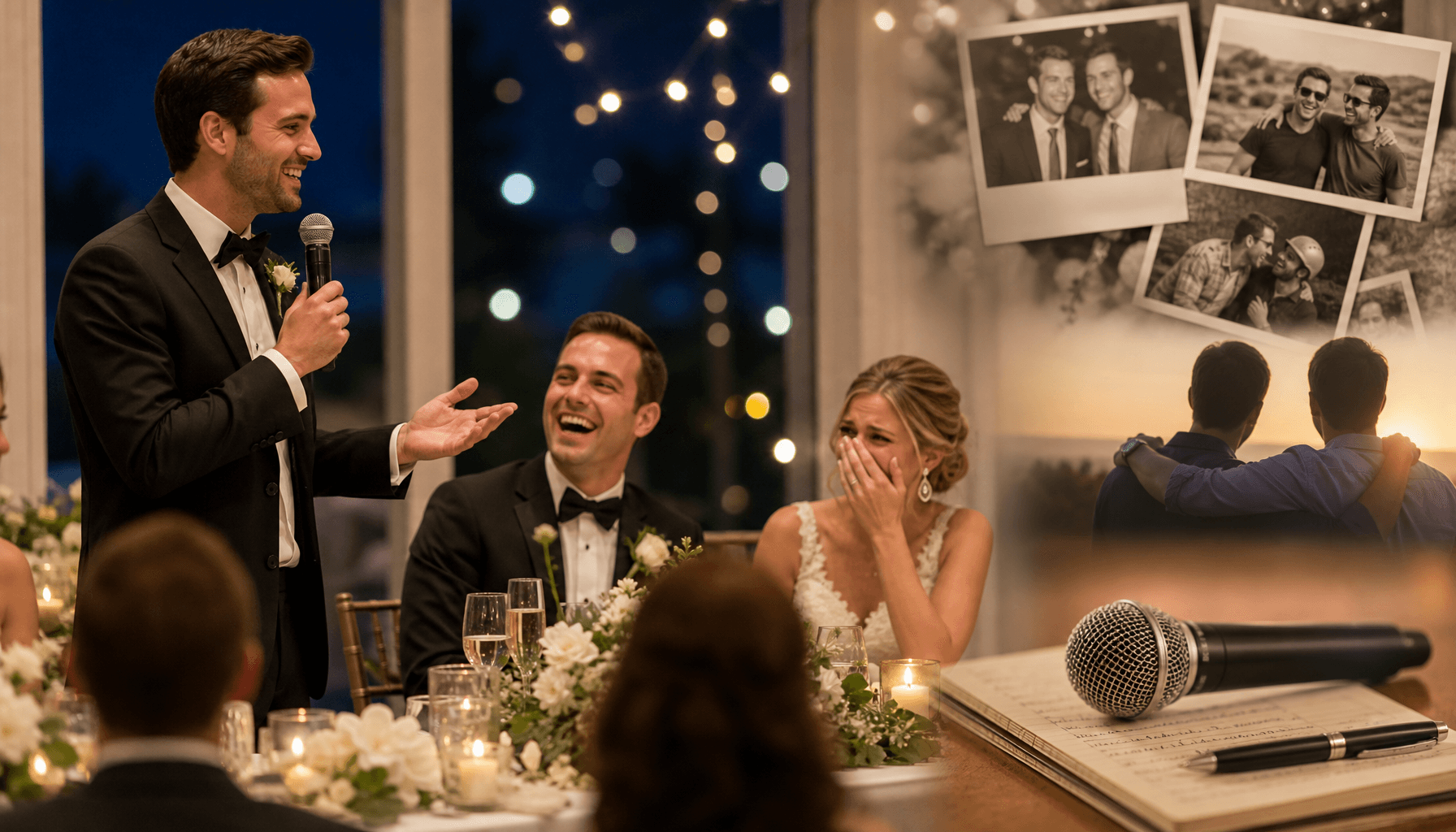
So, you've been asked to give a wedding speech. Congratulations! It's an honor, a privilege, and... a potential source of major stress. Staring at a blank page, wondering how to encapsulate years of friendship, love, and inside jokes into a coherent and entertaining few minutes can feel daunting. But fear not! This comprehensive guide will take you from that dreaded blank page to delivering a speech that earns you a standing ovation (or at least a hearty round of applause).
If you want help turning your ideas into polished wording, ToastPal guides you through a few questions and delivers editable wedding speech drafts in minutes.
Wedding speeches are a crucial part of the celebration. They provide personal anecdotes, heartfelt wishes, and moments of levity, contributing significantly to the overall atmosphere of joy and love. According to a survey by WeddingWire, 78% of guests rate speeches as one of the most memorable parts of a wedding. This means your words have the power to truly impact the couple and their loved ones. The key is preparation, structure, and a healthy dose of sincerity. This step-by-step guide will equip you with the tools and techniques to craft and deliver a wedding speech that’s both memorable and meaningful.
1. Brainstorming and Gathering Your Thoughts: Laying the Foundation for a Great Wedding Speech
Before you even think about writing full sentences, take some time to brainstorm. Think about your relationship with the couple (or the specific person you're addressing – bride, groom, etc.). Consider:
- How you met: A funny or heartwarming story about the first time you met the bride/groom.
- Shared experiences: Memorable adventures, funny mishaps, or significant milestones you've shared.
- Their best qualities: What makes the bride/groom special? What do you admire most about them?
- Their relationship: How have you seen their relationship evolve? What makes them a great couple?
- Funny anecdotes: Keep it tasteful! Embarrassing childhood stories are generally off-limits, but a lighthearted anecdote can add humor.
- Inside jokes: Use sparingly! Ensure most of the audience will understand the reference.
Write down everything that comes to mind, no matter how silly or insignificant it may seem. This is your raw material. Don't worry about structure or eloquence at this stage; just get your ideas down on paper (or in a document).
Actionable Tip: Dedicate at least an hour to brainstorming. Find a quiet place where you won't be interrupted. Consider using mind-mapping techniques to visually organize your thoughts.
2. Structuring Your Wedding Speech: Building a Compelling Narrative
Once you have a collection of ideas, it's time to structure your speech. A typical wedding speech follows a familiar but effective format:
- Introduction:
- Thank the hosts: Express your gratitude to the parents of the bride and groom for hosting the wedding.
- Introduce yourself: Briefly state your name and your relationship to the couple. (e.g., "Hi everyone, I'm John, and I'm the groom's best friend from college.")
- Compliment the couple: Offer a sincere compliment to the bride and groom. "Don’t they look fantastic?"
- The Body:
- Anecdotes and Stories: Share 2-3 well-chosen anecdotes that highlight your relationship with the bride/groom and/or their relationship as a couple.
- Personal Reflections: Share your thoughts on the couple. Speak from the heart and be genuine.
- The Toast:
- Well Wishes: Offer your best wishes for their future happiness.
- The Toast: Raise your glass and propose a toast to the bride and groom. "To [Bride's Name] and [Groom's Name]! May your life together be filled with joy, laughter, and endless love!"
Example: "For those of you who don't know me, I'm Sarah, and I've been friends with Emily since we were kids. I remember when Emily first told me about David... she was practically glowing. And seeing them together now, it's clear why. They bring out the best in each other."
Actionable Tip: Create an outline of your speech, filling in each section with the ideas you brainstormed. This will help you stay organized and focused.
3. Writing and Refining Your Wedding Speech: Crafting the Perfect Words
Now it's time to flesh out your outline and write your speech. Keep the following tips in mind:
- Be authentic: Write in your own voice. Don't try to be someone you're not.
- Keep it concise: Aim for a speech that's 3-5 minutes long. No one wants to listen to a rambling monologue. According to studies, the ideal speech length is between 500 and 750 words.
- Use humor sparingly: A little humor can be great, but avoid jokes that are offensive, embarrassing, or too obscure. Self-deprecating humor can often be a safe bet.
- Practice, practice, practice: Read your speech aloud several times. This will help you identify any awkward phrasing or pacing issues.
- Get feedback: Ask a trusted friend or family member to read your speech and provide feedback.
Actionable Tip: Record yourself reading your speech and listen back. This can help you identify areas where you need to improve your delivery.
4. Delivery Tips: Commanding the Room and Connecting with the Audience
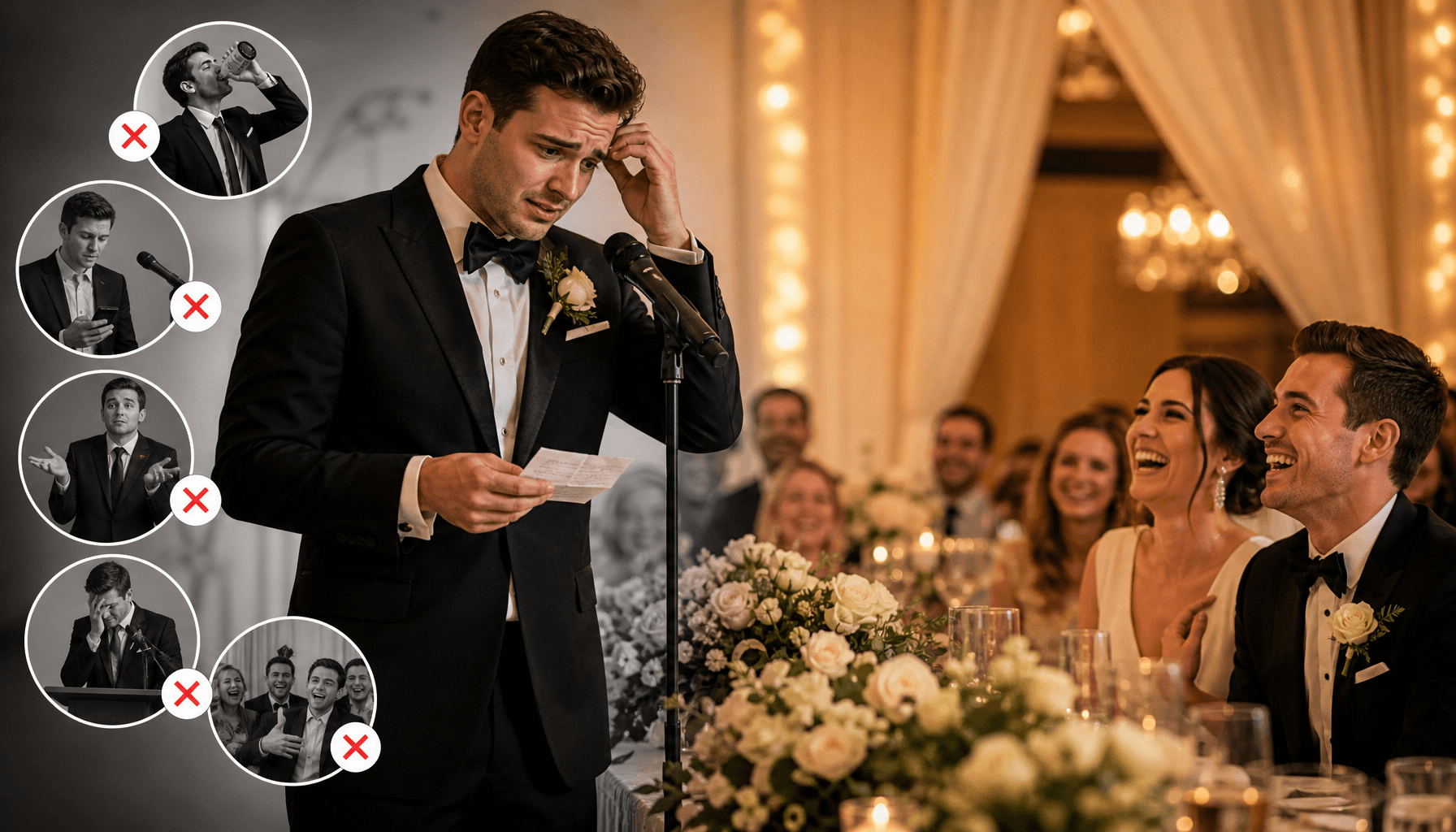
Writing a great speech is only half the battle. Delivering it effectively is just as important. Here are some tips to help you command the room and connect with the audience:
- Make eye contact: Connect with the bride and groom, as well as other guests.
- Speak clearly and slowly: Enunciate your words and avoid rushing.
- Use pauses effectively: Pauses can add emphasis and allow the audience to absorb what you're saying.
- Smile and be genuine: Let your personality shine through.
- Hold your notes: Don't try to memorize your entire speech. Having notes will help you stay on track and avoid getting flustered.
- Most importantly, enjoy yourself! Remember, you're there to celebrate the happy couple. Relax, have fun, and let your love and support shine through.
Actionable Tip: Practice your speech in front of a mirror or with a small group of friends. This will help you build confidence and feel more comfortable on the big day.
5. Dealing with Nerves: Keeping Calm and Confident
It's perfectly normal to feel nervous before giving a wedding speech. Here are a few techniques to help you manage your anxiety:
- Deep breathing: Take a few deep breaths before you start speaking. This can help you calm your nerves and relax your body.
- Visualize success: Imagine yourself delivering a fantastic speech and receiving a warm reception.
- Remember your purpose: Focus on the happy couple and the joy of the occasion.
- It's okay to be imperfect: Don't put too much pressure on yourself to be perfect. The most important thing is to be sincere and heartfelt.
Actionable Tip: Arrive at the wedding venue early and familiarize yourself with the surroundings. This can help you feel more comfortable and less anxious.
Conclusion: Your Standing Ovation Awaits
Writing and delivering a wedding speech might seem intimidating, but with the right preparation and approach, it can be a truly rewarding experience. By brainstorming effectively, structuring your speech logically, writing with sincerity, and practicing your delivery, you can craft a speech that will be remembered for years to come. Remember to focus on the happy couple, speak from the heart, and enjoy the moment. Now go out there and give a speech that earns you that standing ovation! Good luck with your wedding speech!