How to Write Wedding Vows as a Private Couple: Altar Promises vs. Private Letters
How to Write Wedding Vows as a Private Couple: What to Say at the Altar and What to Save for a Letter
You can want a deeply personal wedding ceremony without wanting your entire relationship on a microphone. Maybe your favorite memories need too much explanation. Maybe your love story includes difficult chapters. Or maybe saying something tender in front of everyone you know simply feels different from saying it across the kitchen table.
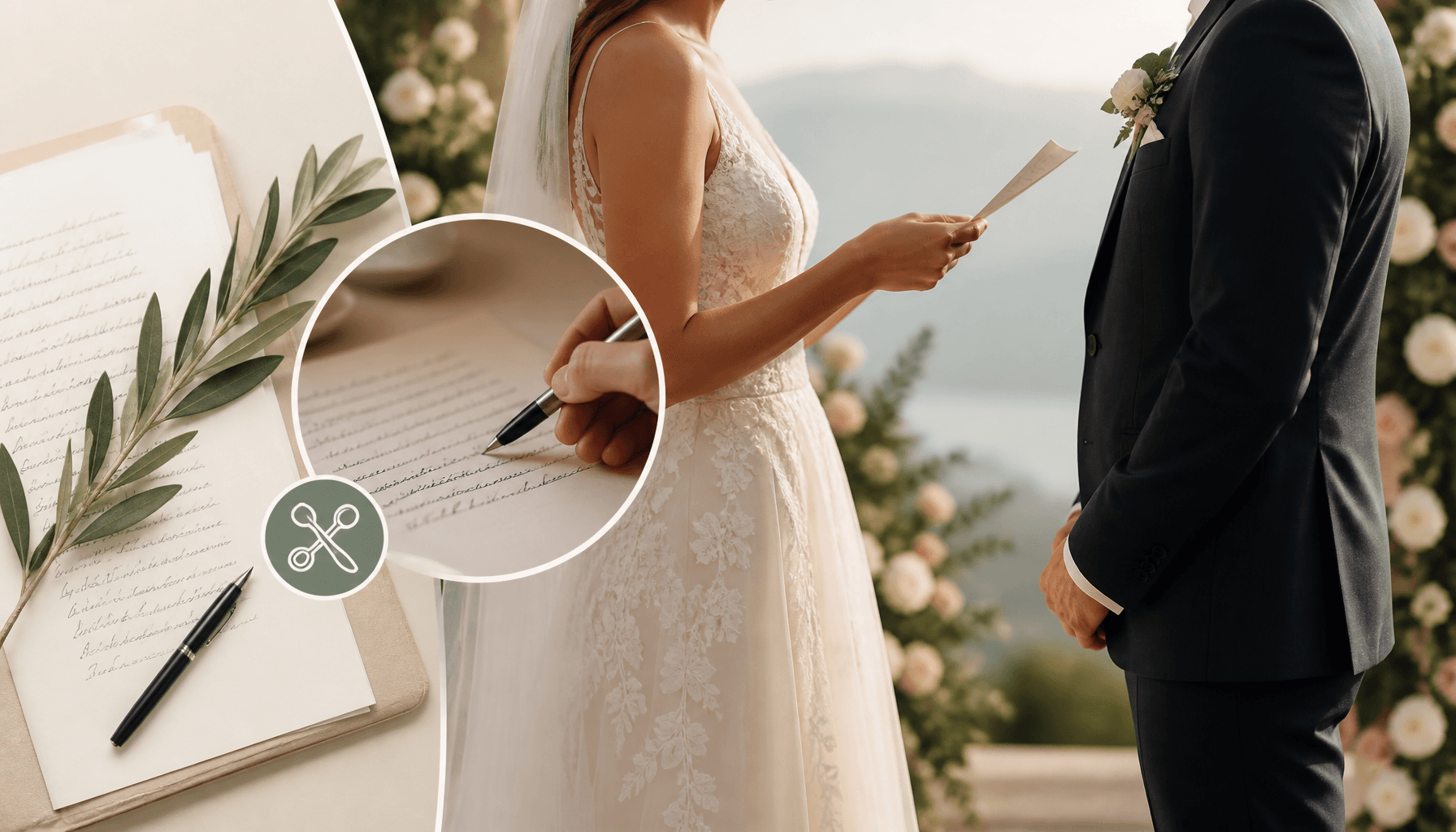
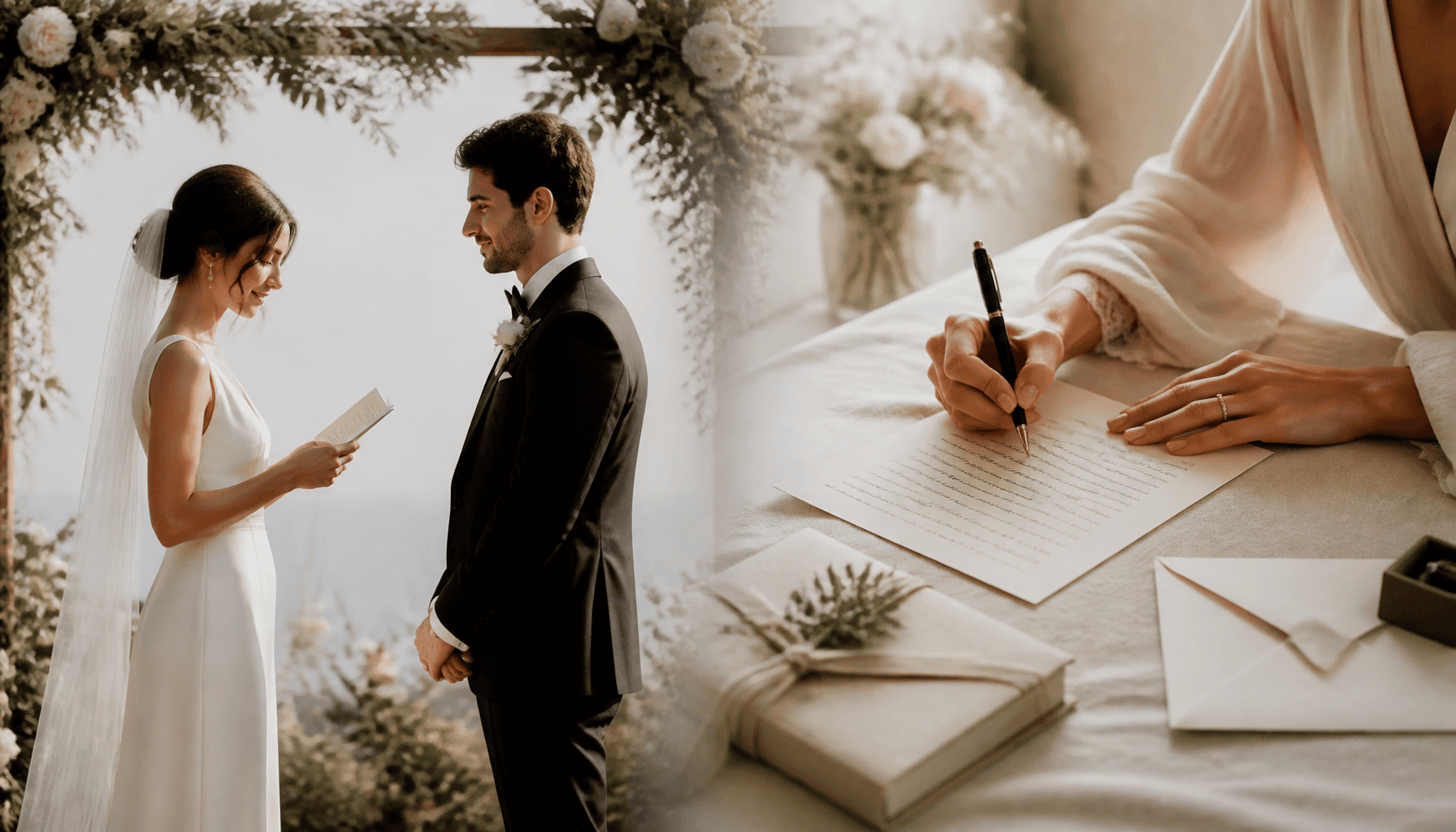
Learning how to write wedding vows as a private couple starts with separating sincerity from disclosure. Your guests do not need every detail to understand the commitment you are making. Think of your altar vows as the promises you want witnessed and your private letter as the story behind those promises. Both can be intimate; they just have different audiences.
1. Agree on Privacy Boundaries Before You Write
Before drafting separately, have a short conversation about what belongs in the ceremony. You do not need to exchange your actual vows. Agree on the boundaries, tone, and approximate length so neither person feels unexpectedly exposed.
Sort possible material into three categories:
- Altar-safe: Qualities you admire, everyday rituals, shared values, and promises you are comfortable making publicly.
- Letter-only: Personal turning points, meaningful insecurities, affectionate details, or memories that feel better shared one-to-one.
- Ask first or leave out: Health information, family conflict, sexual details, financial struggles, and stories involving someone else’s privacy.
A private letter is not automatic permission to revisit every painful experience. When a subject feels sensitive, ask: “Would you like me to include what that season meant to me, or would you rather I focus on our future?”
Also define what “private” means on your wedding day. A letter read during a first look may still be recorded by a videographer. If certain words are only for your partner, arrange an unrecorded moment or give them the letter to read alone.
Finally, check ceremony requirements with your officiant. Personal vows may sit alongside required wording, and some religious ceremonies have restrictions. Knowing the format early prevents a last-minute rewrite.
2. Build Altar Vows Around Qualities, Small Details, and Promises
For private wedding vows spoken publicly, use a simple structure: what you love, how it appears in everyday life, and what you promise in return. This gives your words substance without requiring a revealing relationship history.
Agree on a similar speaking length rather than matching word counts exactly. Around one to two minutes each can work well, depending on the ceremony. Read your draft aloud to measure it; pauses and emotion change the timing.
Choose one ordinary detail that shows your partner’s character. “You put the kettle on before asking what’s wrong” says more than “You’re always supportive,” without explaining what went wrong.
Then write two or three promises you can actually practice:
- Instead of: “I promise we’ll never argue.” Try: “I promise to listen without preparing my defense, and to return to difficult conversations with kindness.”
- Instead of: “I’ll always make you happy.” Try: “I promise to make room for your joy and stay close when happiness feels far away.”
- Instead of: “You saved me during my worst year.” Try: “You have shown me what steady love looks like. I promise to offer you that same steadiness.”
Here is a compact public wedding vow example you can adapt:
“Sam, I love the care you bring to ordinary things: remembering what matters to people, making room at the table, and asking the second question instead of accepting ‘I’m fine.’ Life with you feels thoughtful, funny, and genuinely ours. I promise to notice your efforts, not just the results. I promise to speak honestly and listen with patience, especially when we disagree. I will protect time for us when the calendar gets crowded, and keep making room for the people we become. Today, in front of the people we love, I choose you as my partner and promise to keep building this life with you.”
The specificity comes from recognizable behavior, not private revelations. That is what makes the vows personal rather than generic.
3. Use the Private Letter for the Story Behind the Promise
Your wedding-day letter does not need to be a longer version of your vows. Give it a different job: explain something your partner deserves to hear without managing an audience’s reaction.
Build it around three prompts: “I remember…,” “What you may not know…,” and “What I want you to carry into today…” These invite reflection rather than another list of commitments.
For example, an altar promise might be: “I promise to make space for your dreams, even when they change our plans.” The letter can explain why:
“I still think about the night I admitted I wanted to change careers. I had rehearsed all the reasons it was impractical. You moved the dishes aside and asked what I would try if I wasn’t embarrassed to begin again. What you may not know is that your curiosity mattered more than any reassurance could have. I felt taken seriously before I had anything figured out. Before we get married today, I want you to know that I remember that kindness, and I want you to feel just as free to grow beside me.”
A letter can hold tenderness, gratitude, or a joke nobody else would understand. It does not have to contain a dramatic confession to justify being private.
Agree on when to exchange letters. If reading one might leave your partner overwhelmed immediately before the ceremony, choose a quiet breakfast or a moment after the celebrations instead.
4. Edit for Comfort and Rehearse for the Actual Room
Once both pieces exist, review them separately. Your public vows should stand alone; guests should not feel they have missed essential context. Your letter should feel like a gift, not the explanation required to understand the ceremony.
If you are stuck translating a meaningful memory into a public promise, ToastPal can help you explore wording. Keep only language you would genuinely say, and leave sensitive background out of your drafting inputs.
- Run the microphone test: Imagine each sentence being heard by every guest. If one makes you tense because of its content, move it to the letter or rewrite it.
- Remove unexplained references: Replace “After everything that happened in March” with the quality you want to honor: “I trust the way we face uncertainty together.”
- Check emotional balance: Keep at least as much attention on your future commitments as on praise and memories. These are vows, not only a tribute.
- Mark breathing spaces: Print in a readable size, separate each promise, and pause after saying your partner’s name. Practice from the page you will actually hold.
You do not need to perform for the room. Look at your partner when you can, read when you need to, and let a pause remain a pause.
5. Keep the Commitment Public and the Context Yours
Writing wedding vows as a private couple is not about making your words less meaningful. It is about choosing where each kind of meaning belongs. Agree on boundaries, use small details to make your altar promises recognizable, and save deeper context for a letter. Your guests can witness a sincere commitment without knowing every chapter that brought you there.