Maid of Honor Speeches: Balancing Humor and Heart
The Perfect Blend: Balancing Humor and Sentiment in Maid of Honor Speeches
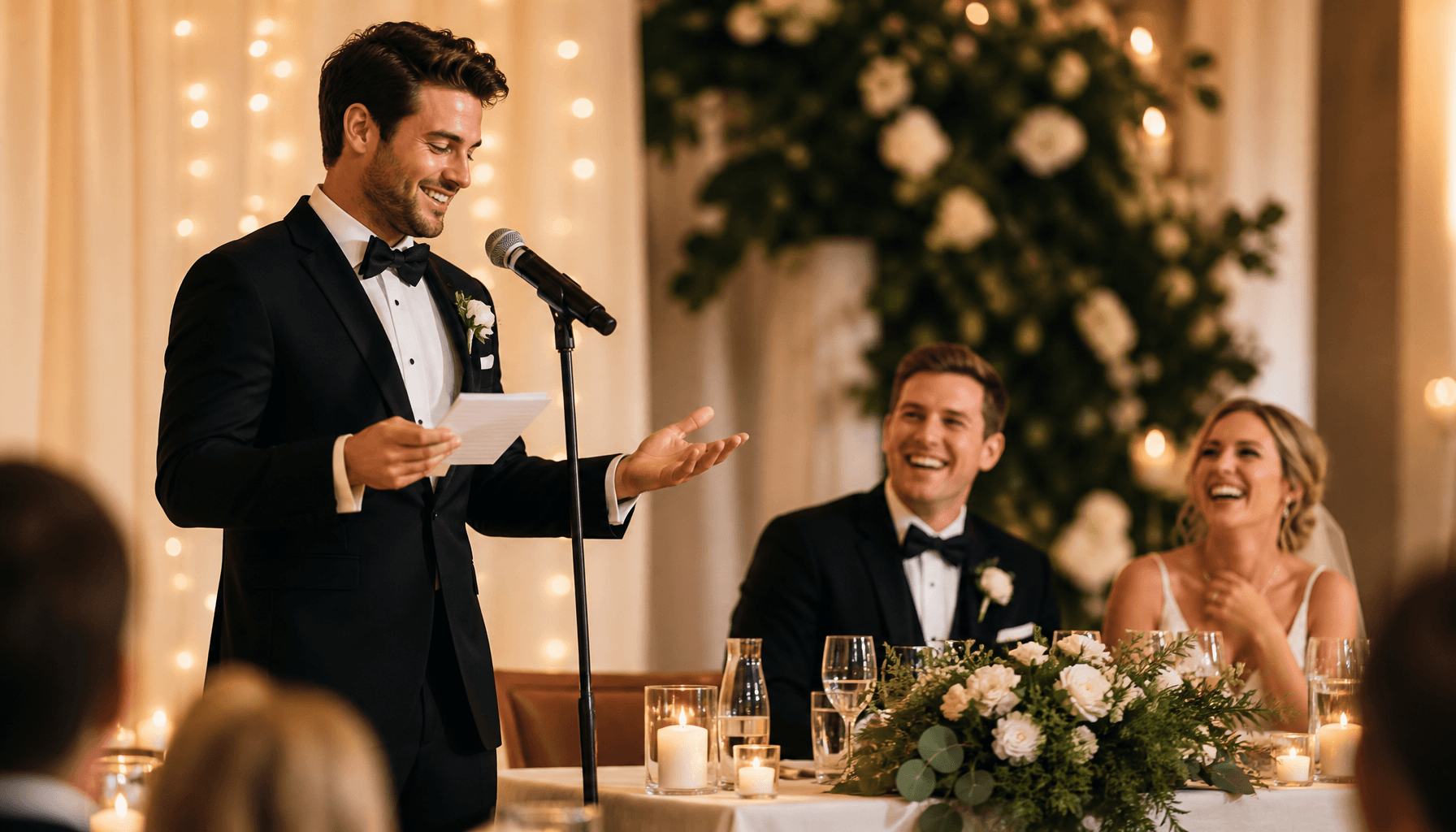
Being asked to be the maid of honor is a role defined by dualities. It is equal parts "I am so incredibly honored" and "Oh no, they are going to give me a microphone." You are standing up for one of your favorite people on one of the most significant days of her life. You are doing this in front of a room that likely includes her coworkers, his childhood friends, your mutual college crew, and at least one relative who will remember every single word you say for the next two decades.
That is a significant amount of pressure for a few minutes of speaking.
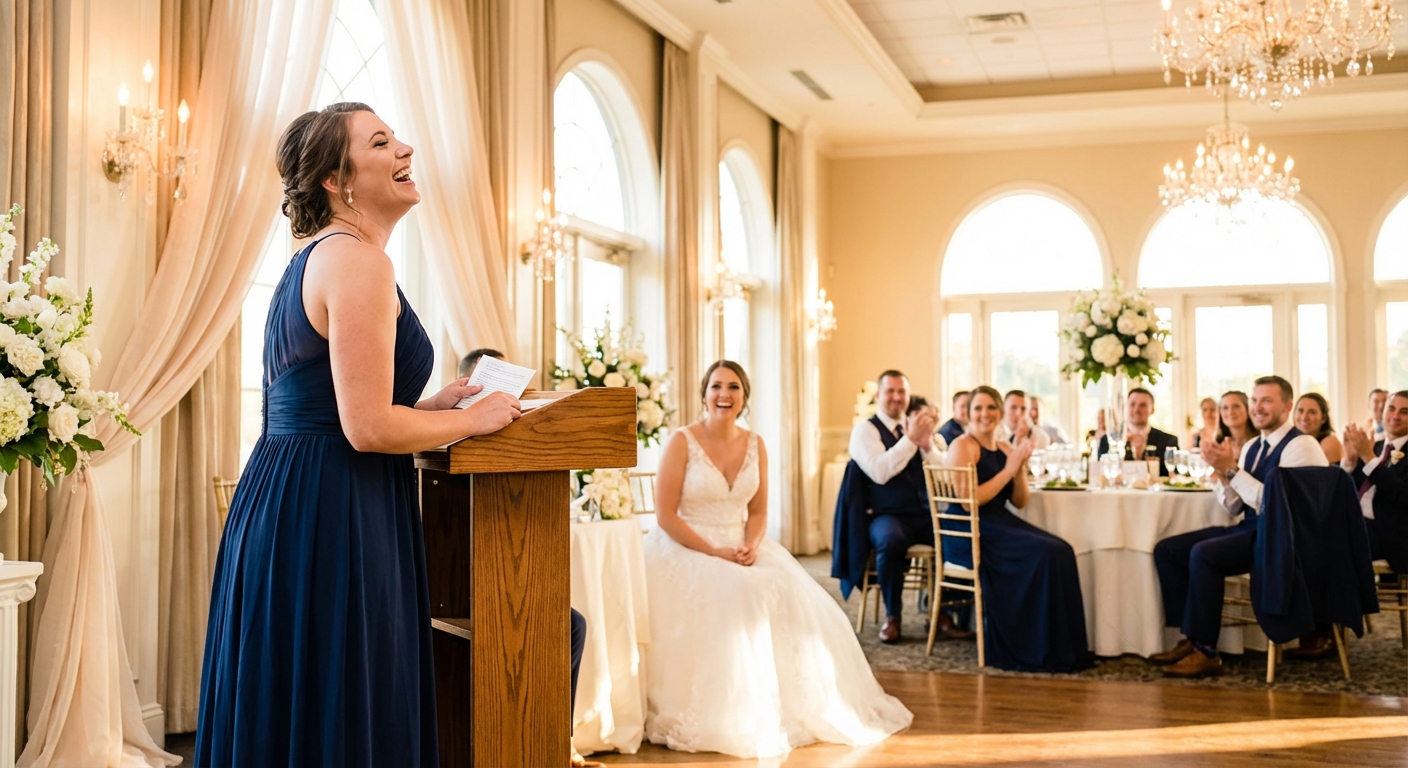
The good news is that you do not have to be a professional comedian, a poet, or the world's most confident public speaker to give a speech that lands beautifully. You just need a plan that balances two things guests actually want: laughter and heart.
It really does matter. A survey shared by Great Speech Writing found that more than 50% of guests said speeches are the most memorable part of the day, and 95% said speeches are the main talking point after a wedding. That is not meant to scare you. It is to remind you that this moment is worth doing thoughtfully because it is one of the few times you get to publicly honor your relationship with the bride.
The most common struggle with maid of honor speeches is swinging too hard into one of two extremes. There is "roast mode," where you try so hard to be funny that the speech turns sharp, awkward, or a little too specific to your friend group. Then there is "sob story mode," where you try so hard to be heartfelt that it becomes long, overly intense, or unintentionally uncomfortable for a party atmosphere.
This post gives you a practical roadmap to do what the best speeches do naturally. You will learn to make the room feel included, make the bride feel seen, and make the couple feel celebrated. If you want a shortcut that helps organize your stories and tone into a polished draft, ToastPal can do a lot of the heavy lifting in minutes while still keeping your unique voice at the center.
Why the Best Maid of Honor Speeches Need Both Laughs and Tears
If you have ever been at a wedding where the speeches felt endless, it usually was not because the speaker had nothing nice to say. It was because the emotional note stayed the same for too long. A speech that is only funny can start to feel like a stand-up set where the couple is just a prop. A speech that is only sentimental can feel like a diary entry read out loud. That can be beautiful in small doses but tough for a room full of people who came ready to celebrate.
The Psychology of Engagement
People pay attention when you take them somewhere. A gentle shift from light to meaningful creates momentum, and momentum is what keeps guests listening even if they do not know you well. Think of your speech like a song that changes tempo rather than a single note held for five minutes.
There is actual science behind this. When we experience humor, our brains release dopamine and oxytocin. These are the chemicals responsible for bonding and trust. Stanford Graduate School of Business notes in their research on humor in communication that humor can increase social bonding, trust, attention, and recall. That means a warm and appropriate joke early on does something powerful. It makes the room feel like they are with you rather than evaluating you.
Humor Builds Connection
If you are nervous, humor helps you too. Laughter gives you a breath, a reset, and proof that the crowd is on your side. It lowers the audience's defenses and makes them receptive to the emotional parts later.
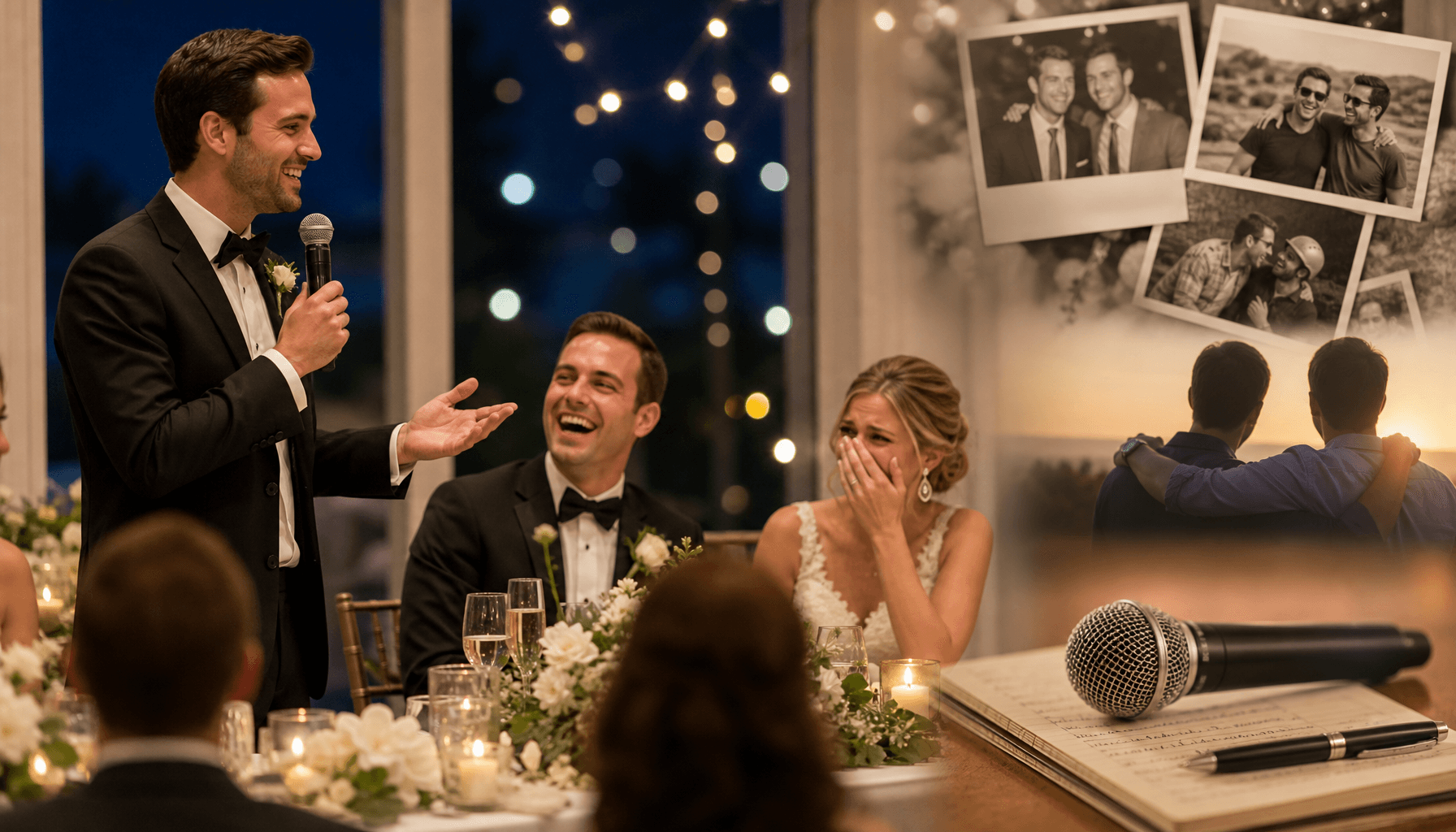
However, humor without heart feels hollow. Without heartfelt meaning, jokes can feel disposable. With heartfelt meaning, jokes become part of a story about who the bride is, how she loves, and why the couple works. The sweet spot is when the humor supports the sentiment. The joke gets the room smiling, then the meaning makes them care.
The Rollercoaster Effect
You do not need dramatic swings. The best speeches tend to follow a gentle emotional rollercoaster. You start with a smile. You build to a laugh. You settle into a meaningful story. You pull in the partner and the relationship. Finally, you end with warmth, hope, and celebration. That structure is how you create a speech that feels both fun and deeply personal.
The "Inside Joke" Trap: How to Be Funny Without Alienating the Room
Inside jokes are tempting because they are real. They are part of your friendship, and they are often genuinely funny to you and the bride. The problem is that a speech is not a private conversation. It is a shared moment for everyone.
An inside joke in a wedding speech usually looks like this: "Remember Cancun, the pineapple, and the hotel lobby at 2 a.m.? I still can’t believe you said that to the concierge!"
The bride might cry laughing. You might feel like you nailed it. But everyone else is thinking, "Wait, what happened in Cancun? Why a pineapple? Should I be laughing? Am I missing something?"
Why Inside Jokes Fail
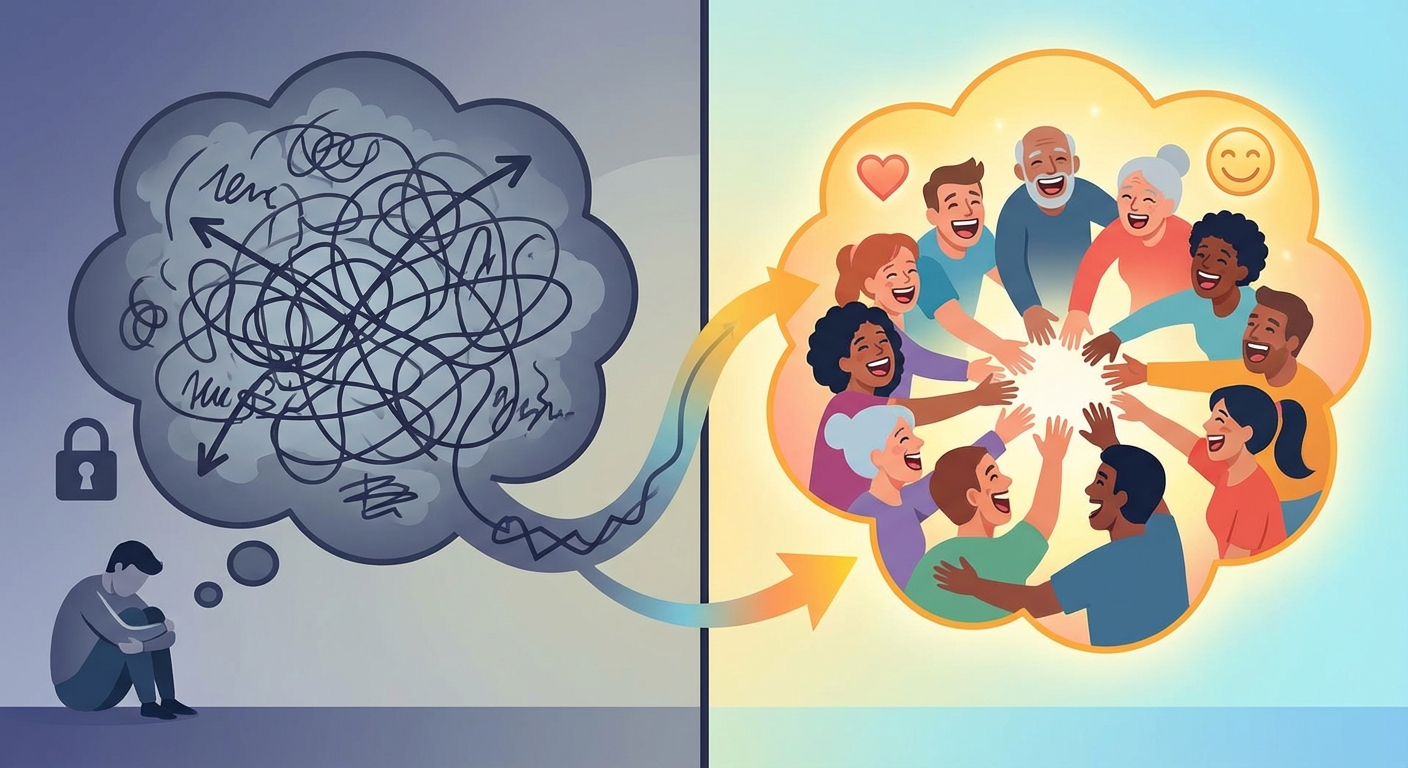
Inside jokes create a "you had to be there" wall. A wall is the opposite of what a wedding toast is supposed to do. Your job is to unite the room around the couple, not split the room into those who get it and those who don't.
When a speech leans on inside jokes, guests feel excluded. Exclusion leads to disengagement. People stop listening closely because they assume the rest won't apply to them. The bride's laughter becomes isolated rather than shared. The moment becomes about your bond with her rather than her bond with her partner.
Importantly, inside jokes can accidentally turn into reputational landmines. A story that feels harmless within your friend group can sound chaotic, inappropriate, or confusing in a room that includes parents, grandparents, and work colleagues.
The Context Rule
If a story needs more than two sentences of explanation for the audience to understand why it is funny, it is not speech material. It is friend-group material. Try this filter. Can I set up the situation in one sentence? Can I deliver the punchline in one sentence? Can the audience laugh without needing additional lore? If not, either cut it or convert it.
Convert to Universal Themes
You do not have to throw your funniest memories away. You just have to translate them into something the whole room can enjoy. Instead of referencing the "Cancun pineapple lobby night," try a different approach.
"One of my favorite things about the bride is that she is equal parts adventurous and unshakeable. She is the kind of person who can turn a travel mishap into a story that makes you laugh for years, and then still be the first one up the next morning ready for breakfast like nothing happened."
Now everyone gets it. The bride still recognizes the memory. The room understands the trait. This is the golden move. Pivot from details to meaning. Detail is exclusive, but meaning is inclusive.
The Grandma Test
Before you keep a joke, ask yourself if the bride's grandmother would understand the punchline and find it charming. If the answer is no, it is either too niche or too risky. That does not mean you have to be overly formal. It just means your humor should be shared humor.
Structuring Your Speech: The "ToastPal Sandwich" Method
When people freeze writing speeches, it is rarely because they do not love the bride. It is because they do not know what goes where. A simple structure takes away 80% of the stress. Here is a format that keeps you balanced, keeps the room engaged, and makes it easy to edit down to the ideal length.
Layer 1: The Icebreaker
Your goal in the first 20 to 30 seconds is not to be hilarious. It is to be comfortable and inviting. Introduce yourself and your connection to the bride. Say one light line that relaxes the room. Signal warmth rather than chaos.
Example openers are easy and audience-safe. "Hi everyone, I am Sarah. I have had the joy of being the bride's best friend for ten years. I promised myself I wouldn't cry today, which was a bold plan right up until I saw her walk down the aisle."
This works because it includes the audience. It does not require private context, and it earns you attention.
Layer 2: The Meat
Pick one story, not five. One story gives your speech focus and keeps it within three to five minutes. Choose an anecdote that illustrates a trait the room can admire. Look for loyalty, courage, generosity, or humor under pressure. Then connect that trait to her relationship.
A simple story arc involves the bride in her element as a friend or human being. Explain what that taught you about her. Describe how you have seen that trait show up in her relationship. Explain why that makes you excited for their marriage.
For example, "I have always known she is the person who shows up. When I needed help moving, she was there. It wasn't dramatic; it was just her being her. And when I met her partner, it hit me. She found someone who doesn't just benefit from that kind of love but matches it." That is sentiment without being overly heavy.
Layer 3: The Garnish
This is the part people forget, and it is where the room leans in. Speak directly to the partner for two or three lines. Welcome them. Appreciate them.
"To the groom, thank you for loving her the way she deserves. Thank you for making her laugh, for being steady, and for making her feel safe to be fully herself."
These lines land because they are generous and specific rather than generic.
Layer 4: The Toast
Your closing should be short, upbeat, and easy for guests to follow. Ask everyone to raise a glass. "To love, to friendship, and to the two people who make it look easy. Cheers to the newlyweds."
If the couple wrote their own vows, it can help to echo their tone so the emotional vibe of the day feels consistent. That is why skimming what kind of mood they want from their ceremony can help. It is also why couples often use tools like ToastPal vows to get their wording exactly right.
Actionable Tips for Injecting Humor (That Isn't Cringe)
A funny speech does not require big jokes. It requires warmth, timing, and the right targets.
Self-Deprecation is Safe
If you want a laugh without risking awkwardness, make yourself the punchline gently. "I wrote this speech the way I do most important things in my life: with a lot of love and a tiny bit of panic." It is relatable, lowers the stakes, and does not embarrass anyone else.
Observational Humor
Wedding humor that everyone understands works well. You can joke about how emotional the day is, how fast it is moving, or how many tissues are being used. "Weddings are magical because you get to watch two people commit to each other forever, and also because you realize waterproof mascara is a real investment."
The Roast Limit
A toast is not a roast. The audience is not there to hear the bride dragged, even if she would laugh privately. A good rule is to tease only things the bride would proudly own. Safe teasing targets include her love of planning, her competitiveness in board games, or her obsession with a TV show.
Risky targets include anything that suggests she was messy, reckless, or untrustworthy. Avoid stories involving heavy partying or anything that makes the partner look like a consolation prize. If you are unsure, cut it.
Avoid Classic Mistakes
A lot of awkward moments are predictable. People accidentally make it too long, too personal, too inappropriate, or too focused on themselves. If your humor is kind, brief, and couple-centered, you avoid most of those issues automatically.
Pivoting to Sentiment: How to Make Them Cry (Happy Tears)
The emotional part of maid of honor speeches does not need to be dramatic to be powerful. It needs to be honest and specific.
Authenticity Beats Clichés
Guests can sense when you are borrowing lines that do not sound like you. Skip anything that feels like it came from a generic quote list. Instead of saying "You light up every room," try specific language. "You are the friend who notices when someone is being left out and fixes it without making it a big deal."
Show, Don't Tell
Do not just say "she is kind." Show it. "When I called her crying at 11 p.m., she didn't just text me back. She got in her car, showed up, and sat with me until I could breathe again." That one image does more than ten adjectives.
Highlight Her Qualities
A common trap is telling a story where you are the main character and the bride is a supporting actor. Better yet, pick a moment where the bride's qualities are the spotlight. Your job is to frame it and then step back. If you say "I" more than "she" in the emotional section, revise.
Bring the Partner In
The room wants to see the couple, not only the friendship. Lines that land well acknowledge the relationship. "The version of her that I have seen with you is even more herself." This is how you honor the relationship without sounding like you are giving a speech at the ceremony.
If you want examples that feel sentimental without being cheesy, the maid of honor speech flow inside ToastPal is built around prompts that pull out those kinds of truths and shape them into a structure that makes sense out loud.
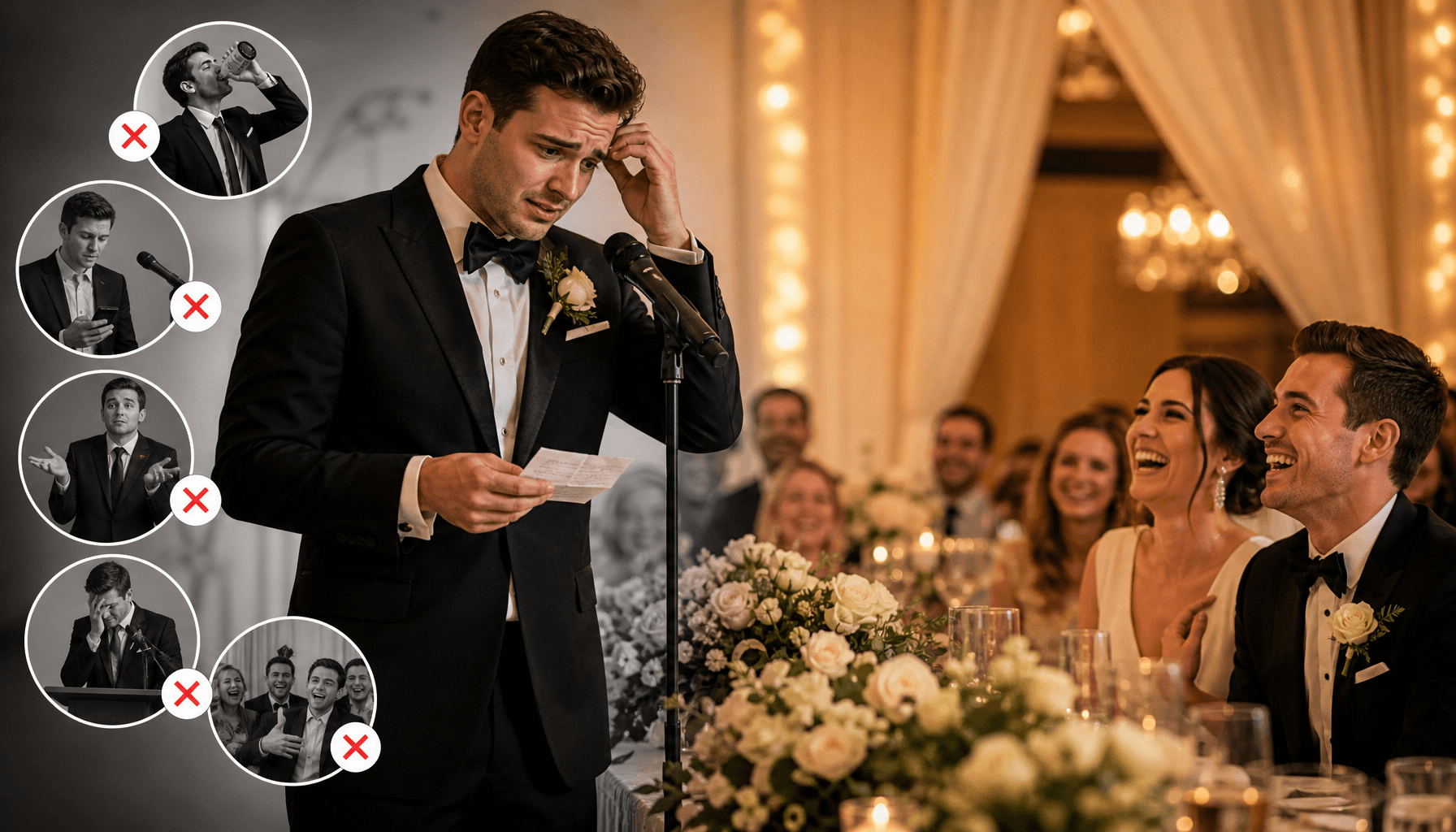
Common Pitfalls to Avoid: What NOT to Include
You can have the sweetest intentions and still accidentally create an awkward moment. Here are the pitfalls that show up most often.
Too Long
Aim for three to five minutes. That typically means about 450 to 750 words, depending on your pace. After five minutes, guests start thinking about food, the bar, and whether they are supposed to laugh again. Long speeches often become repetitive even when they are lovely. If you wrote a long draft, cut extra stories and repeated compliments. Keep one story and your best lines.
Drinking Beforehand
The "liquid courage" myth is dangerous. One drink can feel calming. Two can speed up your speech. Three can blur your judgment and volume control. If you are anxious, try a few deep breaths or a glass of water. Save the celebratory drink for after the toast. Your future self will be grateful.
Reading From Your Phone
Phones are convenient, but they encourage scrolling and shine an unflattering light in photos. They also make you more likely to lose your place. Try cue cards or a small printed sheet. You do not have to memorize. You just want to look up often enough to connect with the room.
The "Me" Show
This is the big one. Your friendship matters, but the wedding is not a tribute to your friendship. It is a tribute to the couple. Keep your speech centered on who the bride is, who the partner is, and what they are building together. A useful ratio is 60% bride, 30% couple, and 10% you.
Edgy Humor
Even if the bride would laugh, you do not want to create a moment where her parents or in-laws freeze. Avoid exes, past hookups, and "I never thought she'd settle down" jokes. Your goal is a laugh that feels affectionate rather than nervous.
Skipping the Welcome
A speech that never acknowledges the partner can feel oddly incomplete. It feels like a best friend giving a speech at a birthday party. You do not have to claim to know them perfectly. A few sincere lines go a long way.
Still Stuck? How AI Can Help You Find Your Voice
If you are feeling behind, overwhelmed, or simply not sure how to turn a lifetime of friendship into a few minutes of speaking, you are not alone. Public speaking anxiety is extremely common. Brides notes that about 75% of people name public speaking as a major fear in their maid of honor toast tips coverage. That fear does not mean you cannot give a great speech. It just means you are human.
This is where AI can be genuinely helpful. It is not a replacement for your emotions but a way to organize them. ToastPal works by asking you simple prompts about your relationship to the bride, a few memorable moments, and the tone you want. You can choose funny, sentimental, or balanced. You can also specify what you want to avoid.
Then it turns those inputs into a structured speech draft that sounds like you. It will have a clear beginning, middle, and end. You still choose what stays in. You still edit for your voice. You still deliver it with your heart. But you are no longer staring at a blank page. You are far less likely to fall into the inside-joke trap because the structure forces clarity and inclusivity.
Before the wedding, read your speech out loud twice. Mark the lines where you want to pause for laughter or emotion. Cut anything that requires long context. Replace any vague compliment with one specific example. End with a short toast that makes guests feel good raising their glass.
If you want a faster path to a polished draft that balances humor and sentiment naturally, ToastPal is built for exactly this moment. You show up with your memories, and it helps shape them into a speech you will feel proud to give.
FAQ
-
How long should a maid of honor speech be?
Most maid of honor speeches land best at three to five minutes. That is typically enough time to share a warm opening, one meaningful story, a few funny lines, and a heartfelt toast without losing the room. Practice with a timer to ensure you are not going over.
-
Is it okay to use inside jokes in a wedding speech?
A tiny nod can be okay, but avoid jokes that require lots of context. If most guests will not understand why it is funny, they will feel left out. A good rule is to translate the inside joke into a universal trait or story that everyone can follow.
-
What is the best way to start a maid of honor speech?
Start by introducing yourself and your relationship to the bride. Then add one light and inclusive line that relaxes the room. Keep it warm and simple so guests feel oriented and ready to listen.
-
How do I balance being funny and emotional in my toast?
Use a structure. Open with light humor, tell one story with heart, connect it to the couple, then finish with a celebratory toast. Humor earns attention, sentiment creates meaning, and a clear structure keeps you from drifting too far into either extreme.
-
Should I memorize my maid of honor speech or read it?
You do not need to memorize. Reading from cue cards or a printed page is totally acceptable and often calmer than trying to recite from memory. The key is practicing out loud so you can look up and connect with the room.
-
What should I avoid saying in a maid of honor speech?
Avoid exes, private party stories, embarrassing details, harsh roasts, and anything that makes the speech more about you than the couple. Also avoid going too long or relying on inside jokes that alienate guests.