Say 'I Do' Without the 'I Don't Know': Overcoming Writer's Block When Crafting Your Wedding Vows
Say 'I Do' Without the 'I Don't Know': Overcoming Writer's Block When Crafting Your Wedding Vows
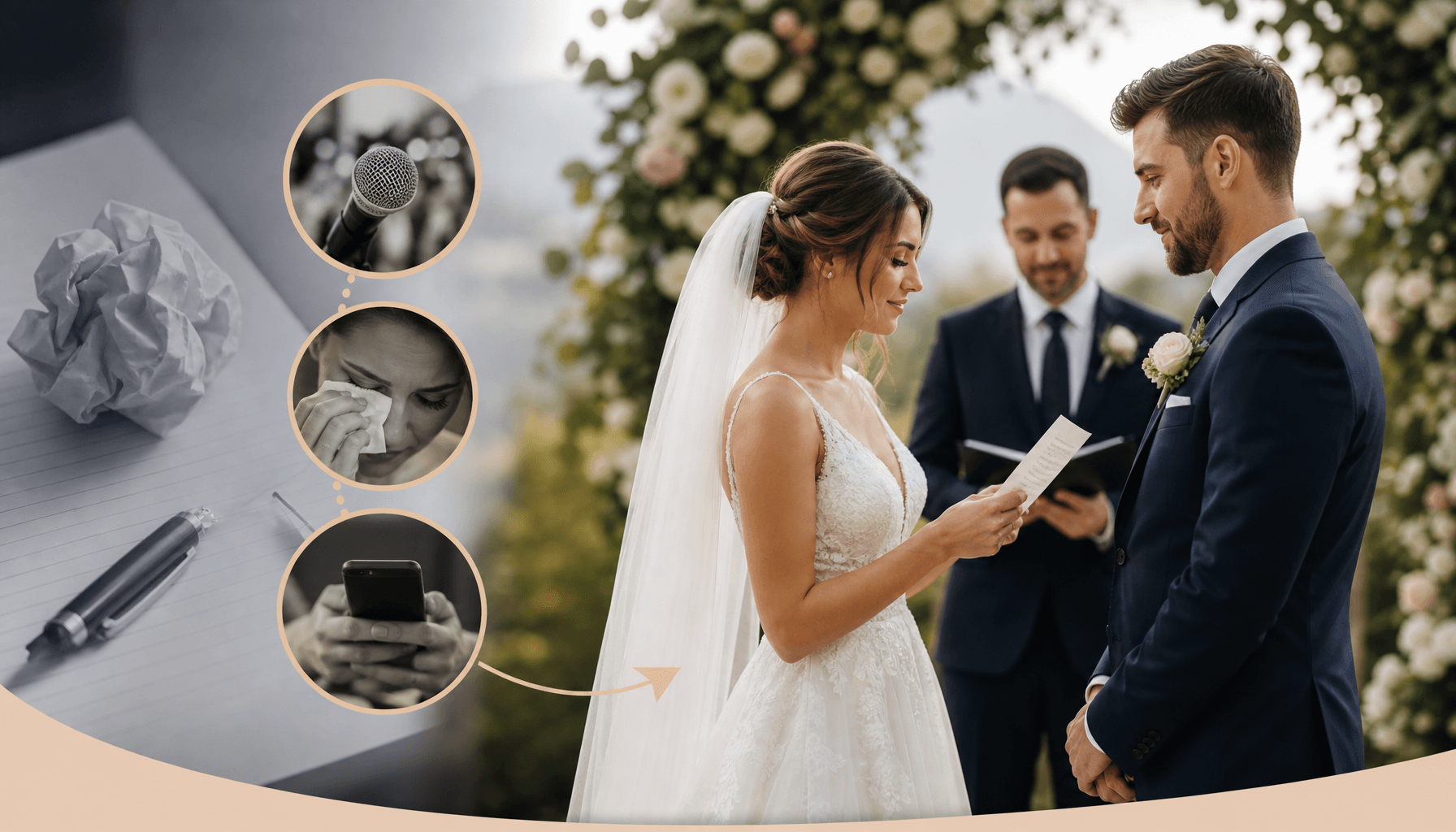
So, you're getting married! Congratulations! The champagne's flowing, the guest list is finalized, and the venue is booked. But then it hits you: you need to write your wedding vows. Suddenly, all the joy and excitement morphs into a paralyzing dread. The blank page stares back, mocking your attempts to capture the depth of your love. Writer's block has arrived to crash the wedding planning party. Don't panic! This is a common hurdle, and with the right approach, you can overcome it. This blog post is your guide to banishing that 'I don't know' feeling and crafting heartfelt, authentic wedding vows that will leave you and your partner misty-eyed at the altar.
If you want help turning your ideas into polished wording, ToastPal guides you through a few questions and delivers editable wedding vows drafts in minutes.
Why Wedding Vow Writer's Block is So Common
Wedding vows are arguably the most personal and significant part of the ceremony. Unlike other aspects of the wedding that can be delegated or outsourced, these words need to come directly from your heart. The pressure to perfectly articulate your feelings, promises, and commitment can be immense. Add to that the expectation of delivering a speech that is both eloquent and emotionally resonant, and it's no wonder writer's block sets in.
According to a recent survey by WeddingWire, approximately 60% of couples choose to write their own vows, highlighting the desire for personalization. However, many of those couples also admit to feeling overwhelmed by the process. This pressure stems from several factors:
- Fear of Vulnerability: Exposing your deepest emotions in front of a crowd can be daunting.
- Perfectionism: Wanting to create the 'perfect' vows can stifle creativity.
- Lack of Structure: Not knowing where to start or how to organize your thoughts.
- Comparison: Feeling pressured to live up to the vows you've heard in movies or at other weddings.
Recognizing these underlying causes is the first step towards overcoming writer's block and unlocking your authentic voice.
Unlocking Your Inner Wordsmith: Practical Tips to Get Started
Now that we've identified the culprits behind wedding vow writer's block, let's explore some practical strategies to get those creative juices flowing:
- Brainstorm and Reflect: Before you even think about crafting sentences, take some time for introspection. Ask yourself these questions:
- What are the qualities I admire most about my partner?
- What are my favorite memories together?
- What promises do I want to make for our future?
- What challenges have we overcome together, and what did I learn?
- What makes our love unique?
- Find Inspiration (But Don't Copy): Read poetry, listen to love songs, or re-watch your favorite romantic movie. Pay attention to the themes and language that resonate with you. However, avoid the temptation to simply copy someone else's words. Your vows should be uniquely yours. Sites like The Knot and Brides.com offer examples, but use them as a starting point, not a template.
- Talk to Your Partner: While your vows should be personal, it's helpful to have a general idea of the tone and length your partner is aiming for. Discuss any specific topics you'd like to avoid or any shared values you want to highlight. This collaborative approach can alleviate some of the pressure and ensure your vows complement each other.
- Set Realistic Expectations: Your vows don't need to be literary masterpieces. They simply need to be heartfelt and genuine. Focus on expressing your love and commitment in your own voice. Authenticity is far more powerful than eloquence.
Structuring Your Vows: A Simple Framework
A well-structured vow can help guide you and provide a roadmap. Here's a basic framework you can adapt to suit your style:
- Acknowledge Your Partner: Start by addressing your partner directly and expressing your love and appreciation.
- Share a Memory or Anecdote: Recount a special moment that illustrates your connection or highlights a quality you admire in your partner.
- Make Promises: State your commitments to each other, both big and small. Be specific and meaningful. For example, instead of saying "I promise to always love you," say "I promise to always support your dreams, even when they scare me a little."
- Express Your Vision for the Future: Share your hopes and dreams for your life together.
- Reiterate Your Love and Commitment: End with a powerful statement of your enduring love.
Remember, this is just a suggestion. Feel free to adjust the structure to fit your personal style and relationship dynamic.
Dealing with the Nitty-Gritty: Overcoming Common Writing Hurdles
Even with a clear structure and plenty of inspiration, you might still encounter specific writing challenges. Here are some tips for tackling them:
- Perfectionism: Let go of the need for perfection. Focus on expressing your genuine feelings. Write a draft, then revise and refine it later.
- Wordiness: Keep your sentences concise and impactful. Avoid jargon or overly flowery language. Simplicity is key.
- Emotional Block: If you're struggling to access your emotions, try writing a letter to your partner first. This can help you tap into your feelings and find the right words.
- Fear of Public Speaking: Practice reading your vows aloud to a trusted friend or family member. This will help you feel more comfortable and confident on the big day.
Remember to be kind to yourself throughout the process. Writing wedding vows is a deeply personal and emotional journey. Allow yourself the time and space you need to create something truly meaningful.
Final Touches and Presentation: Making Your Vows Shine
Once you've crafted your vows, take the time to refine them and prepare them for delivery:
- Read Aloud and Edit: Read your vows aloud several times to identify any awkward phrasing or grammatical errors. Get feedback from a trusted friend or family member.
- Print or Write Neatly: Choose a beautiful paper or notebook to write your vows in. This will add a special touch to the ceremony.
- Practice Your Delivery: Rehearse your vows until you feel comfortable and confident. Pay attention to your pace, tone, and body language.
- Take a Deep Breath: On the day of the wedding, remember to take a deep breath and focus on your partner. Your vows are a gift of love, and they will be received with open hearts.
Conclusion: Your Heartfelt Vows Await
Writing your wedding vows can feel daunting, but it's also an incredible opportunity to express your love and commitment to your partner in a deeply personal way. By understanding the common causes of writer's block, employing practical strategies to spark creativity, and structuring your vows effectively, you can overcome the 'I don't know' feeling and craft words that will resonate for a lifetime. Remember to focus on authenticity, embrace vulnerability, and let your heart guide you. Your perfect wedding vows are waiting to be written. So, take a deep breath, grab a pen, and start writing your happily ever after. Good luck, and congratulations!