The Ultimate Guide to Wedding Speech Order — US, UK & Modern Alternatives
The Ultimate Guide to Wedding Speech Order US, UK & Modern Alternatives
Wedding speeches are one of those rare moments that can make a room feel instantly connected. A great toast turns happy tears into laughter in seconds and often becomes the part guests talk about long after the cake is gone. However, deciding the wedding speech order can feel surprisingly stressful. You are not just picking who speaks. You are designing the emotional rhythm of the reception, managing nerves, and trying to keep dinner hot and guests engaged.
If you have attended weddings in both the US and the UK, you have likely noticed the rules are not always the same. Traditions exist, but they are not laws. Knowing the classics is helpful because they provide a clear structure that many guests subconsciously recognize, yet modern couples are increasingly prioritizing personalization over rigid protocols.
This guide breaks down traditional wedding speech order in the UK and the US, the most popular modern alternatives, and inclusive formats that work beautifully for same-sex weddings, blended families, and multicultural celebrations. You will also get practical guidance on timing, the ideal number of speakers, and how long each speech should be. Once you have your order sorted, ToastPal helps with the hardest part: turning your real stories and love for the couple into a speech that sounds like you and lands with the room.
Traditional Wedding Speech Orders: Understanding the Classics
Before diving into modern alternatives, it is helpful to establish the foundation. Traditional wedding speech orders in the US and UK have distinct differences rooted in cultural customs and etiquette. Understanding these classics helps you decide what to keep, what to adapt, and what to toss out entirely.
The Traditional UK Wedding Speech Order
The traditional wedding speech order UK is famously structured. Historically, speeches happened after the wedding breakfast, and the sequence had a clear start, middle, and closing punchline. This format prioritizes formality and hierarchy.
A classic UK order looks like this:
- Father of the Bride
The Father of the Bride typically welcomes guests, thanks everyone for coming, shares pride in the bride, welcomes the groom into the family, and ends with a toast to the couple. The tone is warm and hosting-focused. For couples leaning into etiquette, this structure aligns with the classic etiquette found in British traditions. - The Groom
The Groom responds to the Father of the Bride, thanks both families, thanks guests (especially those who traveled), pays tribute to the bride, and thanks the bridesmaids. The Groom speech often carries the heart of the traditional lineup. - The Best Man
The Best Man typically closes the speeches. In the UK, the Best Man is treated as the finale: stories, affectionate teasing, and a closing toast to the couple.
Why this UK order works
It follows a host-to-couple-to-friend progression. First, the host welcomes and sets the tone. Then the couple is honored. Then the best friend brings energy and closes the set.
The Traditional US Wedding Speech Order
The traditional wedding speech order US is similar but usually more flexible in how toasts are spread across events. Many US weddings also use the rehearsal dinner for speeches from the wedding party and family, which can lighten the load on the reception timeline.
A common US order at the reception looks like this:
- Father of the Bride (or Parents)
Similar to UK traditions, the Father of the Bride or both parents often deliver the opening remarks. However, in American weddings, this speech frequently happens before dinner is served or during the first course rather than after the meal. - Groom (and Bride)
In the US, the couple’s remarks are often shorter and more gratitude-focused than the longer Groom speech style common in the UK. Increasingly, American couples deliver a joint thank-you together. - Best Man
The Best Man remains a headline toast, balancing humor and sincerity. - Maid of Honor
Here is where American and British traditions diverge significantly. In US tradition, the Maid of Honor speech is a staple and often comes right after the Best Man. She speaks about her relationship with the bride, shares meaningful memories, and offers her own toast.
The Key Difference
In the UK, the Maid of Honor speech is traditionally optional. In the US, it is often expected. Another difference is rhythm: the UK often treats speeches as a set after the meal, while US receptions may place toasts earlier or around key reception moments.
Modern Wedding Speech Order: Breaking Tradition for Personalization
Wedding traditions are shifting quickly, and that is a positive development. Couples are more likely to plan around their personalities, family dynamics, and guest experience than around what they are meant to do. As noted by experts at Brides, many couples are opting to customize their lineup based on who matters most to them rather than defaulting to tradition.
Below are modern alternatives that still feel polished and intentional.
The Bride Speaks
One of the most empowering shifts in modern wedding speeches is brides giving full speeches, not just a quick thank you. This can be incredibly moving, especially for couples who want to acknowledge both sets of parents, honor friendships, or set a warm tone for the evening.
Where the bride fits best
A bride speech can work in a few spots. She might speak immediately after a parent welcome toast to keep the gratitude portion together. Alternatively, she can speak immediately after the groom or as the closer, especially if the best man speech is more comedic and the couple wants the final note to be heartfelt.
The Joint Couple Speech
A joint couple speech is a modern favorite for a reason. It looks united, reduces pressure on one person, and can be genuinely charming when the couple’s voices contrast.
Common formats that work well
Some couples alternate sections where one handles gratitude and family thanks while the other shares a short story. Others use a call and response format or deliver two mini speeches back to back. This approach works especially well for guest experience because the room is usually highly attentive to the couple.
Inclusive and LGBTQ+ Wedding Speech Orders
In same-sex weddings, the biggest mistake is trying to copy a gendered script that does not fit. The best approach is to build the order around relationships and hosting roles rather than bride side versus groom side.
An inclusive framework that works
Start with the host welcome. This is whoever is hosting, paying, or organizing, which could be parents, the couple, or a chosen family member. Follow this with one or two family speeches from any parent, step-parent, grandparent, or guardian. Next, have the Best People, Maids of Honor, or closest friends speak. Finally, the couple speaks either separately or jointly.
Examples of variations
Two fathers or two mothers might both speak, either as a joint toast or back to back. Two Best People might speak, but one keeps it heartfelt and the other keeps it fun to avoid tonal whiplash. One partner’s sibling might speak instead of a traditional wedding party role because that is the most meaningful relationship.
Timing Is Everything: When to Schedule the Toasts
Even a brilliant speech can land poorly if the room is hungry, the bar is slammed, or the kitchen is trying to run plates while someone is sharing an emotional story. Your choice for determining the best time for speeches depends on your dinner style, your crowd, and how many speakers you have.
Before Dinner (The "Get It Done" Approach)
This timing is best for couples who want to minimize nervous waiting and receptions with a tight schedule.
Pros
Speakers relax afterward and enjoy the night. Guests are still fresh, and it sets a warm tone early.
Cons
Guests may be hungry and less patient if speeches run long. Serving can interrupt unless catering pauses.
How to make it work
Keep this block short and crisp. Think two to four speeches maximum, and keep each to three to five minutes.
Between Courses (The "Sprinkle" Method)
This is ideal for plated dinners with natural pauses and couples who want a steady flow of moments without a long speech block.
Pros
It breaks up the meal in an engaging way and keeps energy up.
Cons
It requires coordination with the kitchen to prevent cold food. Transitions must be smooth, or it can feel choppy.
After Dinner (The Traditional Route)
This works best for weddings with a more formal feel and couples who want speeches as a feature moment.
Pros
Guests are comfortable and fed. Champagne toasts feel natural, and the room is settled.
Cons
Guests can get restless later in the evening. Speakers may build anxiety while waiting.
The Rehearsal Dinner Alternative
For couples with many would-be speakers, moving some to the rehearsal dinner is a smart strategy. This is perfect for additional groomsmen or bridesmaids, extended family toasts, and friends who are meaningful but not part of the main lineup. The goal is not to exclude people but to protect the guest experience and let the key toasts land with full attention.
Essential Etiquette: Length, MCs, and Flow
Planning the wedding speech order is only half of it. The other half is making the speeches feel effortless for everyone in the room. That comes down to three things: length, transitions, and content boundaries.
How Long Should a Wedding Speech Be?
The golden rule is that three to five minutes is the sweet spot for almost every role. It is long enough to tell a real story and short enough to keep every table engaged.
Recommended lengths by role
Parent welcome speeches and Maid of Honor speeches should aim for three to five minutes. The Best Man or the Couple might go to seven minutes, but anything over ten risks losing the room. It is always better to leave them wanting more than to have them checking their watches.
The Role of the Master of Ceremonies (MC)
A good MC, DJ, or coordinator does more than announce names. They protect the flow. An MC should confirm speakers are present and ready, check the mic and sound levels, and make transitions feel natural. They also enforce the agreed timing without embarrassment.
Topics to Avoid
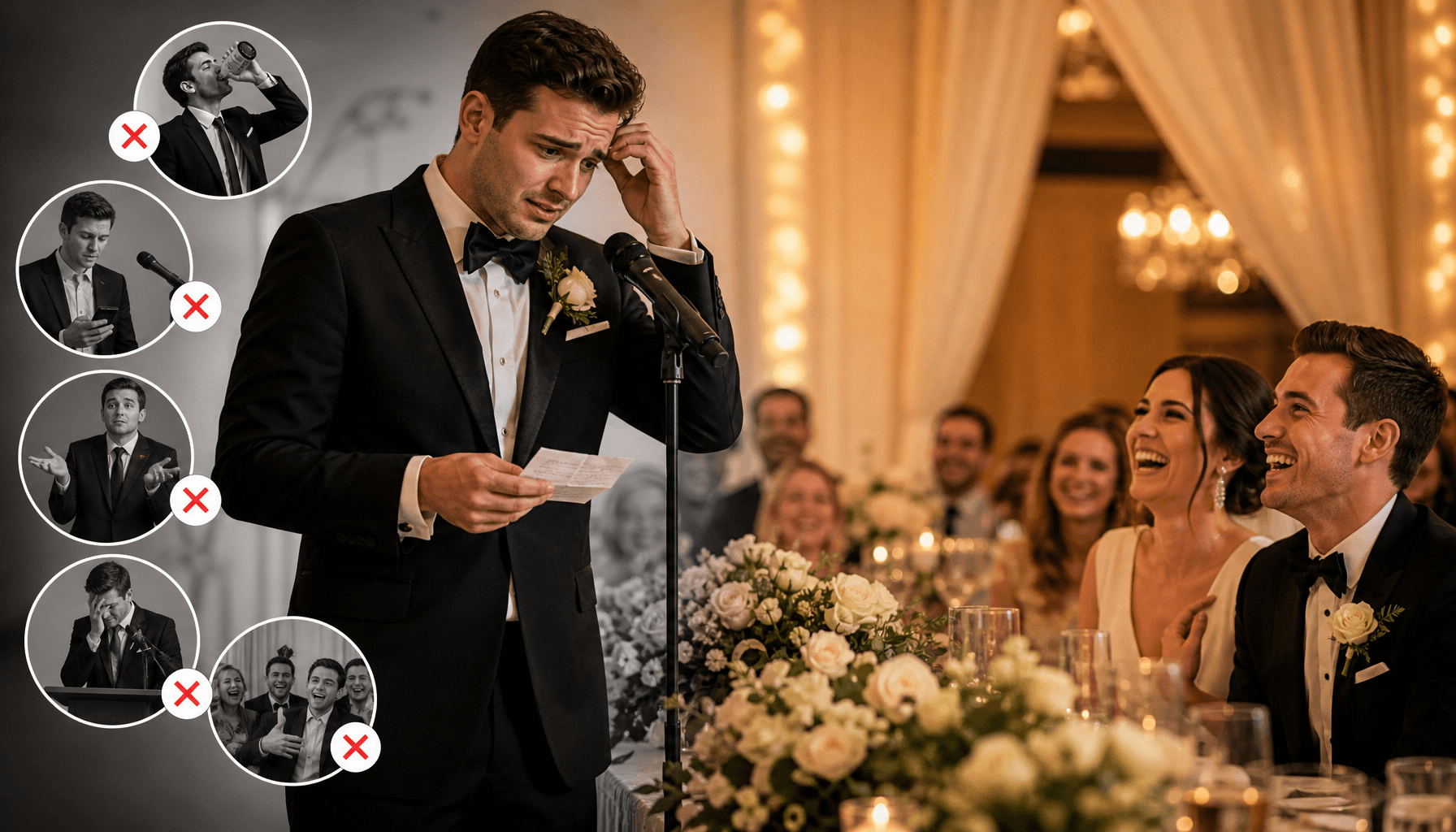
Most speech regrets come from saying too much or saying the wrong kind of thing. Avoid ex-partners, dating history, or stories that sound like comparisons. Steer clear of embarrassing or crude jokes, especially anything sexual. Inside jokes that exclude most guests generally land poorly. A good rule is that if it would make the couple tense while listening, cut it. The goal is to make them feel safe, loved, and proud.
Crafting the Perfect Toast (No Matter Your Role)
Once the order is decided and the timing is set, most people hit the real challenge: what do I actually say? That is where ToastPal becomes your calm, capable backup. ToastPal uses AI-guided prompts to pull out your real memories, the couple’s personality, and the tone you want, then shapes it into a speech that is structured, personal, and easy to deliver.
For the Maid of Honor
A Maid of Honor speech often carries emotional weight. You are not just entertaining; you are witnessing. The best speeches feel like a love letter and a friendship highlight reel, with one great story instead of ten small ones. Focus on the bride’s character and a moment that shows why you trust her choices. If you are struggling to find the right words, ToastPal can help you in creating a touching Maid of Honor speech that balances sentiment with friendship perfectly.
For the Father of the Bride
Parent speeches are powerful because they hold history. The best parent toasts do not try to summarize an entire childhood but choose one or two moments that represent it. Focus on pride without possessiveness and welcoming the new spouse as a full member of the family. There is often pressure to set the tone, but classic Father of the Bride speeches are made easier when you have a clear structure to follow.
For the Best Man
The Best Man role often comes with a comedy expectation. The secret is that the best laughs come from affection, not humiliation. Focus on a story that shows the groom’s loyalty or growth and how the partner brings out the best in him. Balance humor with warmth, ensuring the warmth wins at the end.
Why Use ToastPal?
A lot of people know what they want to say, but they cannot get it onto the page. Others can write, but they do not know how to shape it into a speech that flows. ToastPal is built for exactly that gap.
Benefits include:
- Time-Saving: Generate a draft in minutes so you are not staring at a blank document at midnight.
- Stress-Free: Removes writer's block by using guided prompts to pull out meaningful details.
- Professional Quality: Well-structured with the right balance of humor and emotion.
Whether you are writing vows, a best man speech, or a eulogy, you can start drafting your speech with ToastPal today to ensure you deliver a moment to remember.
Frequently Asked Questions About Wedding Speech Order
Who usually gives the first speech at a wedding?
Traditionally, the first speech is given by the host, often the Father of the Bride in a UK-style lineup or one or both parents in a US-style reception. In modern weddings, it is also common for the couple to open with a short welcome to help guests feel included. The best choice is the person who can confidently get everyone’s attention and set a warm tone.
Does the Maid of Honor have to give a speech?
No, it is not mandatory. In the US, it is standard for the Maid of Honor to give a speech, usually close to the Best Man. In the UK, it has become much more common in recent years, but it is still optional in many traditional lineups. If public speaking is not her thing, a shorter toast, a joint speech, or a reading can be a great alternative.
Can the bride and groom give a speech together?
Yes, and it is one of the most popular modern formats. A joint couple speech shares the pressure, keeps the timeline efficient, and often feels more natural. Many couples split it so one person covers gratitude and family thanks while the other shares a short story and a toast.
How many speeches are too many for a wedding reception?
Most receptions feel best with three to four main speakers. Once you go beyond that, speeches can start to blur together, and guests may lose attention, especially if dinner service is delayed. If several people want to speak, consider moving additional toasts to the rehearsal dinner or asking a few guests to give one-sentence toasts from their seats.
What is the correct order for speeches at a same-sex wedding?
There is no single correct order. The most inclusive approach is to organize by role in the day rather than gender. Start with the host welcome (parents, chosen family, or the couple), then close family, then wedding party, and end with the couple if they want the final word. What matters most is that the sequence feels meaningful and the tone stays celebratory and respectful.