5 Ice-Breaker Jokes for Awesome Wedding Toasts (Crush Anxiety)
Awesome wedding toasts rely on a strong opening to break the tension and captivate the audience immediately. By utilizing proven ice-breaker jokes, such as self-deprecation or situational humor, speakers can overcome public speaking anxiety (Glossophobia) and deliver a concise, high-impact speech that honors the couple without boring the guests.
We have all been there. You are standing in front of a room full of expectant faces, your palms are sweating, and your heart is beating a rhythm faster than the DJ's playlist. You want to deliver something memorable, heartfelt, and funny, but the pressure feels immense. This physical reaction is entirely normal, but it does not have to dictate the quality of your performance.
The fastest way to bridge the gap between a nervous speaker and a supportive audience is laughter. A shared laugh acts as an instant connection, signaling to the room that you are in control and allowing everyone to relax. While the jokes we are about to share are fantastic starting points, weaving them into a cohesive narrative can still be challenging. If you find yourself staring at a blank page after the laughter dies down, ToastPal is the ultimate tool for turning those opening lines into a personalized masterpiece. Whether you are the Best Man or the Father of the Bride, crafting the perfect wedding speech starts with finding your confidence and finding your voice.
Why Humor is the Antidote to Speech Anxiety
Humor functions as a psychological reset button during public speaking; a shared laugh releases endorphins for both the speaker and the audience, instantly lowering cortisol levels and transforming a tense atmosphere into a supportive one.
The Science of Fear
If the thought of holding a microphone makes you want to bolt for the exit, you are not alone. Research consistently shows that approximately 75% to 77% of the general population suffers from some degree of Glossophobia, or the fear of public speaking. It is often cited as a fear greater than death itself. When you stand up to speak, your brain perceives the staring eyes of the guests as a threat, flooding your system with adrenaline. This is why your mouth goes dry and your mind goes blank.
Physiological Impact of Laughter
The moment you land a joke, the dynamic shifts. Laughter provides immediate social validation. When the audience chuckles, your brain receives a signal that you are safe and accepted by the "tribe." This feedback loop stops the adrenaline dump and allows you to think clearly again. Furthermore, a smiling audience is a forgiving audience. They want you to succeed. By starting with humor, you are essentially asking them to be your partners in the moment rather than your judges.
Managing the Nerves
While a good joke is a powerful weapon, it helps to have physical coping strategies as well. Experts at the Mayo Clinic suggest simple techniques to manage the physical symptoms of the fear of public speaking, such as deep diaphragmatic breathing. If your nerves are still getting the best of you, check out our guide on wedding speech anxiety for specific breathing and visualization techniques that can help you center yourself before the big moment.
5 Foolproof Ice-Breakers for Awesome Wedding Toasts
The best ice-breakers are short, tasteful, and relevant to the occasion; they should poke gentle fun at the speaker or the situation rather than the couple, ensuring the audience laughs with you, not at someone else.
1. The Self-Deprecating Opener
The Line: "They asked their funniest friend to speak, they said no... they asked their smartest friend, they said no... so here I am!"
Why it works: Self-deprecation is the safest form of humor because there is no victim other than yourself. By lowering the status of the speaker, you instantly become more relatable and likable. It tells the audience that you don't take yourself too seriously, which relaxes them.
2. The Visual Pun (The Cake)
The Line: "This wedding is so emotional, even the cake is in tiers!"
Why it works: This is a classic "dad joke," but in the context of a wedding, it kills. It plays on the homophone of "tiers" (layers of a cake) and "tears" (crying). It is safe for all ages and serves as a perfect transition from a lighthearted opening into a more sentimental section.
3. The "Short & Sweet" Misdirection
The Line: "The couple asked me not to share any embarrassing stories... so that's it from me, cheers!" (Pretend to sit down, then stand back up).
Why it works: This joke addresses the fear of long, boring speeches. Everyone has sat through a toast that dragged on. By teasing that you are finished, you signal self-awareness and promise the audience that you respect their time.
4. The "Car Hook" (Attention Grabber)
The Line: (Tap mic) "Just a quick announcement, all your cars have been stolen... now that I have your attention..."
Why it works: This is a "pattern interrupt." It shocks the room into silence. In a noisy reception hall, this cuts through the noise immediately. However, the relief that follows the realization that it is a joke creates a burst of energy.
5. The "Bad Handwriting" Gag
The Line: (Squinting at notes) "I can't read your writing... oh wait, this says 'You are the best, most handsome guy I know'—thanks, Groom!"
Why it works: This is a fantastic way to compliment yourself while pretending the compliment came from the groom. It frames the speaker as the hero of the speech in an ironic way and establishes a fun dynamic.
While these jokes are generally safe, context is key. If you are unsure if a joke lands well, check resources like Brides.com to see what is currently considered appropriate etiquette.
The Rise of the "Micro-Toast": Quality Over Quantity
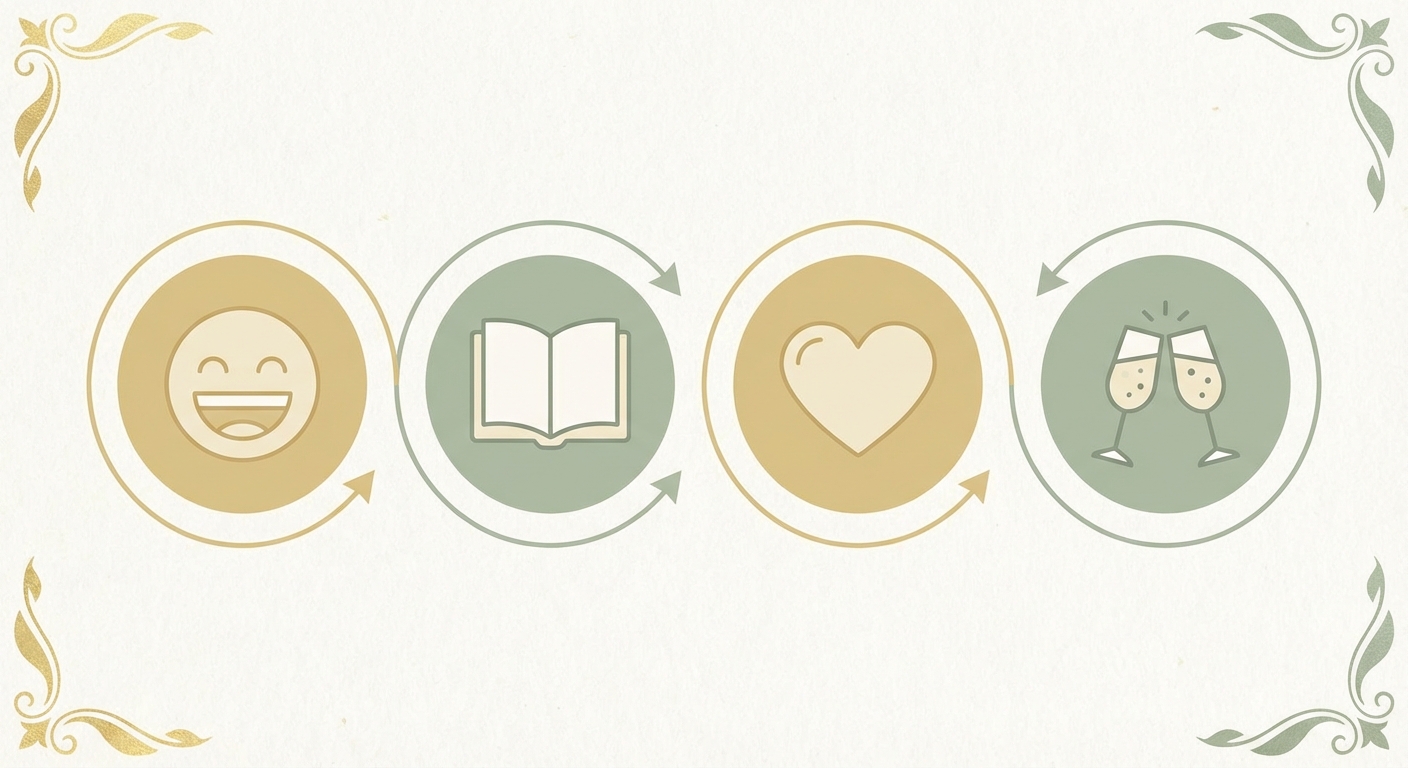 A "Micro-Toast" is a modern speech format lasting between two to three minutes, prioritizing high-impact sentiments and punchy storytelling over chronological biographies or lengthy anecdotes.
The Trend Away from Marathons
Gone are the days of the 15-minute monologue. Modern weddings are often fast-paced, and the "Micro-Toast" respects that. This format forces the speaker to be disciplined with their words, ensuring that every sentence packs a punch. Adhering to Modern Wedding Toast Etiquette means respecting the timeline and the guests' attention spans.
Pro Tips for Delivering Your Toast Like a Public Speaking Expert
Successful delivery relies on the "pause and punch" technique; waiting for the audience's silence before delivering the punchline, and then pausing again to let the laughter land before continuing.
You can have the best script in the world, but if you rush through it, the jokes will fall flat. Nerves often make us speak faster. You have to consciously slow down. When you deliver the setup, stop. Wait a beat. Then deliver the punchline. For more advanced delivery techniques, read our insights from a public speaking expert on commanding the room. You can also find technical tips on microphone handling from Toastmasters International.
Conclusion: Ending on a Heartfelt Note with ToastPal
Creating awesome wedding toasts is about balance. It is the art of mixing a strong, funny start with a sincere, emotional finish. The ice-breakers provided here are your safety net. They are designed to get you through the first 30 seconds—the most terrifying part of the speech—and earn you the goodwill of the room.
However, if the idea of writing the rest of the speech still feels daunting, you do not have to do it alone. Let technology do the heavy lifting so you can focus on the delivery. Stop staring at a blank page and let ToastPal craft a speech that balances humor and heart in minutes.