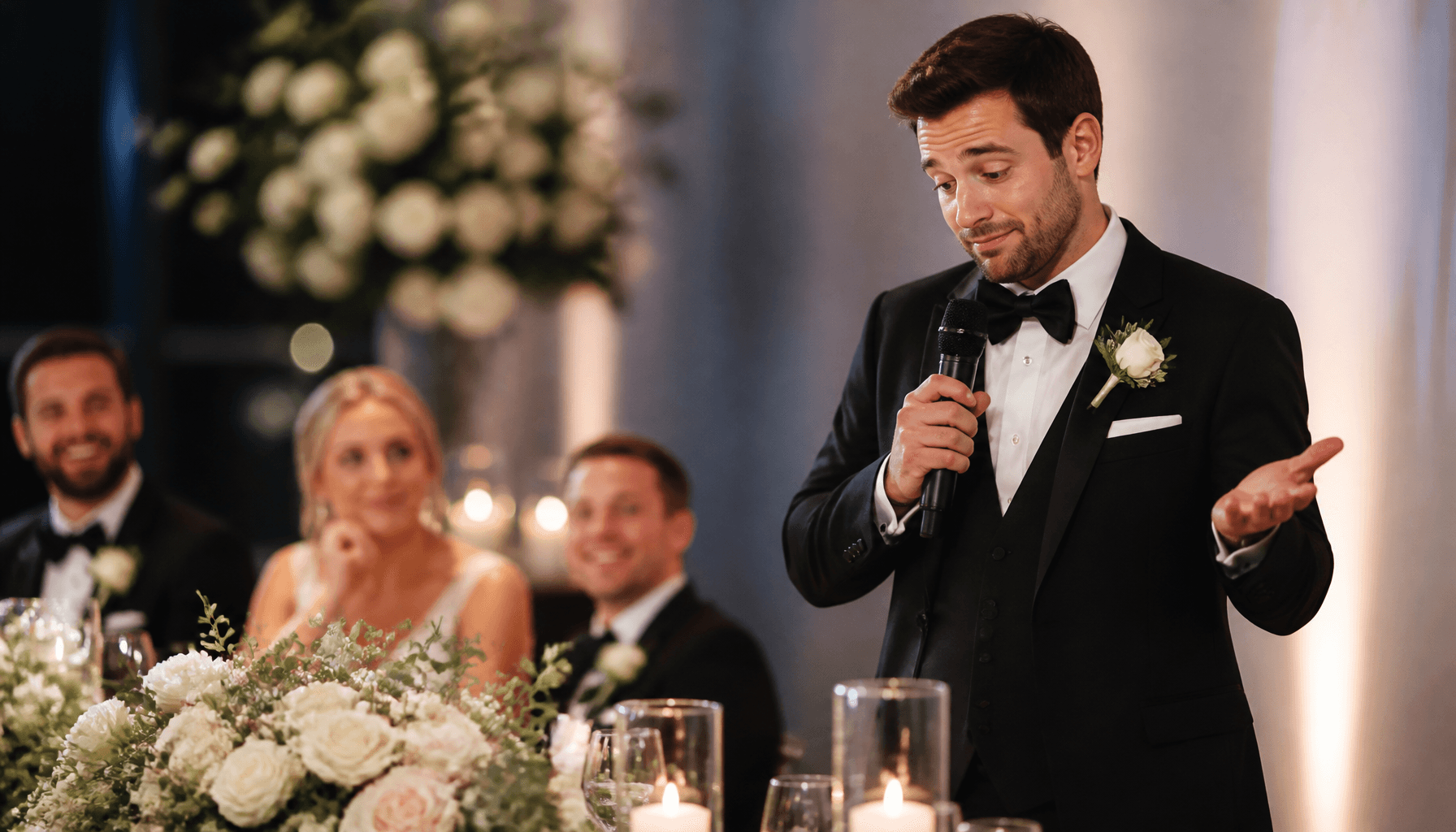
Last-Minute Best Man Speech: Find a Toast-Worthy Story in Your Camera Roll
Last-Minute Best Man Speech: Find a Toast-Worthy Story in Your Camera Roll
The wedding is hours away. Your suit is ready, the rings are accounted for, and your best man speech currently consists of three bullet points and a joke you probably shouldn’t tell. Before you search for another generic opening line, open your camera roll.
Somewhere between the screenshots and blurry group selfies is a moment that explains why the groom matters to you. That’s the foundation of a memorable wedding toast: not a perfect punchline, but a specific story with something genuine behind it.
This guide will help you turn one photo into a last-minute best man speech that feels personal, celebrates the couple, and ends with a confident toast.
1. Find Your Best Man Speech Story in Five Minutes
Set a five-minute timer. You’re looking for a useful memory, not reviewing your entire friendship. Search your phone’s photo app by the groom’s name if you’ve labeled people, or try a location, year, or event. Shared albums and message attachments can help, too.
Start with these three kinds of photos:
- Everyday moments: A moving day, kitchen disaster, or rainy hike can reveal more character than a spectacular holiday.
- Shared milestones: Graduation, a first apartment, or a new job can remind you how the groom supported you.
- Photos of the couple: Look for moments that show their teamwork, shared humor, or thoughtfulness.
For each promising photo, ask: “What happened just before or after this?” The picture is a memory prompt; the story often lives outside the frame. A muddy campsite photo might remind you that the groom gave someone else his dry sleeping bag.
Choose three candidates, then stop scrolling. You don’t need to display the photo at the wedding.
2. Choose a Story That Celebrates, Not Embarrasses
The funniest memory in your group chat isn’t automatically the best wedding speech material. Your audience includes people who have never met you, so the story should make sense without a lengthy explanation.
Give each candidate this quick test:
- Is it easy to explain? You should be able to establish the situation in two sentences.
- Does something happen? Look for a small surprise, problem, or revealing choice.
- Does it show a good quality? Loyalty, patience, kindness, and optimism all give you a meaningful ending.
- Is it safe to share? Skip exes, sexual details, illegal behavior, private struggles, and anything the couple would rather keep private.
For example, a photo from a disastrous road trip could support two very different speeches. One mocks the groom for getting lost. The stronger version briefly jokes about the detour, then explains how he kept everyone laughing and made sure nobody felt blamed.
If you’re unsure whether a detail is welcome, leave it out. Affectionate humor should make the groom feel recognized, not exposed.
3. Turn One Photo into a Simple Best Man Speech Structure
A last-minute best man speech doesn’t need five stories. One clear anecdote, followed by a sincere connection to the couple, is enough. Use this structure to build your draft:
- Introduce yourself: Give your name and explain how you know the groom.
- Set the scene: Describe where you were and what was happening.
- Tell the moment: Share the action or surprise, keeping only essential details.
- Explain what it reveals: Name the quality you admire without turning it into a lecture.
- Celebrate the couple: Connect that quality to something you’ve genuinely observed in their relationship.
- Raise a toast: Finish with a direct invitation and a warm wish.
Here’s a fictional example of a short story-and-toast passage inspired by a moving-day photo:
“For anyone I haven’t met, I’m Ben, and I’ve known Alex since university. I found a photo this morning of us moving into our first flat. There’s a sofa wedged in the doorway, three deeply unqualified movers, and Alex holding a tape measure that we probably should have used earlier.
“What the photo doesn’t show is that Alex stayed until midnight helping me unpack, even though his own room was still full of boxes. That’s Alex: he’ll laugh with you when everything goes wrong, but he won’t leave you to sort it out alone.
“And when I’ve spent time with Alex and Sam, I’ve seen that same care going both ways. They listen to each other, back each other up, and somehow agree on furniture that fits through doors.
“Please raise your glasses to Alex and Sam: may your home always be full of laughter, kindness, and accurately measured sofas.”
Use the structure, not the invented details. If the transition from friendship story to wedding toast feels awkward, ToastPal can help you explore different drafts without replacing the memory that makes your speech personal.
4. Rehearse Your Wedding Toast Before You Reach the Microphone
Once the draft exists, stop polishing silently. Read it aloud and time it. Follow any length requested by the couple; otherwise, around three minutes is a practical target for a short best man speech.
As a rough planning guide, 360–450 words can fill about three minutes at 120–150 words per minute. Laughter, pauses, and emotion add time, so your actual rehearsal matters more than the word count.
- Cut unnecessary setup: Remove extra names, dates, and side stories.
- Simplify stiff language: Replace anything you wouldn’t naturally say to a friend.
- Mark your pauses: Leave space after jokes and before the final toast.
- Prepare readable notes: Use large text, save an offline copy, and silence notifications if reading from your phone.
- Practice the ending twice: Know exactly when you’ll invite everyone to raise a glass.
Look toward the couple for the heartfelt lines. You don’t need flawless delivery; you need to be audible, unhurried, and sincere.
A Last-Minute Best Man Speech Can Still Feel Personal
Open your camera roll, find one revealing memory, and choose a story that makes the groom feel appreciated. Give it a simple structure, include the couple meaningfully, and rehearse aloud. The goal isn’t to summarize an entire friendship. It’s to show everyone one good reason you’re proud to raise a glass.