Maid of Honor Toast Guide: Write, Rehearse & Deliver
Maid of Honor Toast: How to Write, Rehearse, and Deliver the Perfect Speech
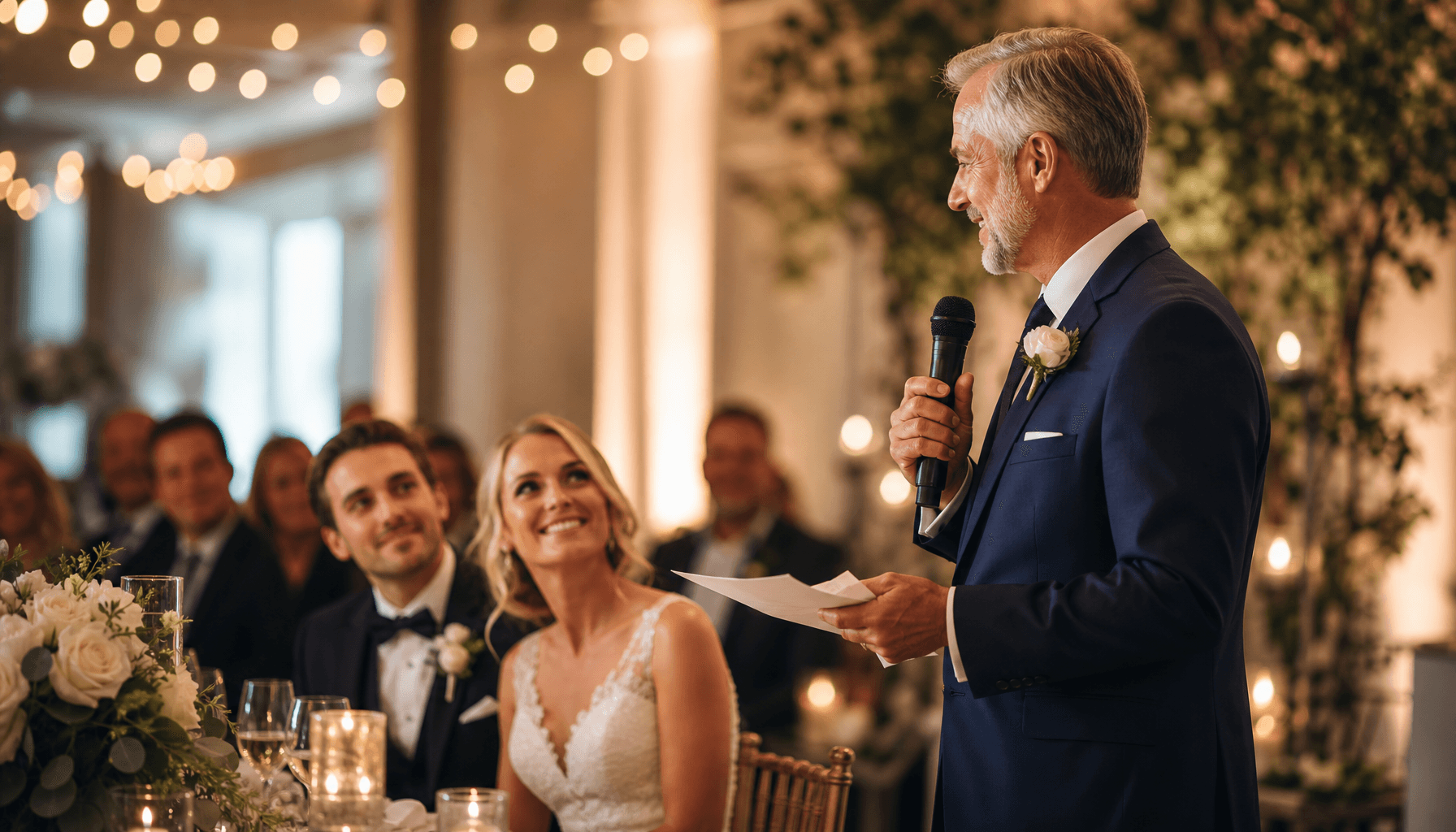
Standing in front of a room full of expectant faces with a microphone in your hand can feel like the longest walk of your life. If you feel honored, excited, and slightly nauseous about giving a Maid of Honor toast, you are having the most normal experience imaginable. The weight of this moment feels enormous because you want to do justice to your best friend or sister on one of the biggest days of her life.
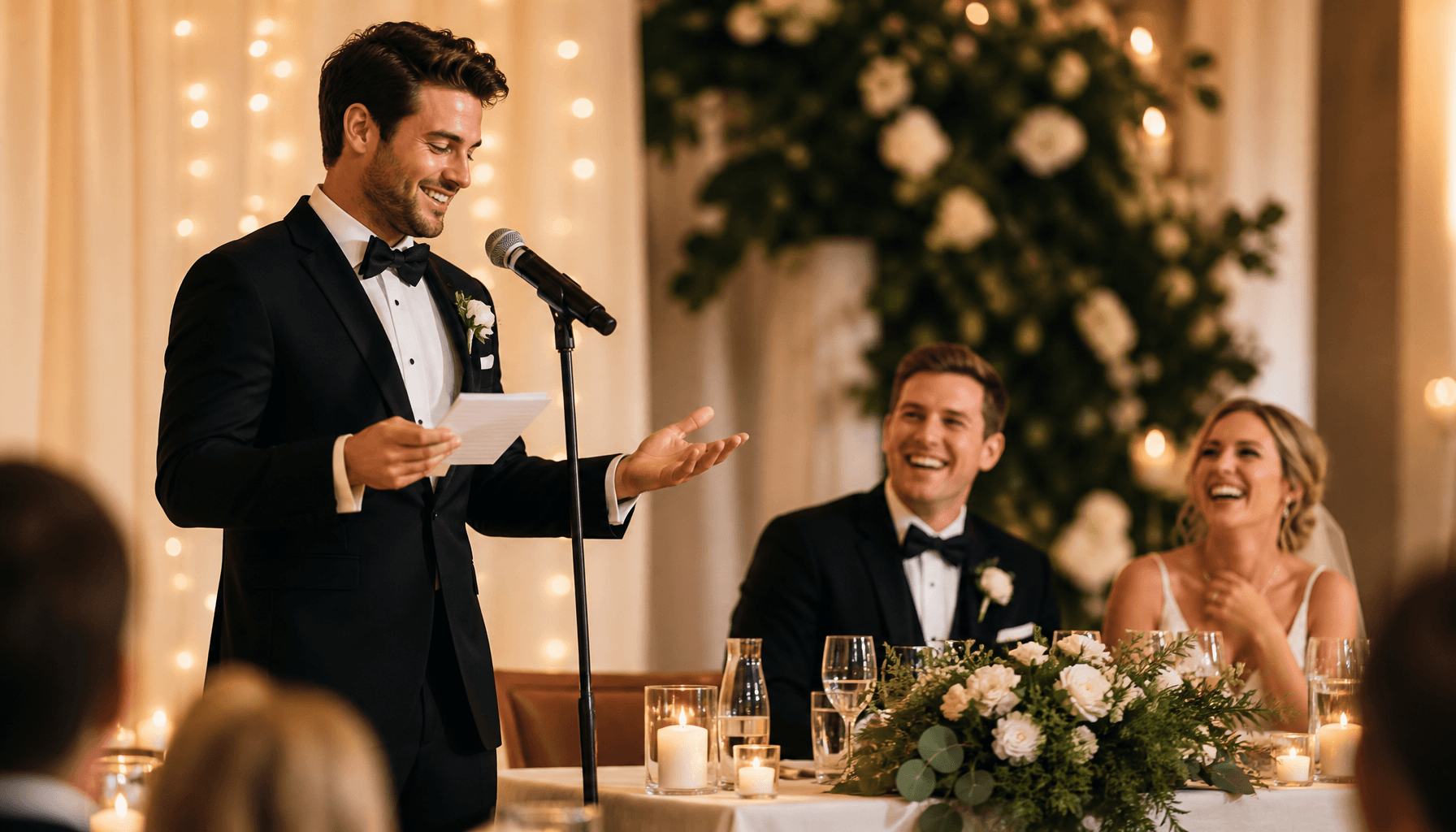
The good news is that you do not need to be funny, fearless, or a natural public speaker to give a toast that lands beautifully. You just need a clear structure, a calm delivery plan, and words that sound like you. The audience is not waiting for a performance. They are rooting for authenticity. They want to see the love between the bride and her best friend through your eyes.
While this guide provides the manual for writing and delivering your speech, sometimes the hardest part is simply starting. If you are staring at a blank page and panic is setting in, ToastPal can help you craft a personalized, heartfelt speech in minutes. Think of it as your secret weapon to break through writer's block and capture the unique bond you share without the stress.
Quick Stats & What Guests Prefer
Let us start with the part nobody says out loud. Most people are scared to do exactly what you are about to do. Public speaking anxiety is incredibly common, and a wedding toast adds extra pressure because it feels emotional and public at the same time.
The Reality of Public Speaking
The nerves you feel are not a personal failure. They are a human reflex. Toastmasters International estimates that approximately 75% of people experience some degree of fear of public speaking. That statistic alone should be comforting because it reframes the moment. You are not bad at this. You are simply in a situation that triggers a very normal stress response. If there are 100 guests at the wedding, roughly 75 of them understand exactly how you are feeling right now.
Here is the most helpful reframe. Nerves are not proof you will mess up. Nerves are proof you care. Adrenaline shows up when something matters. The goal is not to eliminate nerves entirely but to channel them productively.
What the Audience Actually Wants
Most wedding guests are not judging your comedic timing or expecting a TED Talk. They are listening for sincerity, specificity, and flow. Guests tend to remember one vivid detail and one genuine line more than a long timeline of your friendship.
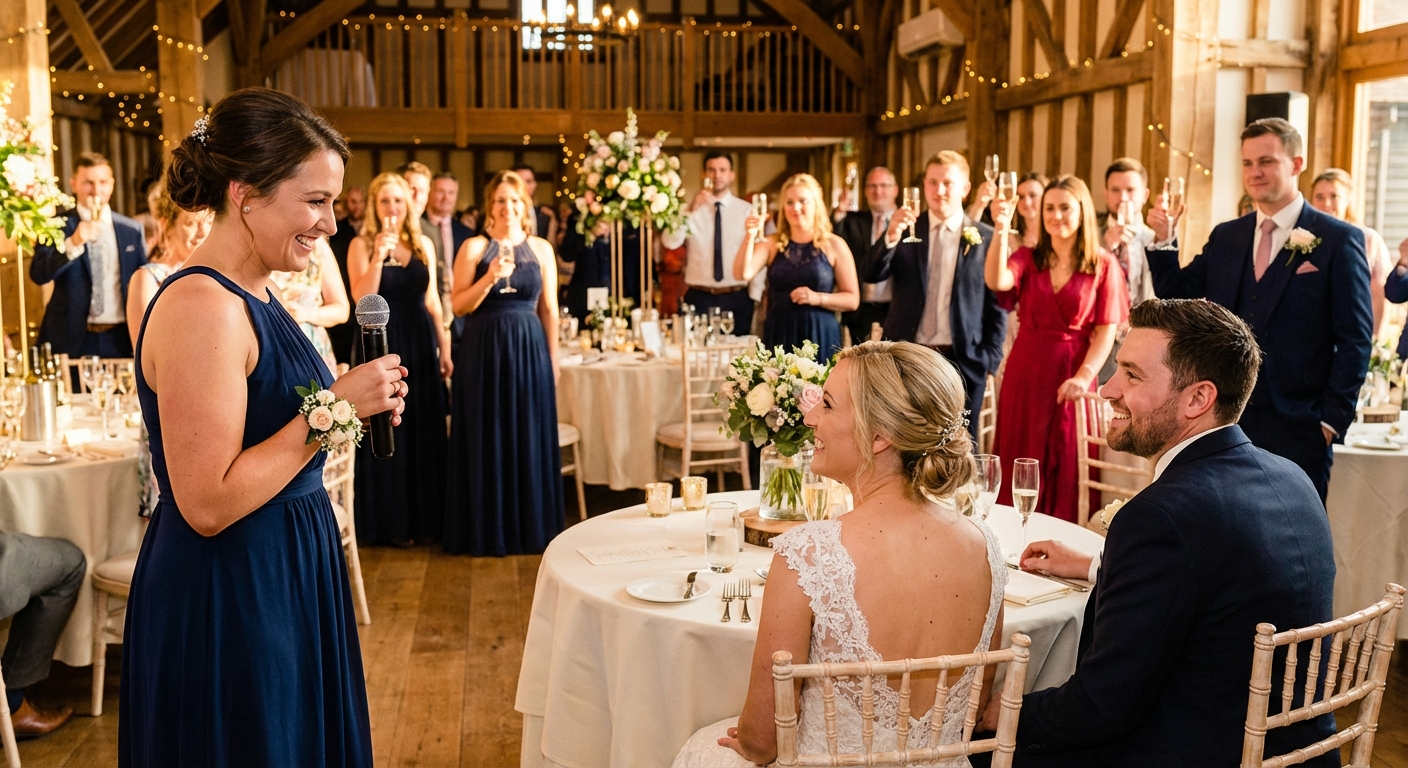
Length matters significantly. Many wedding resources point to a sweet spot that is shorter than most maids of honor expect. Junebug Weddings suggests a 3-minute "sweet spot" for wedding speeches, and that tracks with real reception energy. People are happy, emotional, and ready for dinner and dancing. A toast that ends while guests still want a little more is almost always perceived as excellent.
Guests generally love a clear beginning, middle, and end they can follow even after a cocktail hour. They want a personal story that reveals who the bride is at her best and a warm nod to the partner. Conversely, guests generally dislike confusing inside jokes, embarrassing stories, or anything that sounds like a roast. If you take nothing else from the stats, remember that perfect is not the goal. Present is.
What to Include: A Simple 3-Minute Structure
The fastest way to reduce speech anxiety is to stop thinking of your toast as a performance and start thinking of it as a short story with a toast at the end. Breaking your speech into four distinct sections makes the writing process less overwhelming and ensures you hit all the emotional notes without rambling.
1. The Killer Hook (0:00 to 0:30)
Your opening has one job. It must orient the room and earn attention without trying too hard. Start by introducing yourself, not because you are self-centered, but because not everyone in the room knows who you are.
Avoid the cliché "For those who don't know me" opening. Instead, try a warm and simple line that sets the tone. "Hi everyone, I am Sam, and I have had the joy of being the bride's best friend since college." This establishes your credibility and hints at the depth of your relationship immediately.
A light laugh line can help, but keep it clean and universal. You might say, "I promised myself I would keep this short so we can get back to celebrating, and also because the bride is the organized one, not me." The best hook is not a joke. It is clarity.
2. The "Bride" Section (0:30 to 1:30)
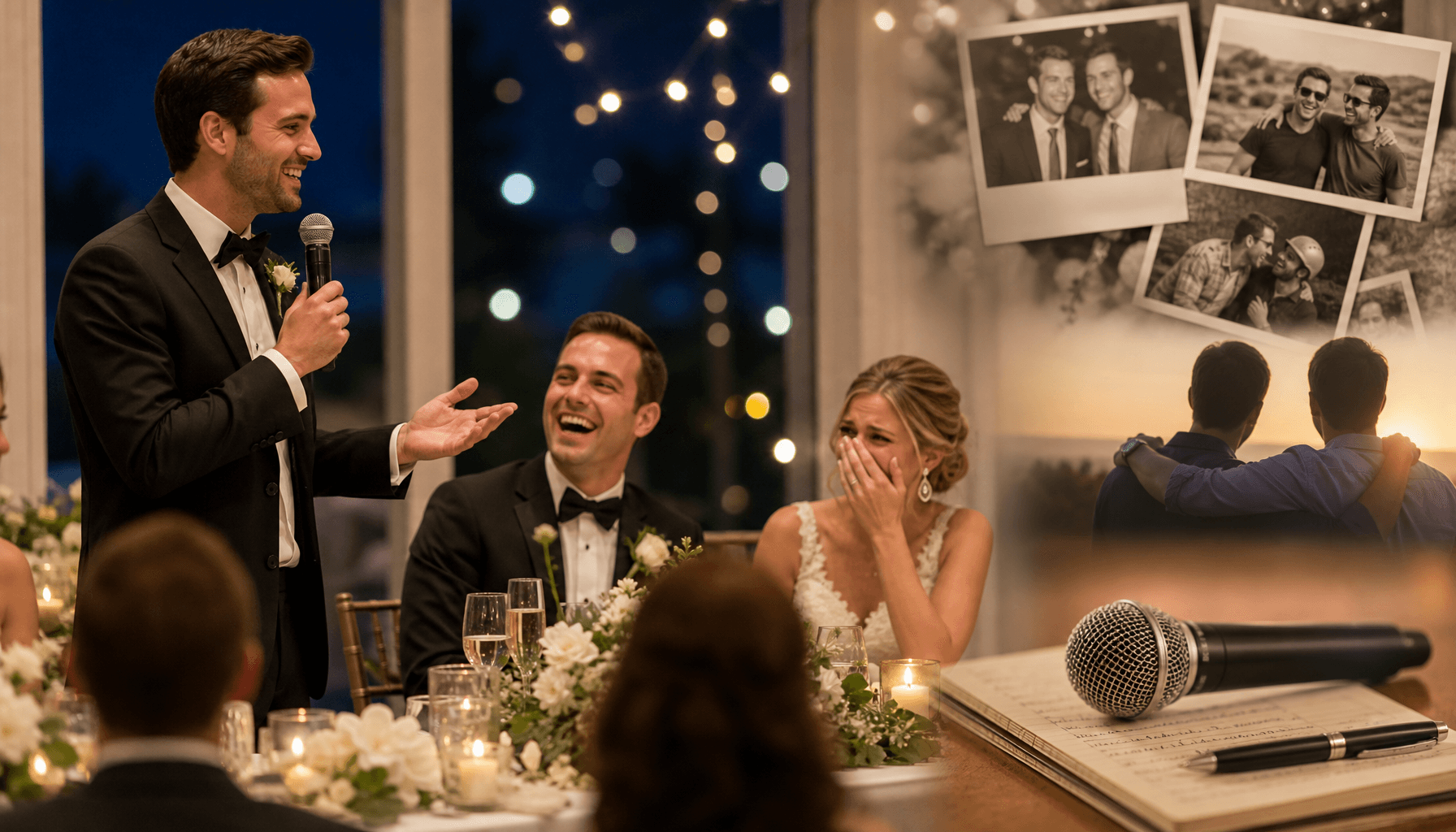
This is the heart of the toast. You are not listing achievements. You are sharing a glimpse of her character. Pick one trait and one story that proves it. Specificity is what transforms a forgettable speech into a memorable one.
For example, instead of saying she is loyal, tell the story of the time she drove three hours in a snowstorm to be there when you needed her. If you want to highlight her humor, share a moment that captures how she lightens a room.
A simple formula is to state what you love about her, share the moment you saw it most clearly, and explain that this is who she is every day. If you are stuck finding the right anecdote, this is where AI prompts can be incredibly useful to extract specific memories so you do not have to brainstorm alone.
3. The "Partner" Section (1:30 to 2:15)
Now widen the lens from your relationship with the bride to the couple's relationship. Address the partner directly by name. This transition moves the speech from being about your friendship to being about the couple's love story.
Share a positive observation about who the bride became with them. Perhaps she is more confident, more adventurous, or more at peace. Explain why they are a perfect match. Maybe they balance each other's strengths or share the same quirky sense of humor.
Avoid generic statements like "They are perfect for each other." Instead, offer specific evidence. "I knew Jake was the one when I saw how Emma lit up talking about their weekend hiking trips. He didn't change her. He helped her discover parts of herself she didn't know existed."
4. The Toast & Well Wishes (2:15 to 3:00)
This is the landing. The ending should be short, clear, and unmistakably a toast. You need to articulate your hopes for their future.
A strong closing might sound like this. "So tonight, I just want to say how grateful I am to love you both and to witness this day. May your home be full of laughter, your partnership be full of respect, and may you always feel like you are on the same team."
Then, ask everyone to raise their glasses. This physical action gives the audience something to do and creates a unified moment of celebration. For more advice on appropriate closing sentiments and decorum, it helps to review basic wedding speech etiquette to ensure your tone is perfect.
Delivery Tips: Rehearse, Breathe, Don’t Memorize
A strong toast is written on the page, but it is won in the delivery. The goal is not to sound like you are reading. The goal is to sound like you are speaking with support.
The Myth of Memorization
Memorization is a common trap for anxious speakers. It feels like control, but it creates a fragile situation. If you forget one line, you can panic and lose your place because you are trying to retrieve specific language rather than conveying an idea.
Instead of memorizing word-for-word, memorize the map. Know that you start with the hook, move to the bride story, transition to the partner, and end with the toast. When you know your first line and your last line, everything in between becomes flexible. This actually makes you sound more natural.
Rehearsal Strategy
Many people rehearse once, feel awkward, and stop. That is exactly when anxiety stays high. Repetition builds familiarity, and familiarity lowers the threat response. Brides suggests practicing ~12–15 times and using note cards rather than memorization or reading from a phone.
Think of these as reps rather than performances. Practice out loud and standing up. Your brain needs to associate the speech with the physical act of saying it. Practice in front of a mirror to observe your body language, or record yourself to check your pacing.
Using Note Cards Like a Pro
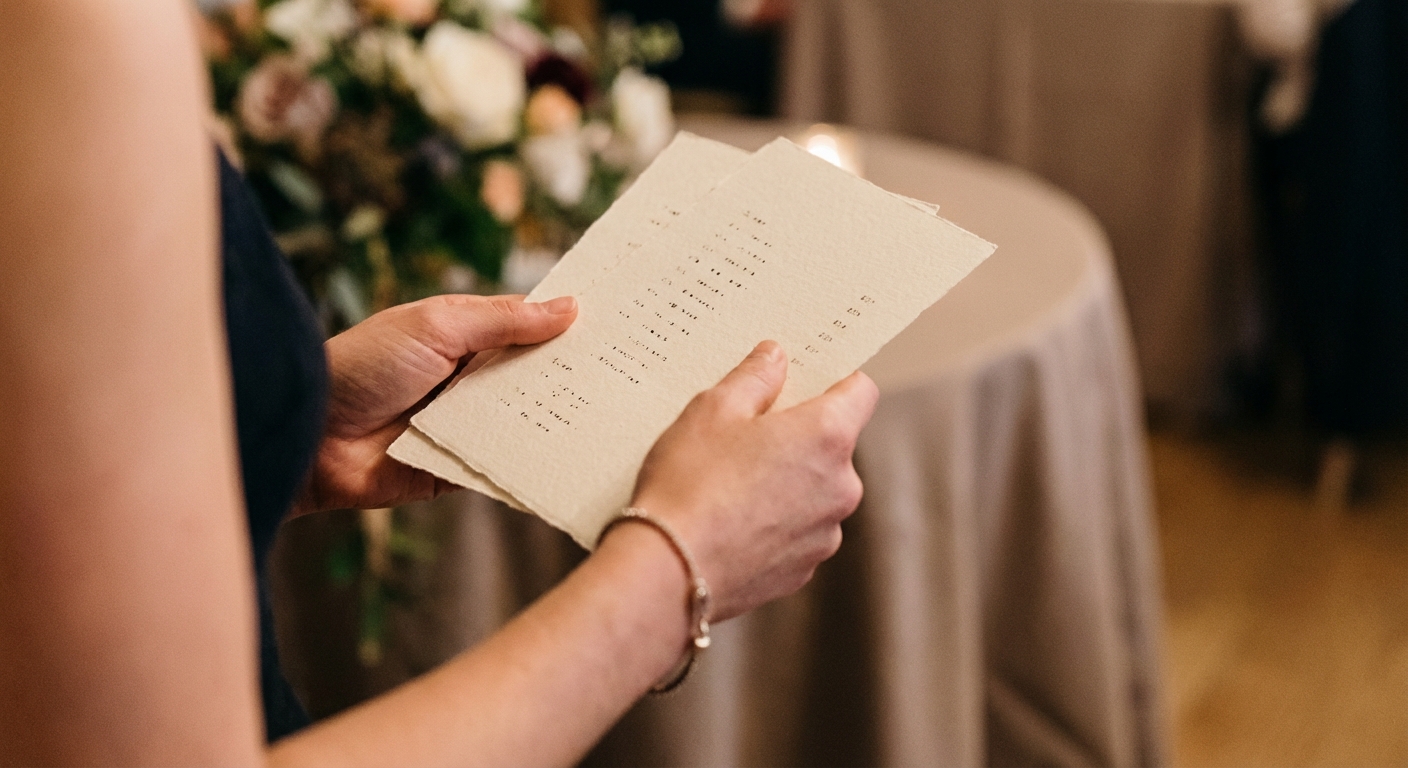
Note cards are your safety net. Use thick cardstock or index cards rather than flimsy paper that will shake visibly if your hands tremble. Never read from a phone. The screen light ruins photos, looks informal, and increases the risk of distractions from notifications.
Write in a large font or thick marker. Put only key lines and transitions on the cards, not paragraphs. Bold the first line of each section. Add stage directions like "PAUSE" or "LOOK AT BRIDE." If your hands shake, hold the cards with two hands at waist level.
Physical Delivery and Breathing
Your body language communicates as much as your words. Stand up straight with your shoulders back to project confidence. Make eye contact with the couple first, then scan the room lightly so everyone feels included.
Pacing is critical. Adrenaline makes you speed up. Speak 15% slower than feels normal. Add intentional pauses after your first line, after a laugh, and before the toast.
Right before you stand up, use a simple box-breathing technique. Inhale for 4 counts, hold for 4, exhale for 4, and hold for 4. Repeat this 2 to 3 times. This signals safety to your nervous system and helps steady your voice.
Common Pitfalls to Avoid
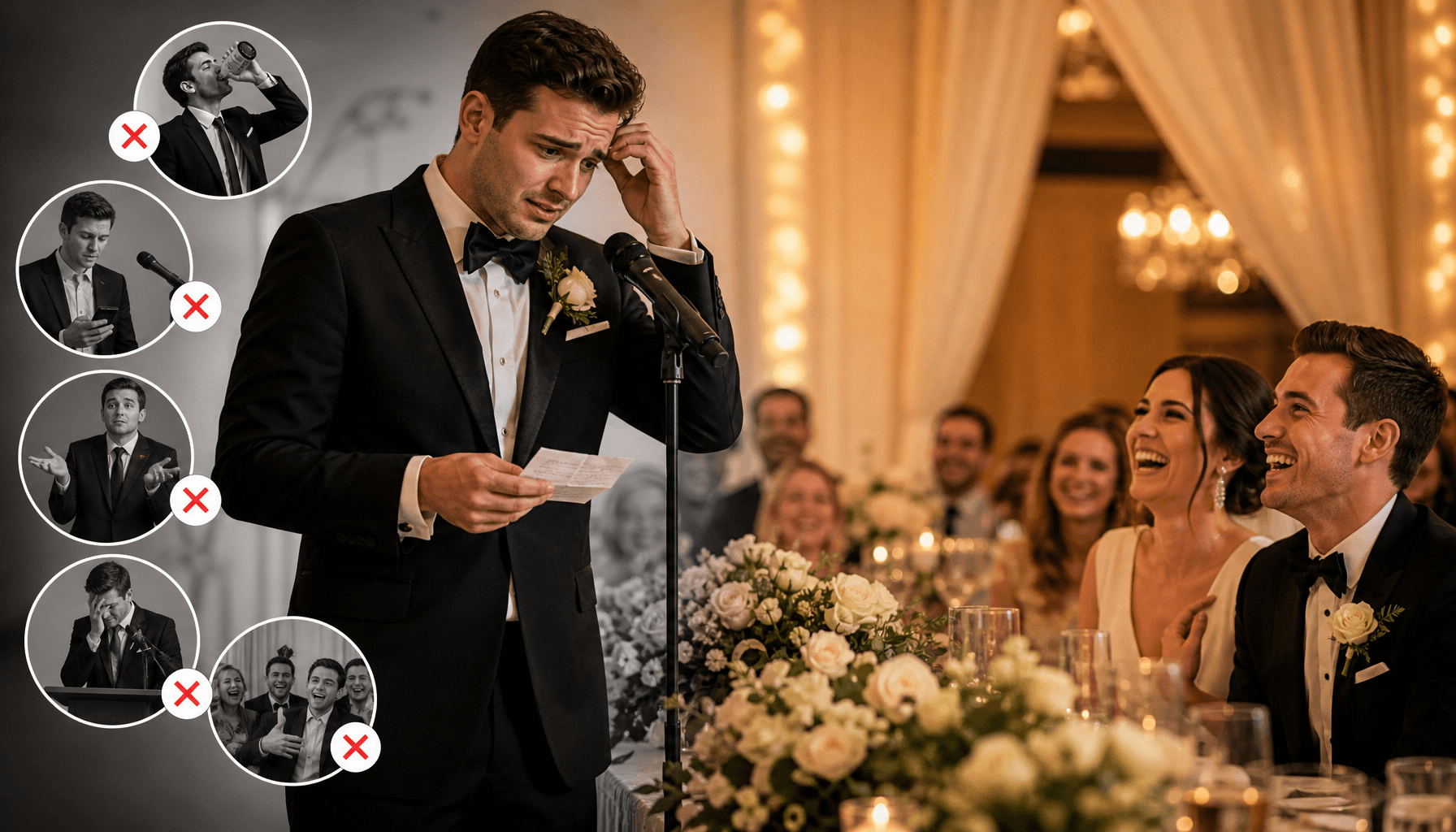
Avoiding common mistakes is half the battle. When you skip the cringe landmines, your speech immediately feels more polished and loving.
Inside Jokes and Exes
Inside jokes feel tempting because they are personal, but they often create silence because guests do not have context. If only you and the bride get it, the other guests will feel alienated. Make the story universal. Instead of referencing a specific obscure event, describe the situation so everyone can laugh along.
Mentioning ex-partners is the cardinal sin of wedding speeches. Never do it. Not as a joke, not as a contrast, and not as a journey. The wedding day is about celebrating this relationship, not referencing previous ones.
The Roast Disguised as Honesty
There is a fine line between gentle teasing and a roast. This is a toast. While humor has a place, it should never come at the bride's expense in a way that makes her or the audience uncomfortable. Avoid stories about wild nights out or questionable decisions. If you are questioning whether a story is appropriate, it probably isn't.
Making It About You
Your friendship is the lens, but the focus is the couple. Watch for too much history or long lists of your adventures where you are the hero and she is the side character. For every "I" statement, try to include a "you" statement that speaks directly to the couple.
Alcohol and Length
It is tempting to have a drink to calm your nerves, but alcohol reduces clarity and emotional regulation. Save the heavy drinking for after you speak. Also, avoid going long. A long speech can be well-written and still feel like it drags. If you are unsure about balancing humor and sentiment or keeping things concise, you can look at a groomsmen speech guide to see how other members of the wedding party approach similar challenges.
Templates & Timing (2–5 minute examples)
Templates are helpful because they reduce decision fatigue. However, copying a generic speech often feels flat. Use these templates as a timing and structure model, then swap in your own details.
2-Minute "Short & Sweet"
This is best for high anxiety. It focuses on clarity and brevity.
- Intro (15 seconds): Name, relationship, one warm line.
- Bride Trait (60 seconds): One short memory that shows her character.
- Couple Line (25 seconds): Why you believe in them.
- Toast (20 seconds): One wish and raising glasses.
Example: "Hi everyone, I am Sarah. If you know the bride, you know she has a rare ability to make people feel instantly cared for. I saw that when she [insert brief story]. That is who she is. And seeing you with her, [Partner], has been a joy. Please raise your glass to a lifetime of happiness."
3-Minute "Balanced"
This is the crowd favorite, blending humor and heart.
- Intro + Light Laugh (30 seconds): Orient the room.
- Bride Story (90 seconds): A specific anecdote with one funny beat and a sentimental conclusion.
- Partner Section (40 seconds): Direct address and observation of their dynamic.
- Toast (20 seconds): Formal closing.
5-Minute "Storytelling"
Use this only if the couple explicitly wants longer speeches and you are a confident speaker.
- Intro: Standard welcome.
- Two Short Stories: One about the bride, one about the couple.
- Theme: Connect the stories with a theme like loyalty or joy.
- Toast: Extended well wishes.
Remember to time yourself using a stopwatch while rehearsing. If you are over time, cut the setup and start your stories closer to the action.
Final Checklist & One‑Page Cheat Sheet
The day of the wedding is not the day to wing it. It is the day to execute a simple plan and enjoy the fact that you showed up for someone you love.
The Day-Of Strategy
Print your speech on cardstock in a large font. Make two copies. Keep one with you and give one to a trusted friend as a backup. Confirm the running order of speeches with the planner or DJ so you know exactly when you are up.
Have a glass of water nearby. Public speaking dries out your mouth. Take a sip before you begin. Decide where you will stand and where you will place your cards.
The One-Page Cheat Sheet
Write this in your own handwriting on a single card to keep in your pocket.
- Posture: Feet flat, shoulders down, mic at chin.
- Start: Smile at the bride. Say the first sentence slowly.
- Pace: Pause after jokes. Pause after emotional lines.
- Eyes: Look at the Bride, then the Partner, then scan the room.
- Panic Button: If you freeze, look at your card, breathe out, smile, and say, "I am just so happy to be here." Then continue.
- Ending: "Please raise your glasses," say their names, and toast.
Confidence is the Goal
You were chosen because you matter to the bride. You do not need to be a professional speaker to give a speech that touches hearts. The most memorable maid of honor toast is the one that feels true, stays brief, and ends with love.
When you are ready to turn your memories into a speech that sounds like you and feels polished, let us help you create a personalized draft in minutes. You can stop staring at a blank page and start practicing with confidence knowing your words are perfect for the moment.
Frequently Asked Questions
How long should a maid of honor toast be?
Most maid of honor toasts land best at about 2 to 4 minutes. Many wedding resources point to roughly 3 minutes as the sweet spot. If you are nervous, a short speech that is warm and clear will almost always be better received than a longer one that rambles.
Who usually gives the speech first, the Maid of Honor or the Best Man?
It varies by reception timeline. Traditionally, the best man speaks first, but often the speeches happen back-to-back. The planner or DJ will set the order. Ask what the plan is beforehand so you can be ready and not caught off guard.
Is it okay to use note cards during the speech?
Yes. Note cards are highly recommended for confident delivery. They help you stay present without the pressure of memorization and reduce the risk of losing your place. Avoid reading from a phone as it looks informal and can cause lighting issues in photos.
What should I do if I start crying during my speech?
Pause, breathe out slowly, smile if you can, and look at your card. You can also say one simple line like, "I am just really happy," then continue. Guests are usually touched by emotion, not judgmental of it.
Should I introduce myself at the start of the toast?
Yes. Not everyone will know who you are, especially guests from the other side of the family. Say your name and how you know the bride in one sentence to orient the room, then move on to your speech.
How do I balance humor and sentiment in the speech?
Use one clean, relatable funny moment, then connect it to a sincere truth about the bride or the couple. Aim for warm and light rather than a comedy routine. If you are unsure whether a joke crosses a line, skip it and choose kindness.