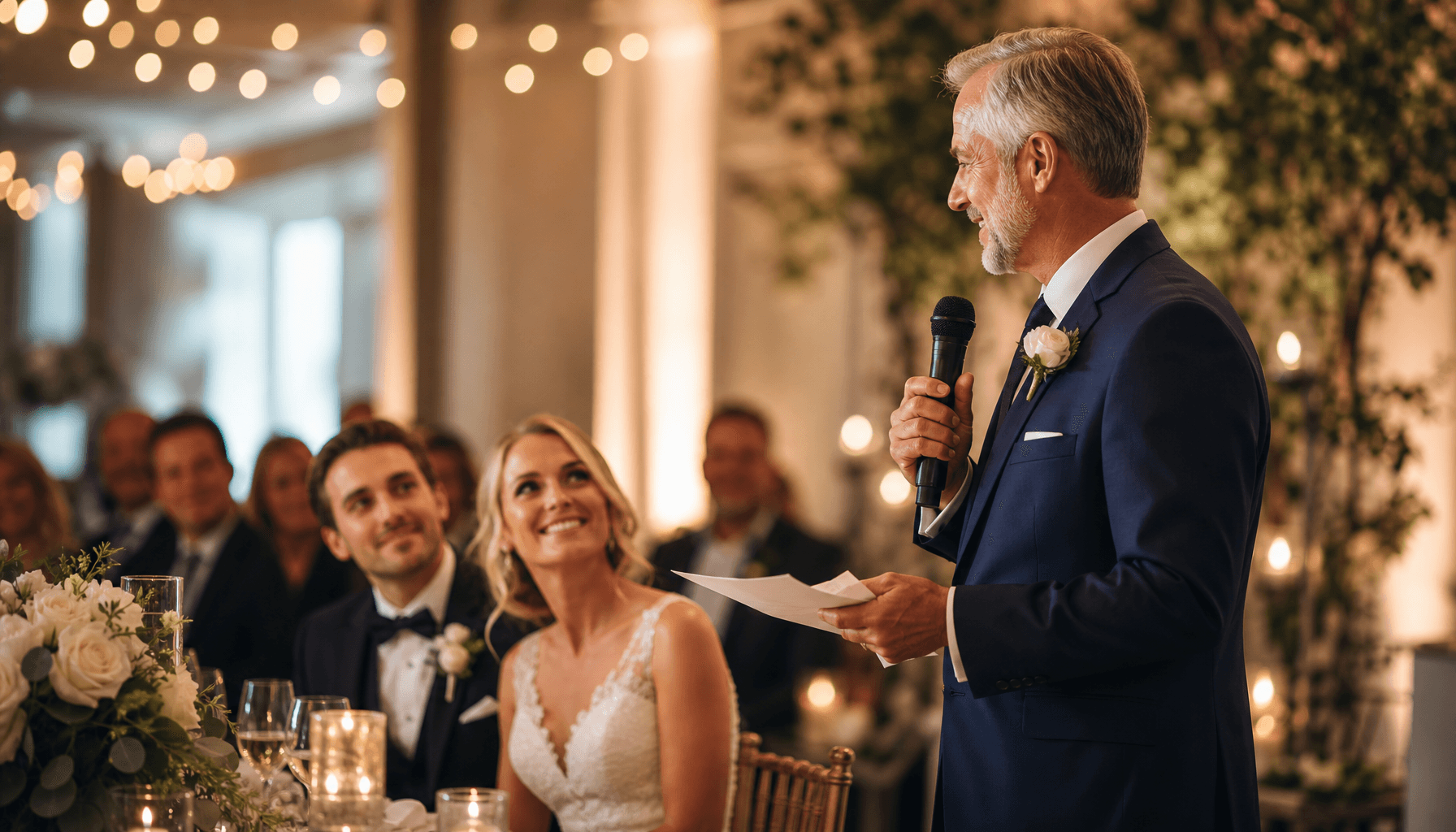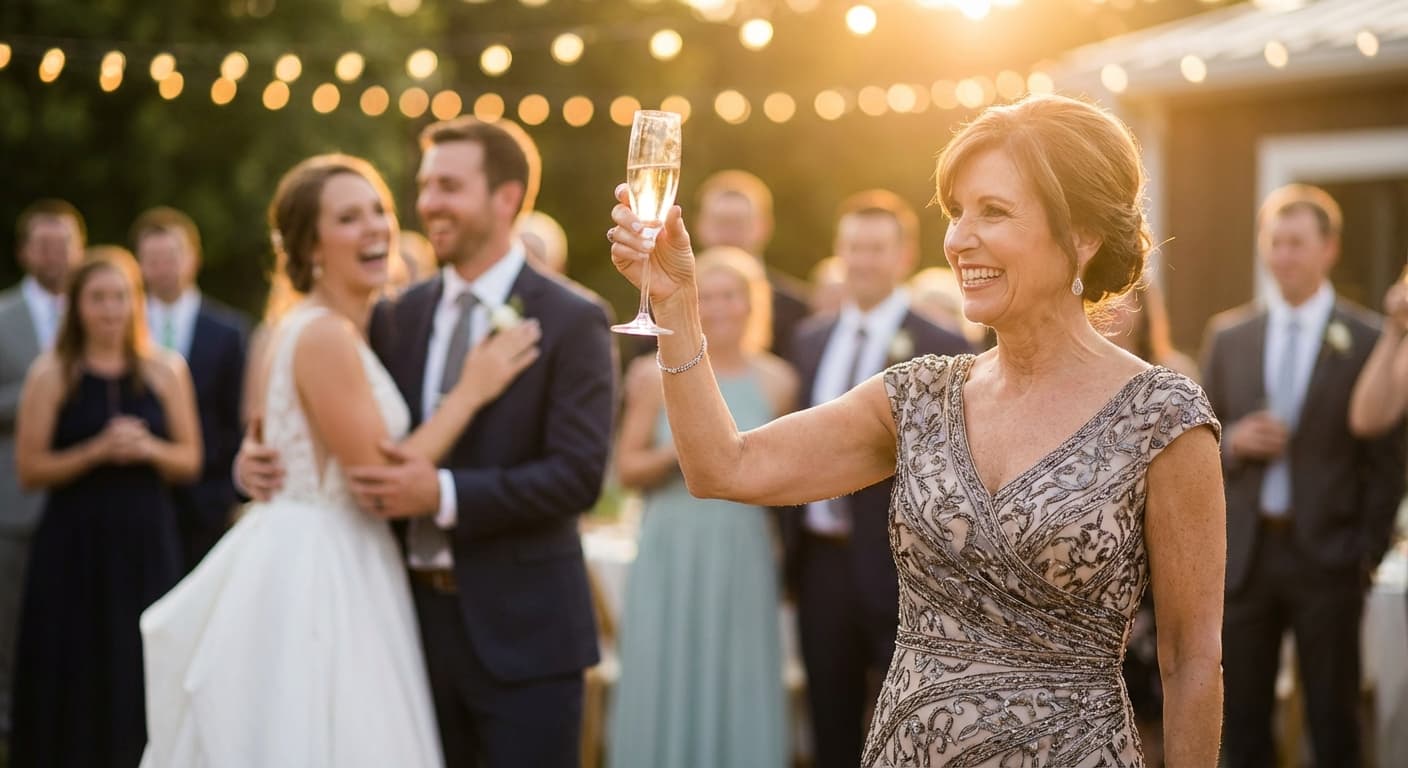
Mother of the Groom Speech: Etiquette, Tips & Examples
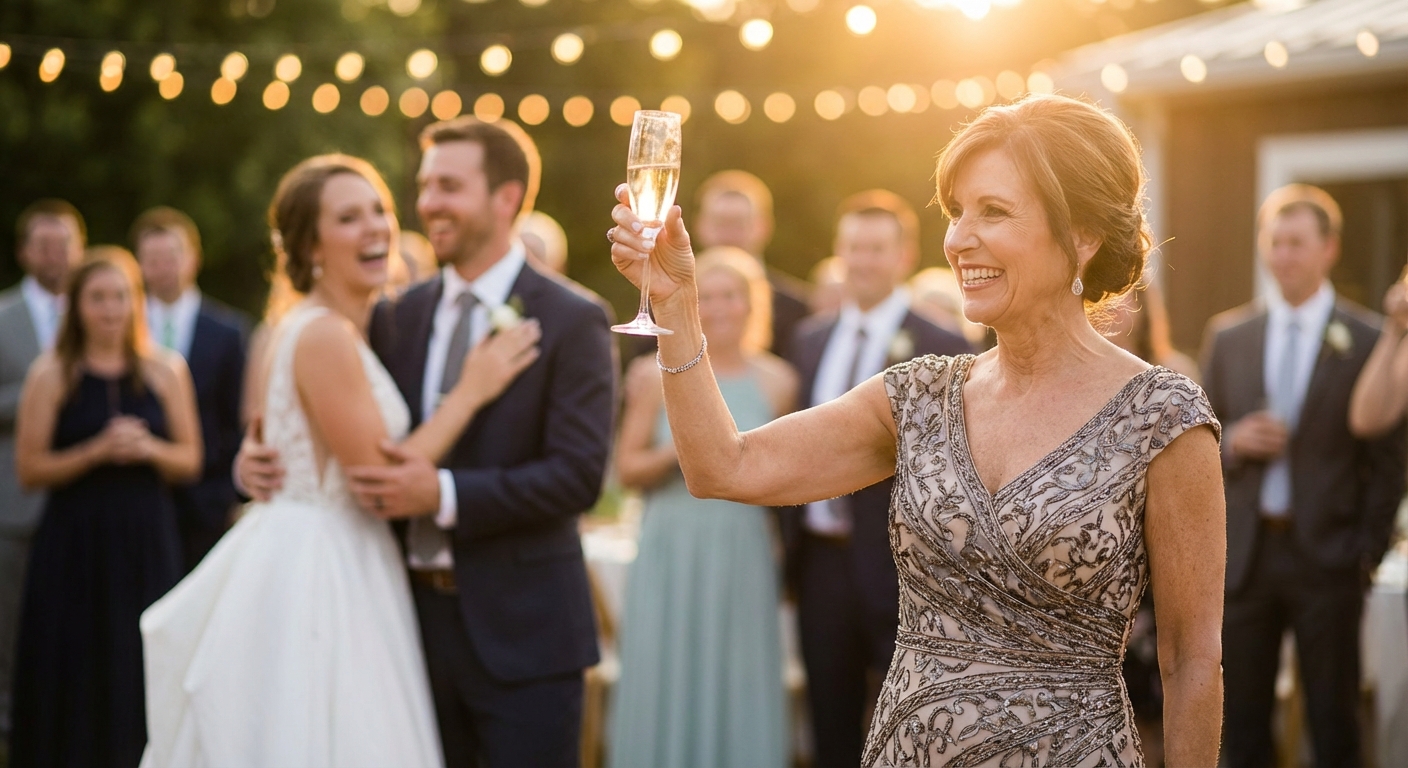
Mother of the Groom Speech Etiquette: What to Say (and What to Skip)
Watching your son prepare to get married is a profound experience that often brings a rush of conflicting emotions. You feel an immense sense of pride in the man he has become, joy for the life he is building, and perhaps a quiet nostalgia for the years that seem to have passed in the blink of an eye. Standing up to speak in front of his friends, your family, and his new spouse’s loved ones is a significant honor. It is your opportunity to publicly affirm his character and welcome a new child into your heart and home.
However, staring at a blank page while trying to condense decades of memories into a few minutes can feel overwhelming. Many mothers worry about striking the right balance between emotion and composure. You might fear rambling, getting too sentimental, or accidentally repeating stories the father of the groom plans to tell. If you are struggling to find the perfect words, you are not alone. This is a common hurdle, but it is one you can overcome with the right structure and support. Using a dedicated mother of the groom speech tool can help you organize your scattered thoughts into a polished tribute that sounds authentically like you, removing the stress of writer’s block so you can focus on the celebration.
This comprehensive guide will walk you through modern etiquette for your speech, offering a clear roadmap of what to include and what to leave out. We will cover strategies to coordinate with other speakers to avoid overlap, practical tips for managing nerves, and ways to infuse your toast with personal details that make it unforgettable. Whether you are speaking at the rehearsal dinner or the wedding reception, you will finish this guide ready to deliver a message that resonates deeply with your son and his new spouse.
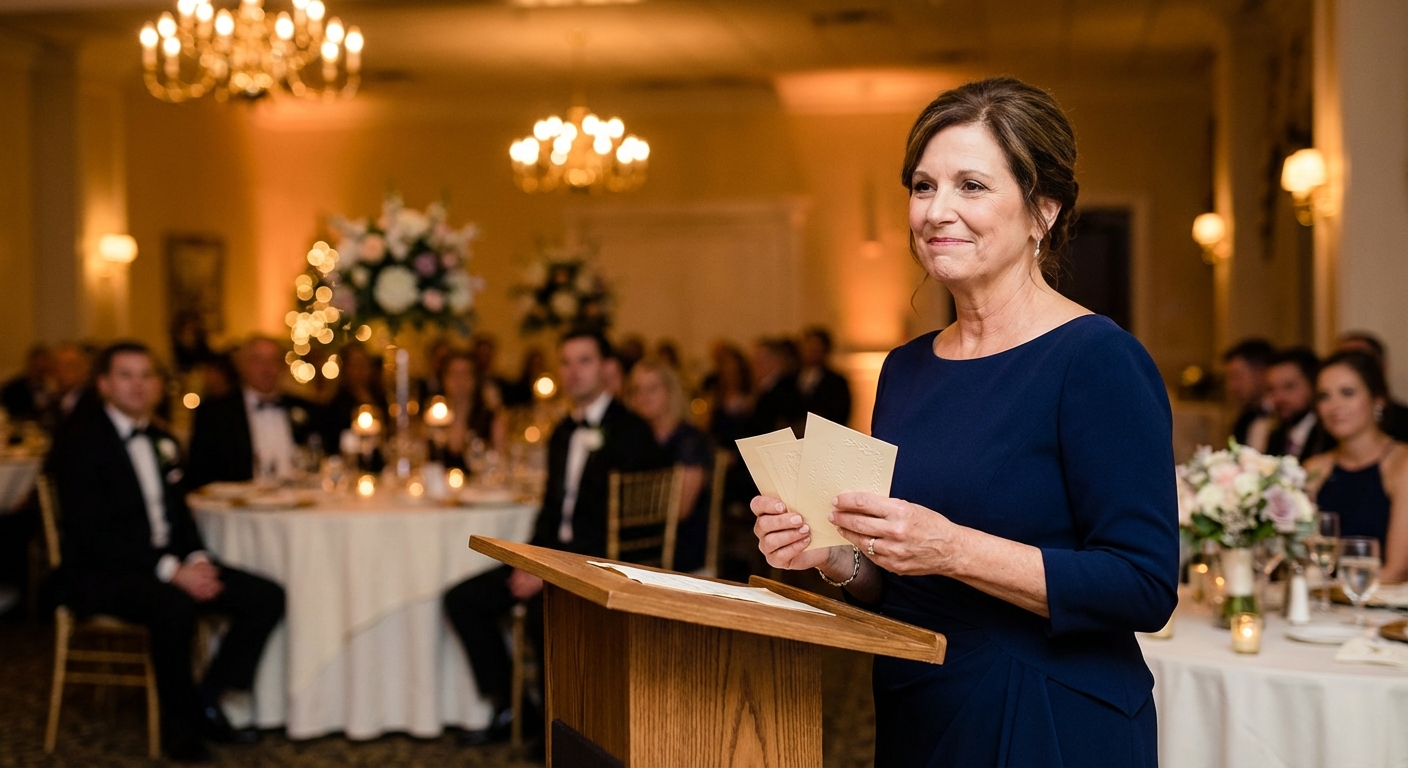
The Modern Role of the Mother of the Groom
Shifting Traditions and Expectations
In the past, wedding speeches were often limited to the father of the bride, the groom, and the best man. Mothers frequently played a supportive but silent role during the toasts. Today, that dynamic has shifted significantly. As families seek to personalize wedding celebrations, it has become increasingly common and often expected for the mother of the groom to share her perspective.
Your speech serves a distinct and vital purpose in the lineup of toasts. While the best man brings humor and the father of the bride often focuses on his daughter’s upbringing, your role is to provide the emotional bridge between your son’s past and his future. You are the voice of warmth and welcome. Modern wedding etiquette positions you as the speaker who best balances family history with an open armed acceptance of the new spouse. You are not just celebrating your son. You are celebrating the union and demonstrating that your family circle is expanding.
According to The Knot Real Weddings Study, parents remain deeply involved in the planning and ceremonial aspects of modern weddings. This involvement naturally extends to the reception toasts, where guests look forward to hearing from the people who know the couple best. Your words add a layer of depth and maternal affection that no other speaker can provide.
Timing and Length Norms
When it comes to speech length, less is almost always more. Industry experts and wedding planners consistently recommend keeping parent speeches between three and five minutes. This translates to roughly 250 to 600 words, depending on your speaking pace and pauses for laughter or applause.
A three to five minute speech is long enough to share a meaningful story and express genuine emotion, but short enough to maintain the energy of the event. Remember that yours is likely one of several speeches. Keeping your remarks concise shows respect for the guests’ time and ensures that the evening flows smoothly from dinner to dancing. A tight, well edited speech is always more impactful than a long, wandering one.
Reception vs. Rehearsal Dinner
One of the first logistical decisions you will face is determining the best setting for your speech. You might speak at the rehearsal dinner, the wedding reception, or potentially both.
The rehearsal dinner is typically a smaller, more intimate gathering comprised of close family and the wedding party. This setting is ideal for a speech that includes longer anecdotes, specific family memories, or inside jokes that a broader audience might not understand. It allows for a more relaxed delivery and deeper emotional vulnerability.
The wedding reception involves a much larger and more diverse audience, including distant relatives, coworkers, and friends from various stages of the couple’s lives. A reception speech should be more universal in its themes. It requires a polished delivery that focuses on welcoming the new spouse and celebrating the couple as a unit. Guidance from Zola suggests that while mothers traditionally spoke at the rehearsal dinner, stepping up to the microphone at the reception is a wonderful way to publicly honor the marriage. If you choose to speak at both, ensure your content is distinct for each event to keep it fresh and engaging.
What to Say: A Step-by-Step Checklist
Anxiety often stems from not knowing where to start. By following a proven structure, you can ensure your speech hits all the right notes without meandering. Here is a step by step checklist to craft a memorable toast.
1. The Warm Introduction and Thank Yous
Start with a clear, confident introduction. Even if you believe most people know you, state your name and your relationship to the groom. A simple opening like, "Good evening everyone, I am [Name], [Groom]’s mother," orients the guests and commands attention.
Follow this immediately with gratitude. Thank the guests for traveling to be there and acknowledge the joy of having everyone together. If appropriate, briefly thank the hosts or the couple for organizing the celebration. Keep this section concise. Avoid reading a laundry list of vendor names or thanking every distant relative individually. A general expression of gratitude covers everyone and keeps the momentum going.
2. The Groom: A Brief, Character-Building Anecdote
This section is your opportunity to shine a light on your son’s character. The goal is not to give a chronological biography of his life but to share a specific glimpse of who he is as a person. Choose one or two brief anecdotes that reveal his best qualities.
Think about moments that showcase his kindness, his loyalty, his sense of humor, or his resilience. Perhaps you recall a time he stood up for a friend, the dedication he showed in learning a new skill, or a quiet moment of generosity that no one else saw. Specificity creates connection. Instead of simply saying, "He is a good man," tell the story that proves it.
This is also the place to transition from his childhood to the man he is today. You might say, "I always knew his curiosity would take him far, but seeing the man he has become today makes me prouder than he will ever know."
3. The Pivot: Welcoming the New Spouse
This is arguably the most critical part of a modern mother of the groom speech. After you have spoken about your son, you must pivot your focus to his partner. This shift demonstrates that you recognize they are now a unit.
Speak directly to your new daughter in law or son in law. Express why you are happy they are the one your son chose. Share a moment when you realized they were a perfect match. Maybe it was the way they supported him during a stressful time, or simply the way his face lights up when they walk into the room.
Use inclusive language that emphasizes gain rather than loss. Phrases like, "We are so happy to welcome you to the family," or "I love the way you love him," are powerful. This public affirmation sets a tone of unity and support for their marriage.
4. Wisdom and Well-Wishes
As you move toward the conclusion, offer a brief piece of advice or a wish for their future. This can be drawn from your own experience, a favorite quote, or simply a hope you hold for them.
Keep it positive and forward looking. You might wish them patience, laughter, or the ability to always find their way back to each other. If you are naturally funny, a lighthearted piece of advice works well, provided it is not cynical. If you prefer a more sentimental tone, a sincere blessing is always appropriate.
5. The Closing Toast
Finally, invite the guests to join you in a toast. Be explicit with your instructions so everyone knows it is time to participate. Say something clear like, "If everyone could please raise their glass."
End with a short, punchy toast to the couple. "To [Groom] and [Spouse], may your life together be full of love and adventure. Cheers!" This provides a definitive end to your wedding speech and allows the celebration to continue on a high note.
What to Skip: Etiquette Pitfalls to Avoid
Knowing what not to say is just as important as knowing what to include. To ensure your speech is well received, avoid these common pitfalls.
Topics That Kill the Vibe
There are certain subjects that simply do not belong in a wedding speech. First and foremost, never mention past relationships. Bringing up an ex girlfriend or boyfriend, even in passing or as a comparison, is a major faux pas that creates immediate awkwardness.
Avoid embarrassing stories that cross the line from charming to humiliating. While a little self deprecating humor or a funny childhood story is fine, do not share anecdotes about bodily functions, illegal activities, or intimate moments that should remain private. If you are unsure if a story is appropriate, ask yourself if you would be comfortable hearing it if you were in the spouse’s shoes.
Steer clear of inside jokes that only a handful of people will understand. A wedding speech is a public address intended to include the entire room. If you have to say, "You had to be there," it is better to save that story for a private conversation. The Emily Post Institute emphasizes that toasts should be inclusive and clear to all guests, avoiding confusion or alienation.
The "Over-Mothering" Trap
It is natural to feel protective of your son, but a wedding speech is not the place to lament him leaving the nest. Avoid phrases that suggest you are reluctant to let go, such as "Take care of my baby," or "He will always be my little boy."
These sentiments can unintentionally minimize the groom’s maturity and imply that the new spouse is taking him away from you. Instead, frame your emotion as pride in his adulthood and joy in his partnership. Focus on the strength of the couple standing before you rather than looking backward at the child he used to be.
How to Avoid Overlap with the Father of the Groom
One of the biggest concerns for mothers is repeating the same stories or themes as the father of the groom. Since you share the same memories, this is a valid concern, but it is easily managed with a little coordination.
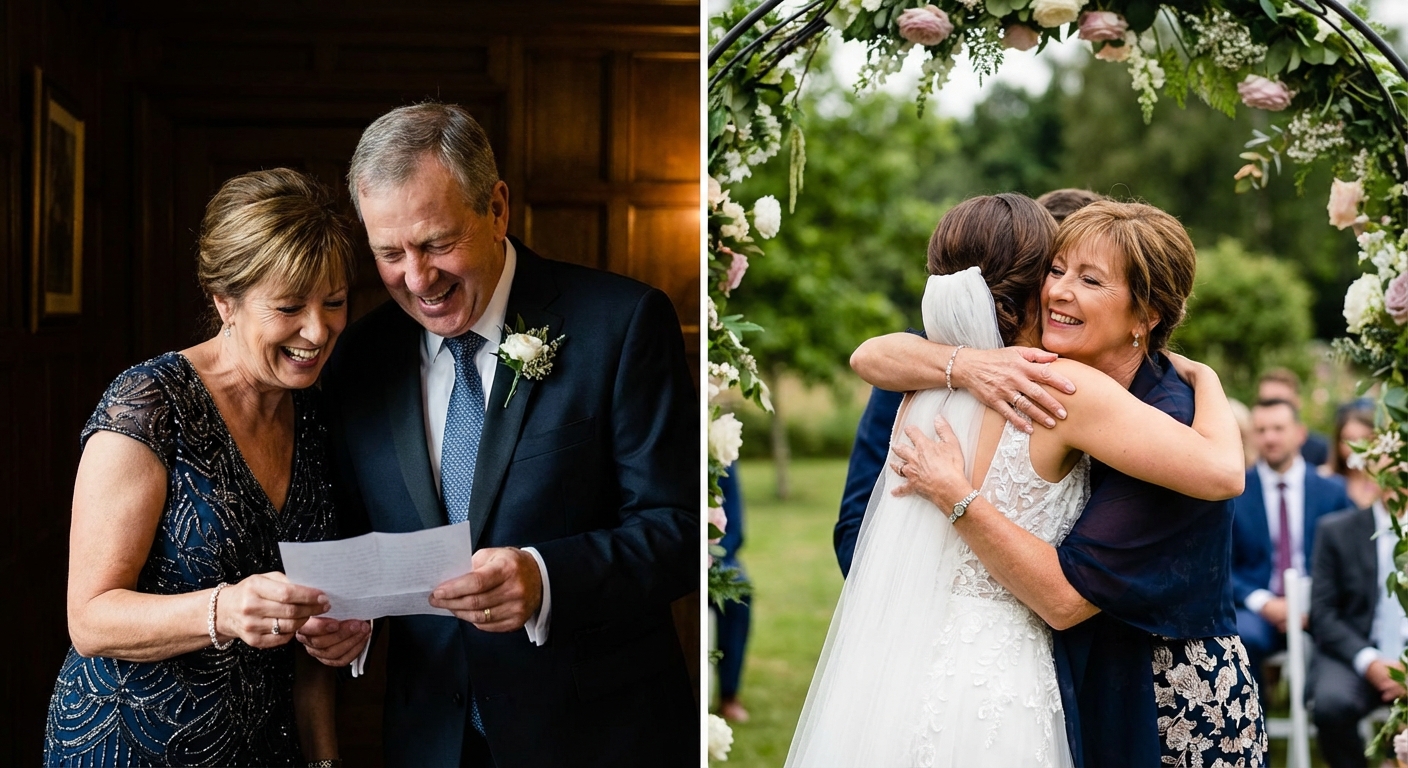
The Coordination Plan
The most effective way to prevent overlap is to communicate before you start writing. Have a brief conversation with the father of the groom (or your husband) to discuss what you each plan to say. You do not need to reveal your entire speech, but agreeing on "lanes" can be very helpful.
A common and effective division of labor is for the father to focus on childhood milestones, sports, academic achievements, and "pride." The mother can then focus on emotional intelligence, the groom’s kindness, relationship dynamics, and the "welcome" aspect. By consciously choosing different angles, you ensure that the guests get a fuller, more multi dimensional picture of the groom.
Using "Bridge Lines"
If you are speaking after the father and you want to acknowledge his speech without repeating it, use bridge lines. These are transitional phrases that reference what was just said while pivoting to your own perspective.
For example, you might say, "As [Father’s Name] mentioned, [Groom] was always an adventurous boy. But I want to tell you about the gentle side I saw when he was helping his sister..." This technique shows that the speeches are connected and that you are adding new information rather than rehashing the same points.
Joint Speeches
If the idea of speaking alone is daunting, or if you want to present a united front, consider giving a joint speech. This works particularly well if you and your spouse have a conversational dynamic.
To make a joint speech effective, avoid simply alternating sentences, which can sound choppy and rehearsed. Instead, trade off larger sections or paragraphs. One parent might handle the introduction and the story about the groom, while the other handles the welcome to the spouse and the closing toast. This allows for a natural flow and lets each of you play to your strengths.
Making It Unique: Sensory Details and Rituals
To take your speech from good to unforgettable, move beyond generic adjectives. Instead of saying your son is "nice," use sensory details and specific rituals to paint a vivid picture.
The Power of Specificity
Details anchor a story in reality. Mention the specific song he played on repeat as a teenager, the smell of the cookies he always asked you to bake, or the way he paces when he is thinking. These small, sensory details make your speech feel lived in and authentic. They trigger recognition in the guests who know him and help those who do not know him well to feel like they do.
The Welcome Ritual
Consider incorporating a family tradition into your welcome. This grounds your acceptance of the new spouse in something concrete. For example, "In our family, Sunday dinner is non negotiable. [Spouse], we are so happy that you now have a permanent seat at our table."
Or perhaps you have a holiday tradition or a summer vacation spot that is special to your family. Inviting the spouse into these rituals verbally is a powerful way to say, "You belong here."
Delivery Tips: Conquering Nerves and Tears
Public speaking is nerve wracking for almost everyone. The key to a great delivery is not the absence of nerves, but the management of them.
Preparation is Key
Practice is the single best antidote to anxiety. Read your speech aloud several times. This helps you catch awkward phrasing and ensures you are comfortable with the rhythm of the words. Time yourself to make sure you are staying within the three to five minute window.
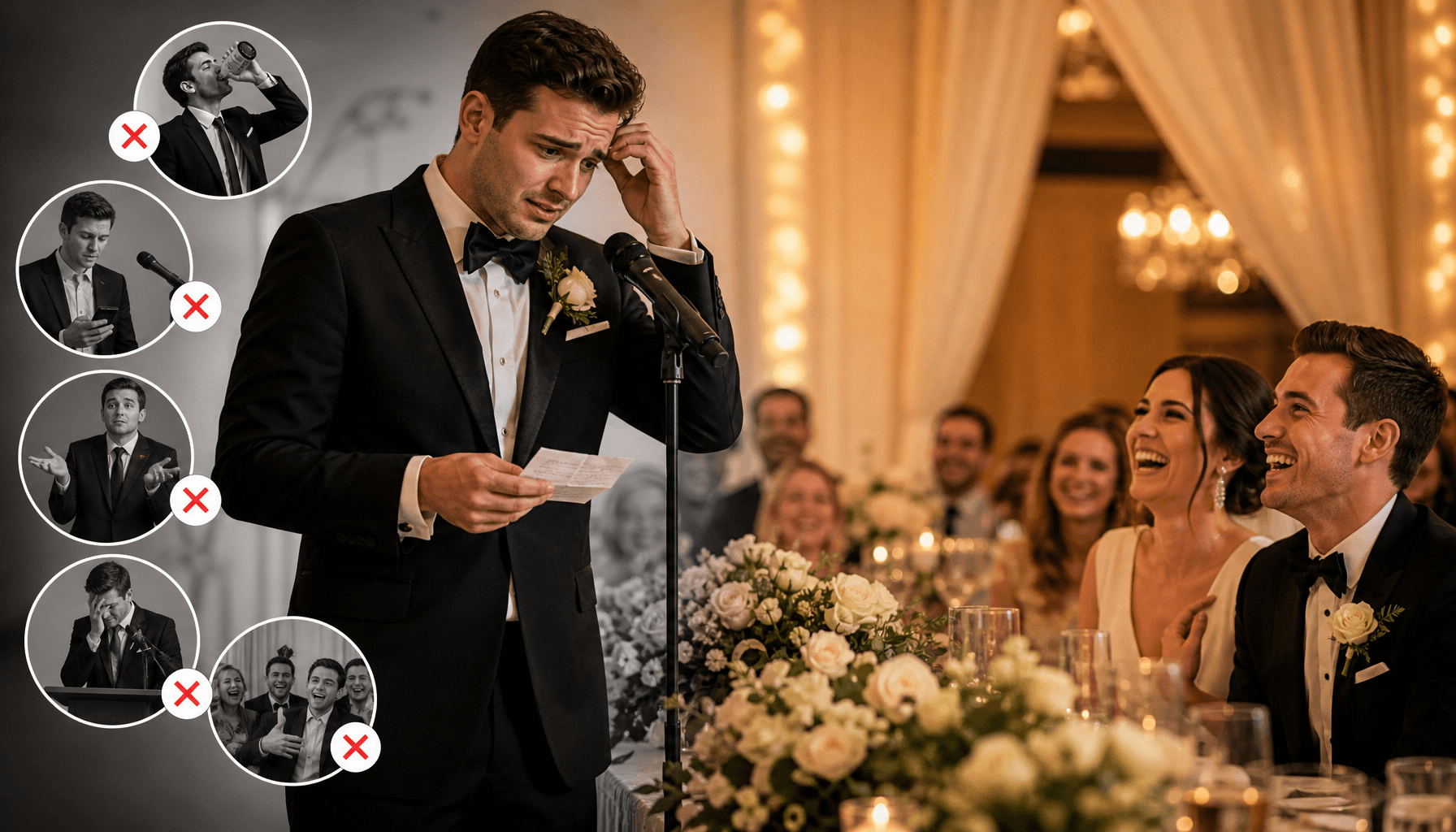
Use index cards rather than a sheet of paper or your phone. Paper shakes if your hands tremble, which can be distracting. Phones can dim, lock, or receive notifications at the worst possible moment. Index cards look professional and are easy to handle. Write in a large font so you can see your notes at a glance without having to squint.
Managing Emotion
It is completely acceptable to get emotional during your speech. In fact, a few tears often make the moment more poignant. If you feel yourself choking up, do not apologize. Simply pause, take a deep breath, and take a sip of water.
The audience is on your side. They want you to succeed, and they understand the weight of the moment. Smile through the tears if you can. It signals that these are happy tears and helps you relax.
Voice and Presence
When you speak, try to project your voice to the back of the room. Stand tall and breathe deeply. Make eye contact with the couple, but also scan the room to include the guests.
Remember to pace yourself. Nerves often make people speak faster. Make a conscious effort to slow down, especially during the punchlines of jokes or the emotional peaks of your stories. Pauses are powerful; they give the audience time to absorb what you have said.
Mother of the Groom Speech Samples
Sometimes seeing examples can help unlock your own creativity. Here are three templates of varying lengths to help you get started.
30-Second Toast (Quick and Elegant)
"Good evening everyone. I am [Name], [Groom]’s mother. I want to thank you all for being here to celebrate this incredible day. [Groom], seeing you so happy makes me happier than I can say. And [Spouse], welcoming you into our family has been such a joy. I love the way you two support each other. If everyone could raise a glass: To [Groom] and [Spouse], may your life together be filled with love, laughter, and endless happiness. Cheers!"
1-Minute Speech (Warm and Personal)
"Hi everyone, I am [Name], [Groom]’s mom. Thank you for traveling from near and far to be with us.
When I think about [Groom], I think about his loyalty. Even as a little boy, he was the one who would never leave a friend behind. I see that same loyalty in the way he loves you, [Spouse].
[Spouse], from the moment you walked into our lives, we saw a change in him. He stands a little taller and smiles a little brighter. We are not just gaining a son in law/daughter in law today; we are gaining a family member we already love.
My wish for you both is that you always keep laughing, even when life gets busy. To the happy couple!"
3-Minute Speech (Classic and Complete)
"Good evening. I am [Name], and I have the privilege of being [Groom]’s mother. Looking around this room and seeing so many people who love [Groom] and [Spouse] is truly overwhelming. Thank you all for being here.
There are a thousand stories I could tell about [Groom], but one stands out. When he was ten years old, he spent an entire Saturday helping our elderly neighbor fix her fence, just because he saw she needed help. That is the man he is today: selfless, kind, and always willing to do the work.
I always wondered who he would find that could match that heart of his. Then he met [Spouse]. [Spouse], I remember the first time he brought you home. I watched you two in the kitchen, just talking and laughing while you did the dishes, and I knew. I knew you were the one who really saw him.
We are so incredibly happy to welcome you to the family. You fit right in, and we cannot wait to see the life you build together.
My advice to you is simple: Be each other’s safe place. The world can be loud, but your home should be the place where you can both just be.
Please join me in raising a glass. To [Groom] and [Spouse], may your love grow deeper with every passing year. We love you both. Cheers!"
Conclusion: Your Heartfelt Message, Perfectly Delivered
Delivering a mother of the groom speech is a beautiful opportunity to honor your son and embrace his future. It does not require professional acting skills or poetic language. It simply requires sincerity, preparation, and love. By following the etiquette of keeping it brief, focusing on the couple, and welcoming the new spouse, you will create a moment that is cherished by everyone in the room.
If you are still feeling unsure about how to phrase your thoughts or worried about how to structure your memories, ToastPal is here to assist you. Our tools can help you draft a speech that feels personal and polished, ensuring you step up to the microphone with confidence. Enjoy this milestone, soak in the joy of the day, and speak from your heart.
Frequently Asked Questions
How long should a mother of the groom speech be?
A mother of the groom speech should typically be between three and five minutes long. This usually translates to about 250 to 600 words. This duration is sufficient to share a story and well wishes without losing the audience's attention.
Does the mother of the groom speak at the rehearsal dinner or reception?
Traditionally, the mother of the groom spoke at the rehearsal dinner. However, modern weddings often feature the mother of the groom speaking at the reception. It is entirely appropriate to speak at either, or even both, provided the content is tailored to the setting.
What is the difference between the mother of the groom speech and the mother of the bride speech?
The mother of the groom speech generally places a stronger emphasis on welcoming the new spouse into the groom's family and acknowledging the couple's relationship dynamics. The mother of the bride speech often focuses more on the bride's upbringing and the "sending off" aspect of the family dynamic.
How do I start my mother of the groom speech?
Start with a warm welcome and a brief self introduction, stating your name and your relationship to the groom. Follow this immediately with a quick expression of gratitude to the guests and hosts.
Can I give a funny mother of the groom speech?
Yes, humor is a great addition to a speech, provided it is balanced with warmth. Avoid roasting your son too harshly or telling embarrassing stories. Gentle, affectionate humor that highlights his personality is perfect.
Create Your Speech