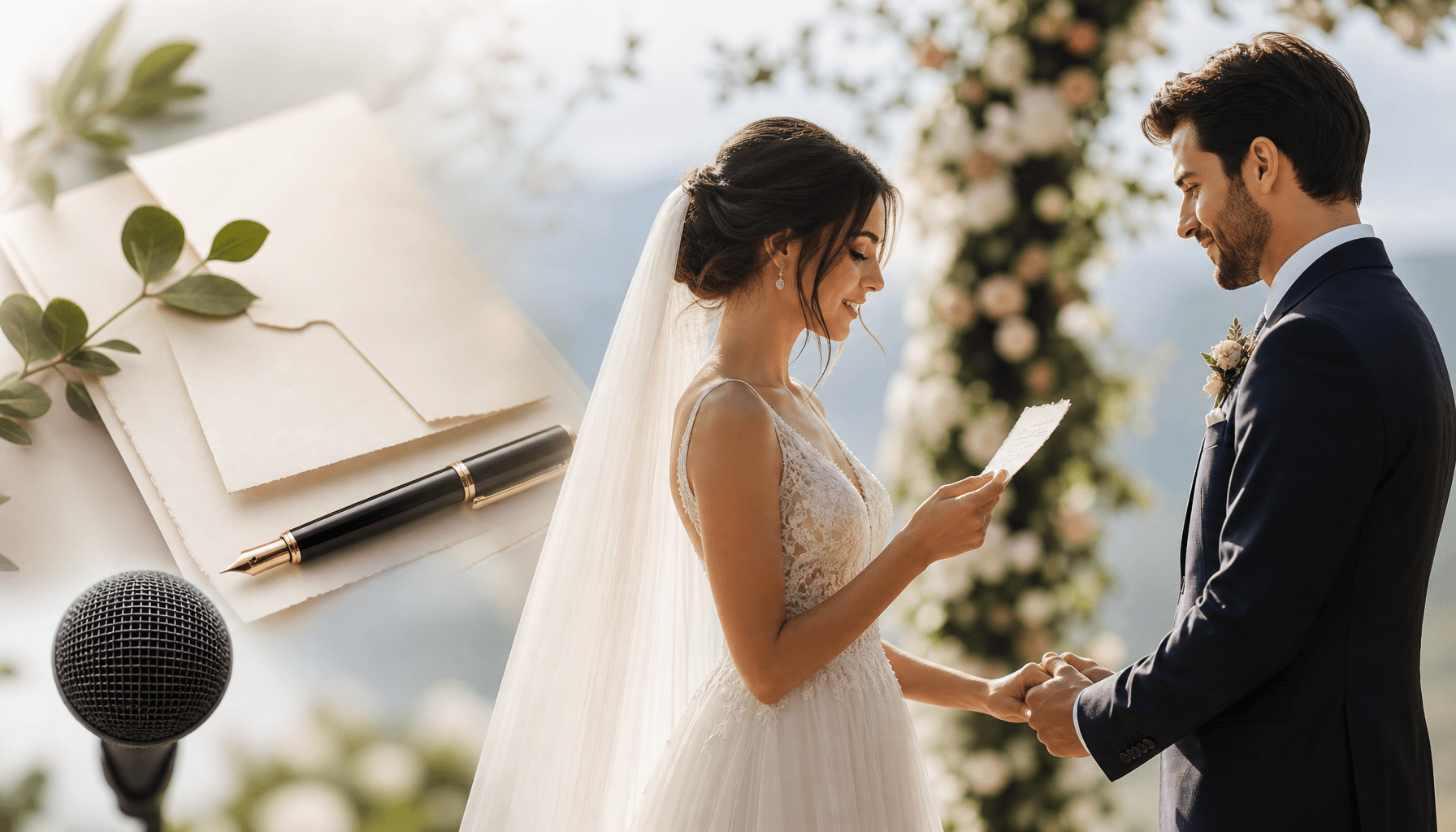
The Vow Writing Date: Turn Stress Into Romance (2025 Guide)

The Ultimate Vow Writing Date Guide: Turning Stress into Romance
TL;DR: A Vow Writing Date is a dedicated, romantic evening where couples simultaneously draft their wedding promises, transforming a typically stressful chore into a bonding ritual. By combining a relaxed atmosphere with structured prompts and utilizing tools like ToastPal for refinement, couples can create authentic vows that balance 2025 trends like private exchanges with timeless sentiment.
Picture this: It is three weeks before your wedding. The seating chart is a nightmare, your future mother-in-law wants to change the flowers, and you still have not written a single word of your vows. The blank page stares back at you, mocking your attempts to capture a lifetime of love in two minutes. Sound familiar?
You are not alone. With 50% of American couples now choosing the path of writing your own vows, the pressure to craft something meaningful has never been higher. The expectation to be profound often leads to procrastination, resulting in frantic scribbling the night before the ceremony. But what if the solution is not more time alone with your laptop, but rather an evening with your partner, a bottle of wine, and a shared commitment to tackle this together?
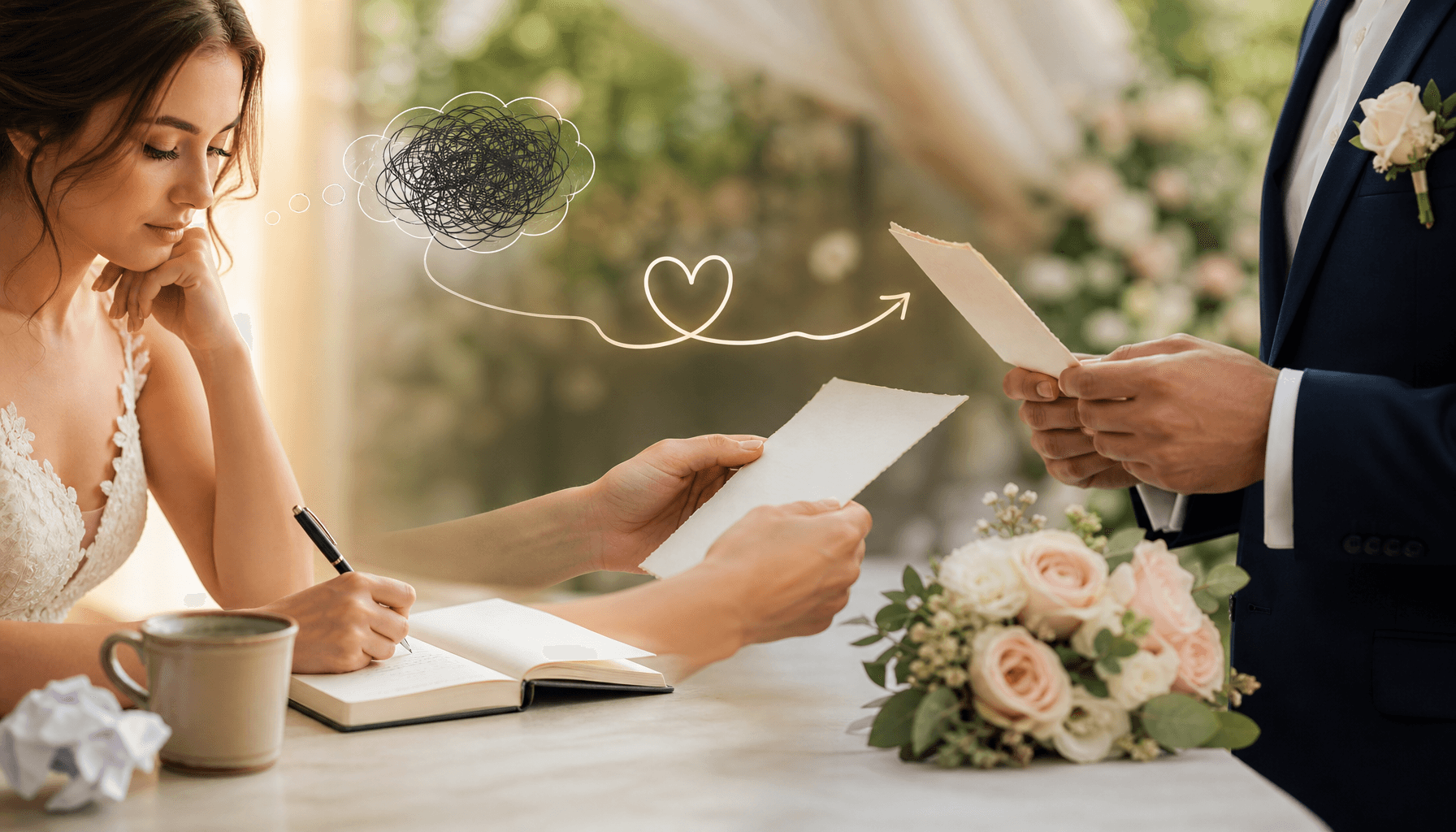
Enter the Vow Writing Date. This concept reframes the anxiety of the blank page into an opportunity for connection. Instead of treating vow writing as a solitary homework assignment, savvy couples are embracing this shared ritual. Whether you are starting from scratch or looking to polish a rough draft, ToastPal serves as the perfect silent partner to ensure your words flow smoothly, helping you articulate the feelings that often get stuck in your throat.
What is a 'Vow Writing Date'? (And Why You Need One)
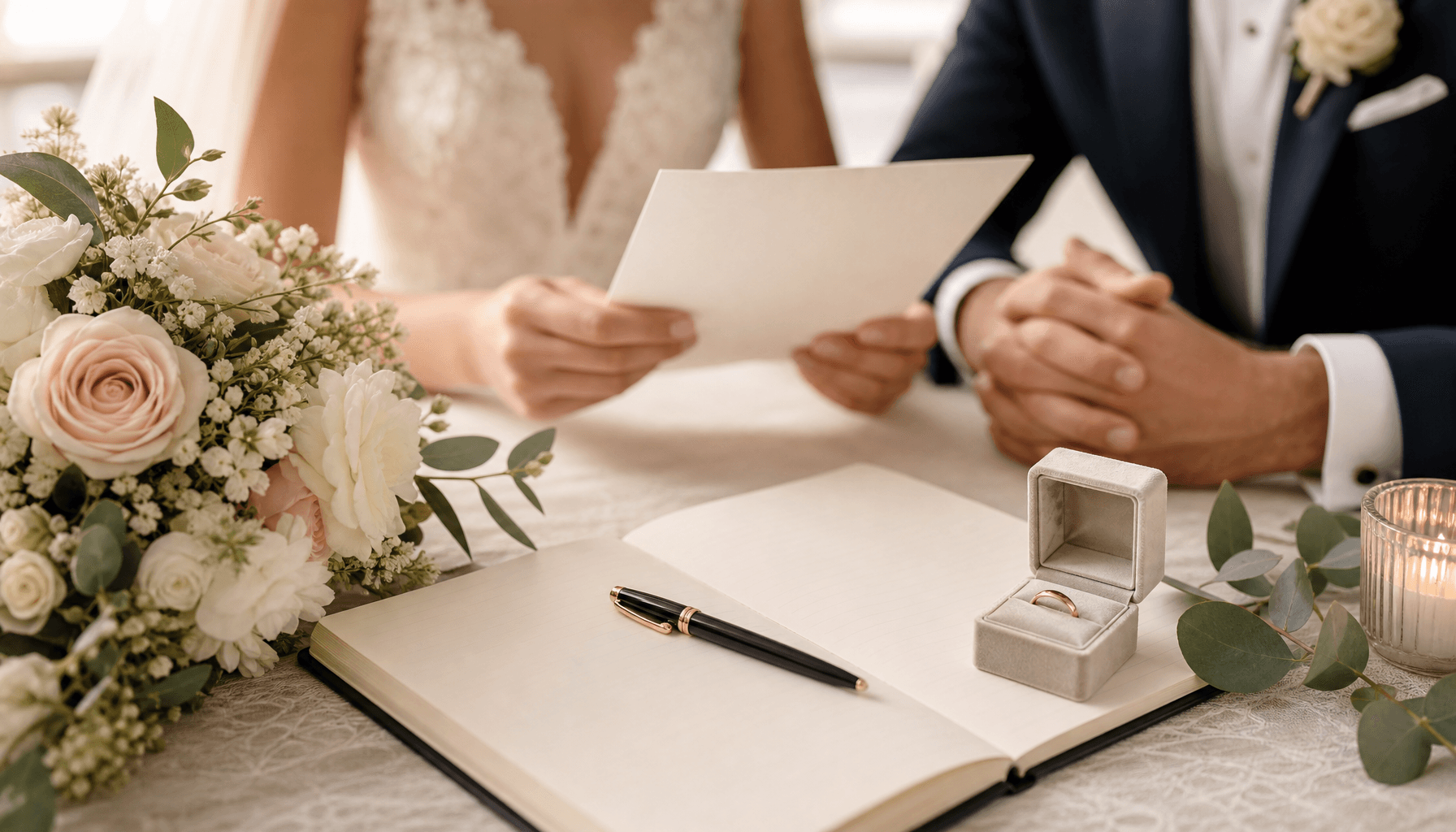
A Vow Writing Date is a scheduled time for couples to disconnect from wedding planning logistics and focus solely on the emotional core of their ceremony. Think of it as a mini-retreat, often accompanied by meaningful food, drink, and a relaxed setting that encourages vulnerability. It is a deliberate pause in the chaotic timeline of wedding preparation to remember why you are getting married in the first place.
The Problem: Tone Drift
Traditionally, partners write their vows in isolation to preserve the element of surprise. While well-intentioned, this often leads to a phenomenon known as "Tone Drift." One partner might write a series of hilarious anecdotes and inside jokes, while the other writes a deeply solemn, tear-jerking poem. When these are read consecutively at the altar, the emotional whiplash can be jarring for both the couple and the guests. Furthermore, writing alone breeds procrastination. Without a deadline or a partner working alongside you, it is easy to push the task until the final week.
The Solution: The Vow Sync Effect
Writing simultaneously creates what relationship experts might call the "Vow Sync Effect." When you sit in the same room to write, even if you do not show each other your screens, you naturally align your energy. You can agree on parameters in real time. You might pause to ask, "Are we doing funny promises or serious ones?" or "How long is yours looking?" This ensures that on the big day, your vows feel like two halves of the same conversation rather than two separate speeches.
Setting the Scene: 3 Vow Writing Date Ideas
The environment you choose for your writing session will heavily influence the output. A sterile office or a cluttered kitchen table might stifle creativity. The best Vow Writing Dates combine nostalgia with a distraction-free environment. Here are three distinct themes to get the ink flowing.
Idea 1: The Memory Lane Picnic
This date is designed to trigger specific memories that serve as the foundation for your vows.
- The Location: Return to the site of your first date, where you got engaged, or a park you frequent together.
- The Setup: Pack a basket with your favorite snacks. Crucially, bring physical artifacts of your relationship. This could be old photo albums, a box of ticket stubs, or even scrolling through your very first text messages to each other.
- The Goal: Use nostalgia to populate the "Past" section of your vows. As you look through photos, you will naturally say things like, "Remember when we got lost in Tokyo?" or "I forgot about that terrible haircut you gave me." Write these down immediately. These specific anecdotes are the gold dust that makes vows feel authentic rather than generic.
Idea 2: The Vow & Vino Night
This is perfect for couples who need structure and a bit of liquid courage to loosen up.
- The Location: A cozy living room with phones turned off and tucked away in a drawer.
- The Setup: Open a bottle of wine or brew a pot of your favorite tea. Use the Pomodoro technique to manage the workload. Set a timer for 20 minutes of silent writing, followed by a 10-minute break to chat, refill glasses, and reconnect.
- The Goal: Focus on overcoming the initial hurdle of starting. If you find yourself staring at a blinking cursor, this is the time to utilize tools for beating writer's block. The sprint structure forces you to get words on the page without overthinking them, while the breaks ensure the evening remains romantic rather than grueling.

The Blueprint: Structuring Your Vows Together
Even the most romantic atmosphere cannot fix a disorganized speech. To ensure cohesion, couples should agree on a framework during their date. Without this, you risk one partner delivering a two-minute epic while the other finishes in thirty seconds.
The most effective structure is the Past-Present-Future method. This narrative arc is easy to follow and emotionally satisfying for the audience.
The Past: How We Got Here
This section sets the stage. It covers how you met, your first impressions, or the moment you knew this person was "the one." It provides context for the guests who might not know your full history.
The Present: Who We Are Now
Here, you transition to the current day. You articulate what you love about your partner right now. This is the place to mention their quirks, their kindness, or how they support you. Don't just say "You are kind." Say, "You always stop to help strangers with directions, even when we are running late."
The Future: What I Promise
This is the most critical part of the vows—the actual promises. These should be a mix of broad, deep commitments and specific, lighter promises that reflect your daily life.
The Goldilocks Length
During your date, you must agree on a word count. The industry standard suggests a 150-250 word sweet spot. This translates to roughly one to two minutes of speaking time. This length is long enough to be meaningful but short enough to hold the attention of your guests. Agreeing on this range before you start writing prevents the need for brutal editing later.
For those struggling to fit their massive feelings into this compact structure, following a Step-by-Step Structure can be a lifesaver. It acts as a skeleton, allowing you to flesh out the body of the speech without getting lost in tangents.
2025 Trends: Private Exchanges and the AI Balance
As we move into the 2025 wedding season, the landscape of vow writing is evolving. Couples are prioritizing authenticity and intimacy over performance, leading to significant shifts in how vows are delivered and created.
The Rise of the Private Exchange
There is a growing movement toward Private vow exchanges, often taking place during the "First Look" before the ceremony. This trend allows couples to share their most intimate, vulnerable, and perhaps slightly racy promises without an audience of grandparents and coworkers.
AI-Assisted Authenticity
The integration of technology into wedding planning has reached the writer's room. While some may view AI with skepticism, the reality is that AI Duality is becoming the norm. Couples are not asking AI to replace their hearts; they are using it to unlock them.
Think of AI tools like ToastPal not as a ghostwriter, but as a highly skilled editor. You provide the raw memories, the messy feelings, and the unpolished anecdotes during your Vow Writing Date. The AI then helps organize these thoughts into a coherent flow, suggests better synonyms for "love," and ensures the tone matches your partner's. It bridges the gap between what you feel and what you can articulate.
Timeline: When to Schedule Your Date
Timing is everything. Schedule your Vow Writing Date too early, and the feelings might feel stale by the time the wedding arrives. Schedule it too late, and you enter the panic zone where stress overrides creativity.
The Sweet Spot (3-4 Weeks Before)
The ideal time to schedule your date is three to four weeks before the big day. Experts advise you to Finalize 3 weeks before. This window provides ample breathing room.
- Week 1 (The Date): You have your date, drink your wine, and produce a solid draft.
- Week 2 (Refinement): You input your notes into ToastPal to polish the flow and check the length.
- Week 3 (Practice): You practice reading them out loud to catch tongue-twisters.
Make Your Vow Writing Date Count
The Vow Writing Date is not just about producing words on a page. It is about transforming a stressful obligation into a meaningful ritual, a moment where you pause amidst the chaos of wedding planning to remember why you are doing this in the first place.
By scheduling dedicated time, choosing an environment that inspires you, agreeing on structure and length, and embracing tools that help you refine your message, you are setting yourself up for success. You are ensuring that when you stand at that altar, the words you speak are authentic, polished, and deeply yours.
Whether you opt for a Memory Lane Picnic, a Vow & Vino Night, or a Time Capsule Evening, the key is intentionality. You are not just checking a box. You are creating a memory, a shared experience that will become part of your wedding story. And when the drafts are written, when the raw emotions are on the page, that is when ToastPal steps in. Not to write your vows for you, but to help you say what you mean with clarity, grace, and impact.