Unconventional Wedding Speech Ideas: Props, Slideshows & Joint Toasts for 2025
Unconventional Wedding Speech Ideas: Props, Slideshows & Joint Toasts for 2025
The era of nervously reading from crumpled notecards is fading fast. Modern weddings are shifting away from rigid formalities toward genuine connection and shared experiences. Today, the most impactful toasts feel less like a lecture and more like a gift to the room. If you are tasked with speaking at an upcoming celebration, you might be looking for fresh wedding speech ideas that allow you to stand out without crossing into gimmicky territory.
Many speakers want to do something unique but worry that using a prop or a partner might look chaotic. The truth is that unconventional speeches using visual aids, multimedia, or collaborative formats can transform your moment at the microphone into something truly unforgettable. However, creativity without structure can fall flat. While props and slideshows add flair, the words you speak still carry the emotional weight. This is where ToastPal serves as your ultimate speechwriting companion. By helping you organize your thoughts into a cohesive narrative, our platform ensures that your creative vision is supported by a solid, heartfelt wedding speech script.
The Shift to "Experience": Wedding Speech Trends for 2025
Weddings have evolved dramatically over the past decade. What once centered purely on ceremony and tradition now emphasizes guest entertainment, personalization, and creating shareable moments. According to The Knot Worldwide 2025 Global Wedding Report, 68% of couples worry about giving their guests a unique experience, while 36% of guests cite personalized touches as the most memorable aspect of any wedding.
This shift has profound implications for anyone holding a microphone. The traditional format of standing at the podium and delivering a five-minute monologue no longer captivates audiences the way it once did. Current wedding speech trends 2025 lean toward shorter, punchier, and more interactive formats that engage rather than lecture. The goal is not just to speak about the couple but to bring everyone into the story. Whether through visual aids, collaborative storytelling, or multimedia integration, modern speeches create moments that resonate long after the reception ends.
Guests remember specificity. They remember real names, real moments, and real details they have not heard in every other toast. To succeed in this new landscape, aim for a speech length of two to three minutes. Focus on one clear theme rather than a laundry list of compliments, and ensure that any interactive element makes it easier for the audience to feel the story, not harder to follow it.
Using Props to Elevate Your Toast
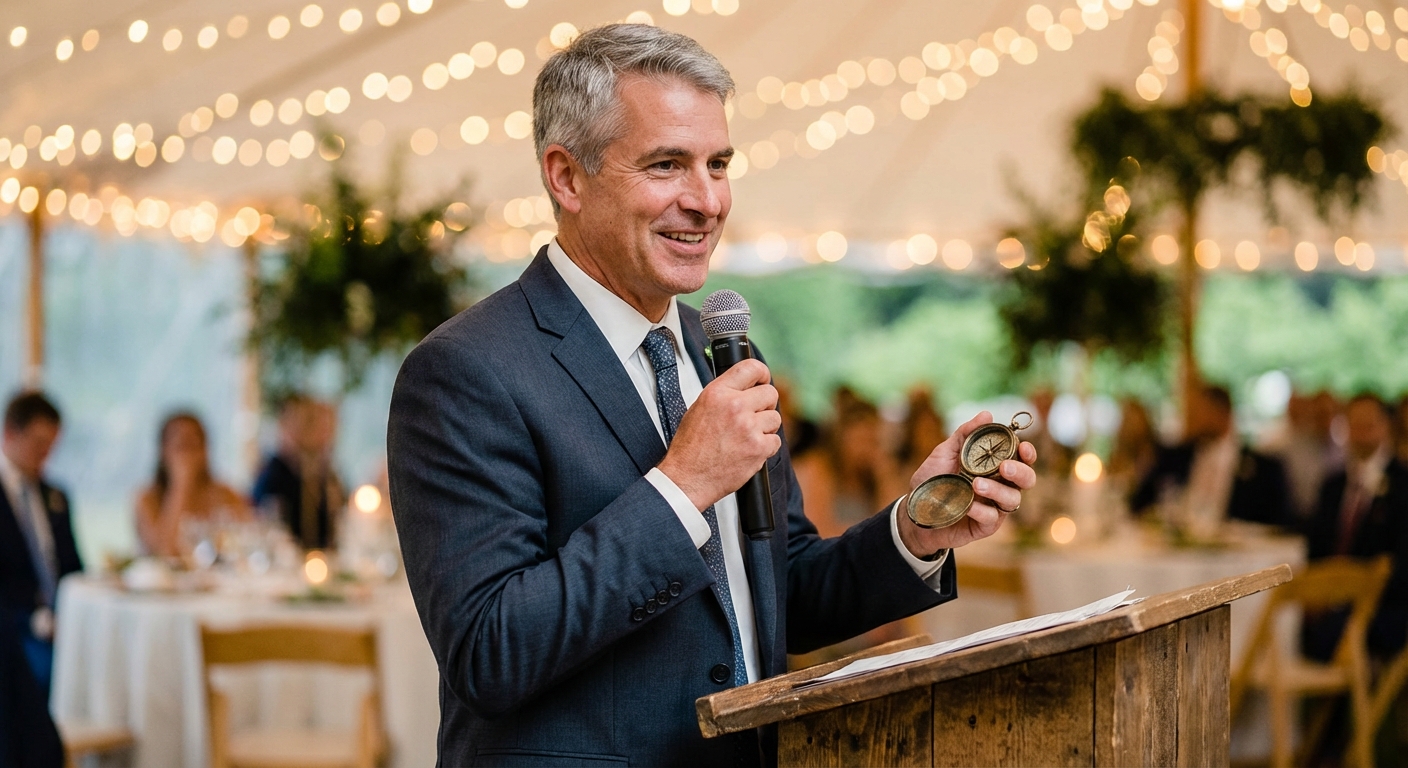
Props might sound like a risky move, but when executed thoughtfully, they serve as powerful visual anchors for your stories. Instead of simply describing a memory, you can show it. The prop is not the joke itself; the prop is the proof. It makes the audience lean in because they can see the memory in your hands.
Here are some wedding speech props ideas that work beautifully when paired with the right story.
The "Time Capsule" Box
Bring a small, decorative box to the podium and pull out three items, each tied to a short story about the couple. The structure is what makes this work effectively. You might pull out a movie ticket stub from their first date to represent "where it started," followed by a memento from a challenging trip to represent "the moment I knew this was serious," and finally, a small item that symbolizes your wish for their future. This turns your speech into a "show and tell" that keeps guests visually engaged.
The "Red Card / Yellow Card" Gag
Borrowing from sports, this format allows you to playfully "judge" past decisions made by the groom or bride. You can hold up a yellow card for minor infractions like showing up late to the first date or leaving texts on read. A red card can be used for bigger, humorous blunders, provided they are safe for a general audience. This works especially well for best man speeches where humor is expected. The key is to end with a sincere "green card" moment that praises their relationship and character.
Large Format Photos
Sometimes the simplest props are the most effective. Holding up a single, enlarged photo printed on foam board creates instant visual comedy. Avoid passing around small photos, as only the people at the front tables will see them. The image could be a childhood haircut, an awkward school dance pose, or a goofy costume. The joke lies in the setup line, not just the image itself.
Remember that a prop is only as funny or meaningful as the script accompanying it. You need perfectly timed delivery and clear transitions. If you remove the prop and the speech has no heart, you were relying on a gimmick. Use ToastPal to generate the perfect punchlines that set up your prop reveal, ensuring the visual element enhances rather than distracts from your message.
Mastering the Multimedia Toast: Slideshows and Video
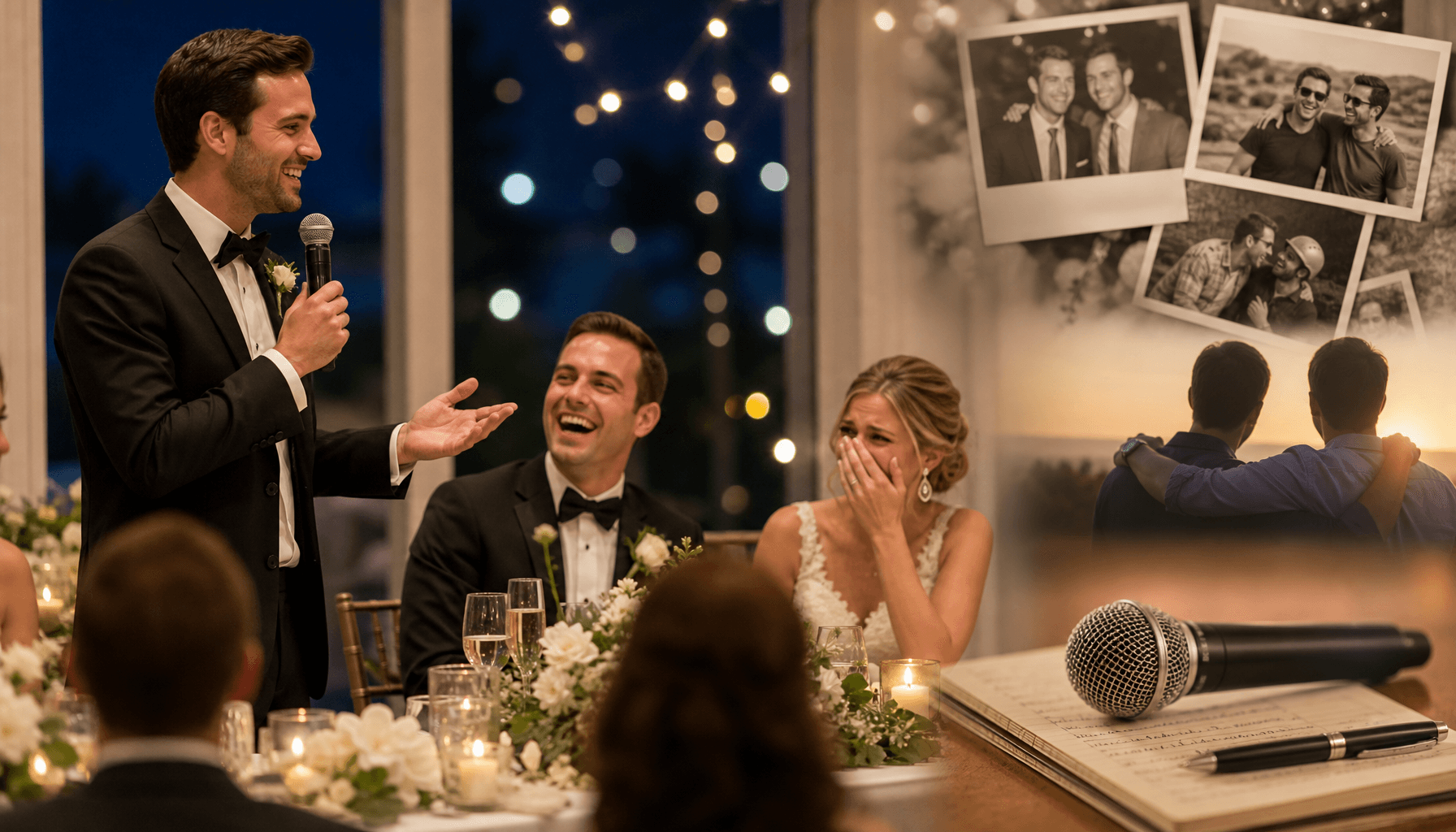
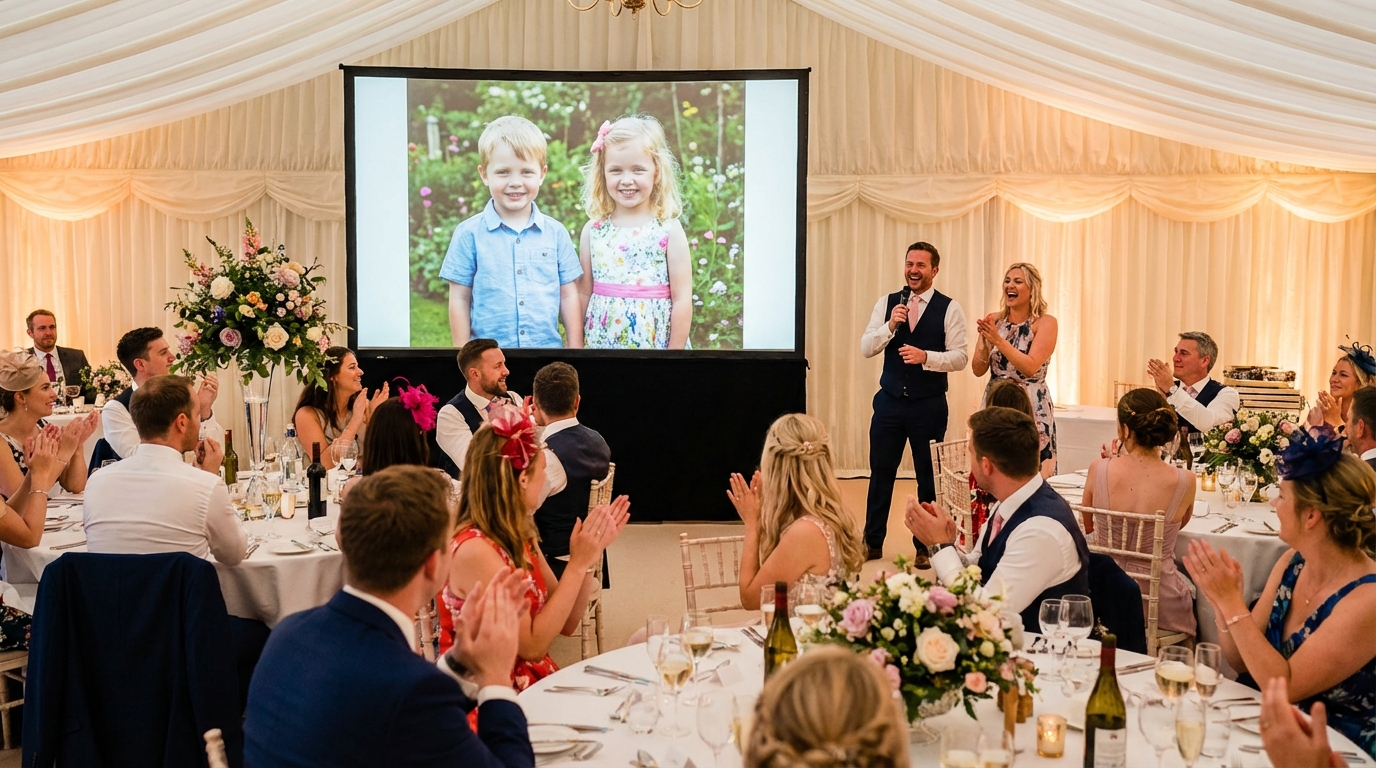
The silent slideshow playing on loop during dinner has become wedding wallpaper. Guests glance at it occasionally but rarely engage deeply. The modern approach flips this dynamic by integrating narrated slideshows directly into your speech, creating a synchronized audio-visual experience.
To execute slideshow wedding toast tips effectively, you must prioritize timing and clarity.
The 90-Second Rule for Slideshows
Keep video clips or photo sequences to 30 to 60 seconds maximum within your speech. Any longer and you risk losing audience attention. The visuals should punctuate your words, not replace them. If you are showing a video clip, ensure your spoken introduction sets it up perfectly, then let the clip play, and immediately pick up the narrative once it ends.
Curate Ruthlessly
Quality trumps quantity every time. Instead of showing 50 photos, select six to ten images that each tell a specific part of the story. Every photo should have a clear connection to what you are saying in that moment. If you are building toward a point about the groom's loyalty, show photos that demonstrate this quality across different life stages.
The Narrated Approach
A narrated slideshow fails when the speaker starts describing what everyone can already see. Instead of saying "Here is a photo of them at the beach," give the audience meaning. Tell them why that beach trip was a turning point in their relationship. Speak to the emotion of the image, not the content.
The technical challenge with multimedia toasts lies in synchronizing your spoken words with visual transitions. Practice your timing repeatedly. For guidance on pacing and handling these elements smoothly, reading Expert Tips for Delivering Non-Traditional Toasts can help you master the performance aspects of modern toasts.
Double the Fun: How to Deliver a Joint Wedding Speech
Joint wedding speech scripts are gaining popularity, especially among parents of the bride or groom who want to share the spotlight, or when there are co-maids of honor. The challenge lies in creating one cohesive voice from two distinct personalities without the speech feeling disjointed or competitive.
The "Tag Team" Format
A joint speech works best when it is clearly choreographed. One effective method is the chronological split. Speaker 1 might cover childhood and early years, sharing stories from the past. Speaker 2 then takes over to discuss the college years, the meeting of the partner, and the present day. This format feels clean because it has a natural narrative progression.
The "Roast vs. Toast" Dynamic
Another option creates a tonal balance. One speaker focuses on light humor and funny anecdotes, while the other balances the energy with heartfelt sentiment and gratitude. This keeps the crowd smiling while still delivering the emotional punch required of a wedding toast.
Drafting Unified Content
The biggest mistake in joint speeches is writing two separate speeches and stitching them together. This creates awkward transitions. Instead, outline the full arc together. Agree on one central theme and a shared closing line that you deliver together.
ToastPal excels at generating joint scripts by allowing you to input details for both speakers. The platform helps merge distinct voices into a unified narrative, ensuring natural handoffs between speakers. If you are new to this process, learning how to craft the perfect unconventional speech using a structured approach will give you the foundation to experiment confidently with a partner.
Other Non-Traditional Wedding Toast Examples
Beyond props and multimedia, several other formats can make your speech stand out. These non-traditional wedding toast examples are popular because they feel personal and participatory without needing extensive equipment.
The Musical Toast
Rewriting lyrics to a popular song requires confidence, but when done well, it is unforgettable. Choose a song everyone knows and keep your version short, ideally just one verse and a chorus. This works especially well for musically inclined speakers who can accompany themselves on guitar or piano. If you cannot sing, speaking the rewritten lyrics like a poem can be just as effective if delivered with humor.
The Poem or Rhyme
A heartfelt poem or clever limerick offers a refreshing change from standard prose. This format particularly suits parents or grandparents who want to convey deep emotion in a structured way. The key is avoiding forced rhymes that sound awkward when spoken aloud. Aim for plain language and vivid imagery that is uniquely specific to the couple.
The Table Quiz
Start your speech by asking the audience to guess something about the couple. You might ask, "Raise your hand if you think you know who said 'I love you' first." After collecting guesses, reveal the real story. This interactive element immediately engages guests and creates anticipation for your narrative.
According to Toastmasters International wedding toast tips, the most important factor in any toast is knowing your audience. What works at a casual backyard wedding might feel out of place at a formal ballroom reception. Always consider the couple's style and the overall tone of the event before committing to an unconventional format.
The Logistics of Creativity: Ensuring Your Speech Goes Smoothly
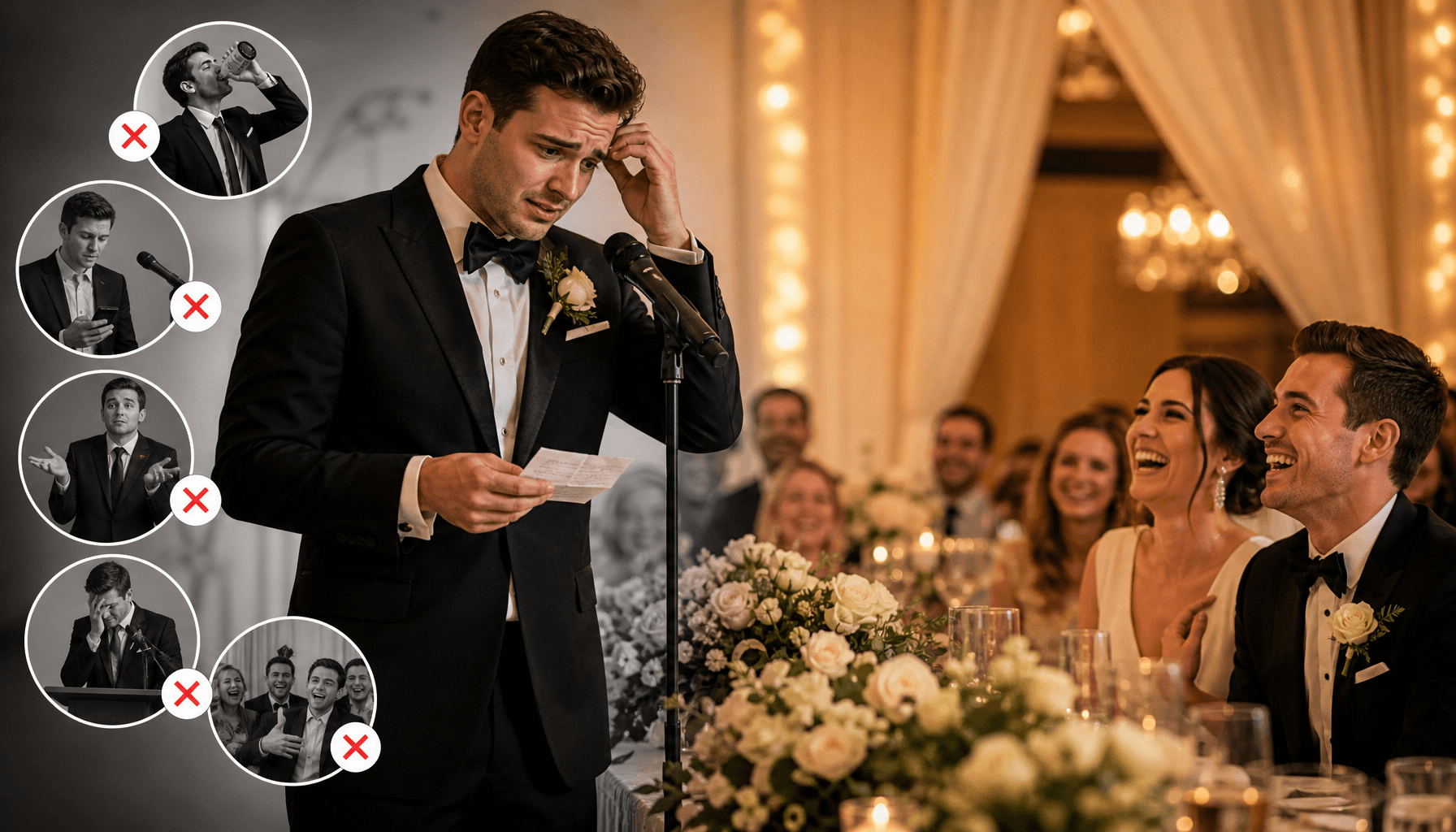
Creative speeches introduce more potential points of failure than traditional formats. A forgotten prop, a technical glitch, or poor timing can derail even the best-written content. To ensure success, you must think like a producer.
AV Check Protocol
Arrive at the venue at least two hours before guests to test all equipment. Bring your own laptop if possible, and have your presentation saved in multiple formats, such as cloud storage and a USB drive. Test the projector, sound system, and any video playback to ensure compatibility. Do not rely on the venue's Wi-Fi alone.
The DJ Connection
Give the DJ or venue coordinator a printed cue script indicating exactly when to cut background music, play sound effects, or advance slides. Do not assume they will intuitively know your timing. Be specific with your instructions, noting exactly which sentence triggers the next slide or sound cue.
Mic Technique with Props
Holding a microphone while managing props requires practice. If you have one handheld mic, you only have one free hand. Use a prop table or stand so you are not juggling items. Practice lifting the prop into view without blocking your face or the microphone.
Backup Plan
Technology can fail at the worst moments. Always have a printed version of your speech that works without any visual aids. If the projector dies, you should be able to deliver a complete, compelling toast using words alone. Your composure in the face of a glitch will be remembered more than the glitch itself.
For additional planning considerations, the Junebug Weddings Ultimate Guide offers helpful advice on venue-specific factors and timing coordination with other wedding events.
Conclusion
Unconventional wedding speeches are thriving because modern celebrations prioritize personalization and guest experience over rigid tradition. Props create instant visual memories, narrated slideshows turn nostalgia into a shared moment, and joint speeches add energy and warmth. However, every creative format still needs the same foundation: a clear theme, a thoughtful structure, and words that sound like you.
This is exactly where ToastPal earns its place. When you have a prop idea, a slideshow concept, or a joint speech plan, our AI helps you shape it into a toast that is tight, heartfelt, and deliverable in real wedding conditions. Start with your stories, let ToastPal build the structure, and then rehearse the performance details so your creativity feels effortless. Don't let the pressure of being creative stop you. Let AI handle the structure so you can focus on the performance.
Frequently Asked Questions (FAQ)
Are unconventional wedding speeches appropriate for formal weddings?
Yes, as long as the format matches the room. For formal weddings, choose low-disruption creativity like one meaningful prop, a short narrated slideshow, or a joint speech with clean handoffs. Always check with the couple or planner if you are unsure.
How long should a speech with a slideshow be?
Keep the total length between two and three minutes, with five minutes as the absolute maximum. Your slideshow or video clips should be brief and serve as punctuation for your spoken words rather than replacing them.
What if the technology fails during my speech?
Have a printed backup script that works as a normal toast. If your slideshow fails, move on immediately to your backup plan. The audience will follow your confidence.
Can I use ToastPal to write a joint speech?
Yes. Provide details for both speakers, and use ToastPal to merge the tone into one cohesive script with clear speaker labels and transitions.
What are the best props for a Best Man speech?
High-impact options include a single large-format photo, a childhood item that symbolizes the groom’s personality, or a playful red/yellow card set that ends in a sincere compliment.