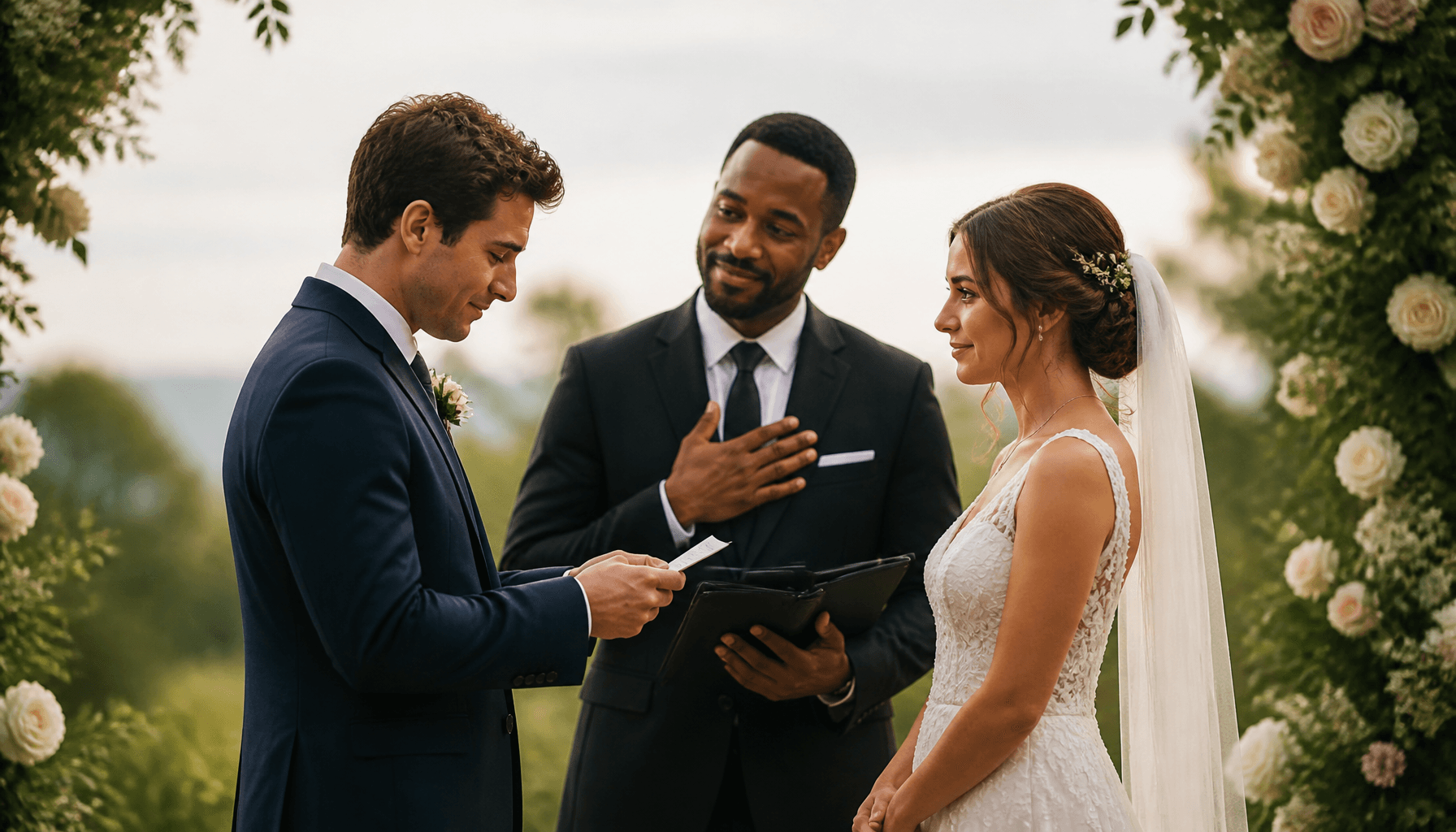
Wedding Vows for Long-Term Couples: Openings Beyond “Finally” and Closings That Look Forward
“Finally, we’re getting married.” It might earn a laugh, but it can also make years of shared life sound like a waiting room. If you have already built a home, navigated difficult seasons, or learned exactly how your partner takes their coffee, your wedding is not the moment your relationship starts counting.
The strongest wedding vows for long-term couples honor that history without getting stuck in it. They open with recognition rather than relief, turn familiar details into meaningful promises, and close on the life you intend to keep creating. Here is how to write personal vows that sound like two people who know each other well—and still have something important to say.
1. Replace “Finally” With What Today Actually Means
“Finally” is not a forbidden word. If it captures a private joke you both genuinely enjoy, it may belong. But as an opening line, it can frame marriage as overdue or suggest that everything before the ceremony was a rehearsal. References to “making an honest person” of someone or “taking long enough” carry similar baggage.
Before drafting, complete this sentence privately: “Getting married now matters to me because…” Your answer identifies the emotional purpose of the ceremony. Perhaps you want to make your commitment public, honor the family you have built, or promise something more deliberate than simply continuing as you are.
Before-and-after opening lines
- Before: “After twelve years, we’re finally doing this.” After: “For twelve years, you have been the person I want beside me. Today, I get to tell you what that means.”
- Before: “It took us long enough to get here.” After: “We arrive here with a whole life already woven together, and more of it still to make.”
- Before: “Today our real life begins.” After: “I love the life we have built, and today I promise to keep building it with you.”
Notice the change: the revised lines do not defend your timeline. They explain your choice. You do not owe guests an account of why you waited, especially if that story involves money, health, family pressure, or circumstances you prefer to keep private.
2. Choose an Opening Only You Could Deliver
A useful opening for long-term wedding vows combines one recognizable detail with its emotional meaning. Keep the detail brief: your partner should recognize the relationship before guests need a backstory. Choose a tone that feels natural when spoken, not impressive on paper.
Warm and everyday
“I have loved you in three apartments, through two terrible sofas, and across thousands of ordinary mornings. Those mornings taught me what I want to keep choosing.”
This works when your bond is rooted in daily companionship. Substitute details you actually remember; an invented quirk will sound less intimate than a real Tuesday routine.
Quiet and reflective
“When we met, I knew I wanted another conversation with you. Years later, you are still the person I want to tell everything to.”
The movement from first encounter to present-day intimacy gives you a relationship arc in two sentences. You do not need to summarize every year.
Lightly funny, without the timeline joke
“You know my coffee order, my stress face, and my deeply unreliable definition of ‘five minutes.’ You know me well, and you love me with extraordinary care.”
Keep the joke affectionate and preferably aimed at yourself. Follow it with sincerity so the opening leads into vows rather than becoming a comedy routine.
A simple opening template
“Through [specific shared chapter], I learned that you [quality shown through action]. Today, I stand here knowing [what your relationship means to you].”
Read your version aloud. If the first sentence requires three breaths or an explanation of who someone is, simplify it. The opening only needs to establish connection; the promises will carry the weight.
3. Turn Shared History Into Future-Facing Promises
Years together provide plenty of material, but wedding vows are not a relationship retrospective. Give each memory a job: let it explain a promise. “You supported me through a career change” becomes more meaningful when followed by “I promise to make room for your ambitions, even when they ask us to rearrange our routines.”
Choose two or three commitments you can practice, not grand claims you cannot guarantee. For long-term partners, that often means naming how you will stay attentive when familiarity makes it easy to coast.
- Instead of “I promise we’ll never argue,” try “When we disagree, I promise to ask what you mean before deciding I already know.”
- Instead of “Nothing will ever change,” try “I promise to keep learning who you are as your hopes and needs change.”
- Instead of “I’ll always make you happy,” try “I promise to listen when something hurts, without rushing to explain it away.”
Close with direction, not a victory lap
A closing line should leave your partner looking ahead with you. Avoid ending on “We made it,” which can make the ceremony sound like the finish line. Echo your opening image or name the kind of partner you intend to be.
- For an everyday opening: “For all the ordinary mornings ahead, I promise to notice you, thank you, and never treat your love as background noise.”
- For a reflective opening: “Whatever changes around us, I promise to stay curious about you and honest with you.”
- For a concise ending: “I know what it means to share a life with you, and I choose to keep making that life together.”
Keep the future open unless you have agreed on specific plans. Promising children, a move abroad, or a particular retirement can introduce expectations your partner has not chosen. Commit to how you will face the future, rather than predicting its contents.
4. Build a Short Draft, Then Test It Aloud
Use four beats: recognition, one piece of evidence, two or three promises, and a forward-looking close. If choosing between memories is slowing you down, ToastPal’s wedding vows tool can help you explore drafts before you settle on your own wording.
Here is a compact example of that structure:
“For nine years, you have been the person I look for at the end of the day. When we moved into our first flat, we ate dinner sitting on the floor, and somehow I already felt at home.
“You have shown me that love is often practical: making the appointment, asking the second question, staying when the conversation gets difficult. I promise to offer you that same care. I will listen without reaching for my phone, protect time for us, and take your changing dreams seriously.
“We will not always know what comes next. But in every place we call home, I promise to help make a life where we both feel heard, wanted, and free to grow.”
Before the ceremony, agree on an approximate length with your partner and check whether your officiant requires separate legal or ceremonial wording. Rehearse at a comfortable pace, including pauses. Cut any sentence you would never say directly to your partner.
5. Let Your Last Words Point Forward
Wedding vows for long-term couples do not need to explain the wait or prove the relationship has lasted. Open with something true about your life together, connect that truth to promises you can practice, and finish with intention. You already have a history. Your vows are the moment to say how you will care for what comes next.