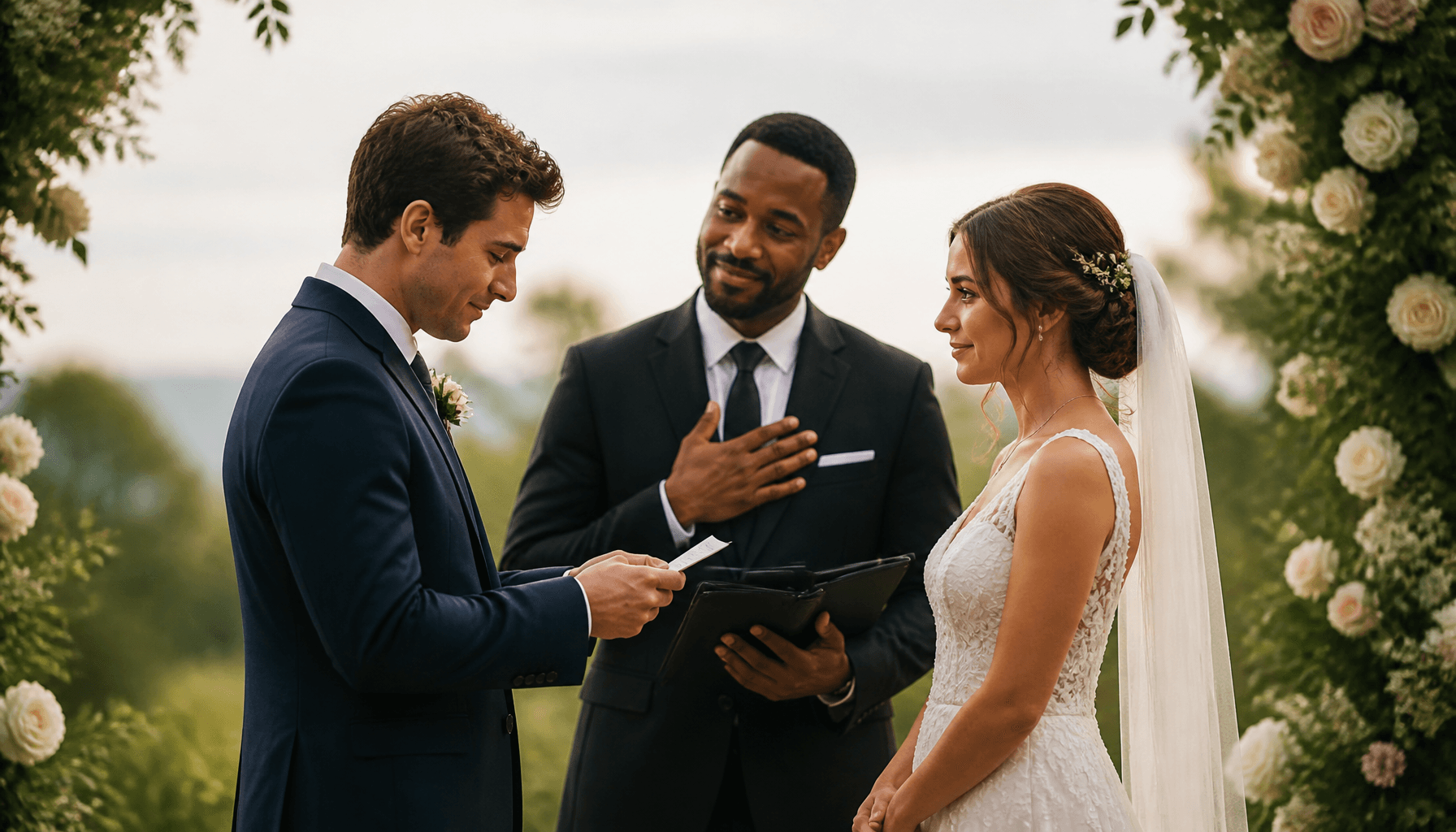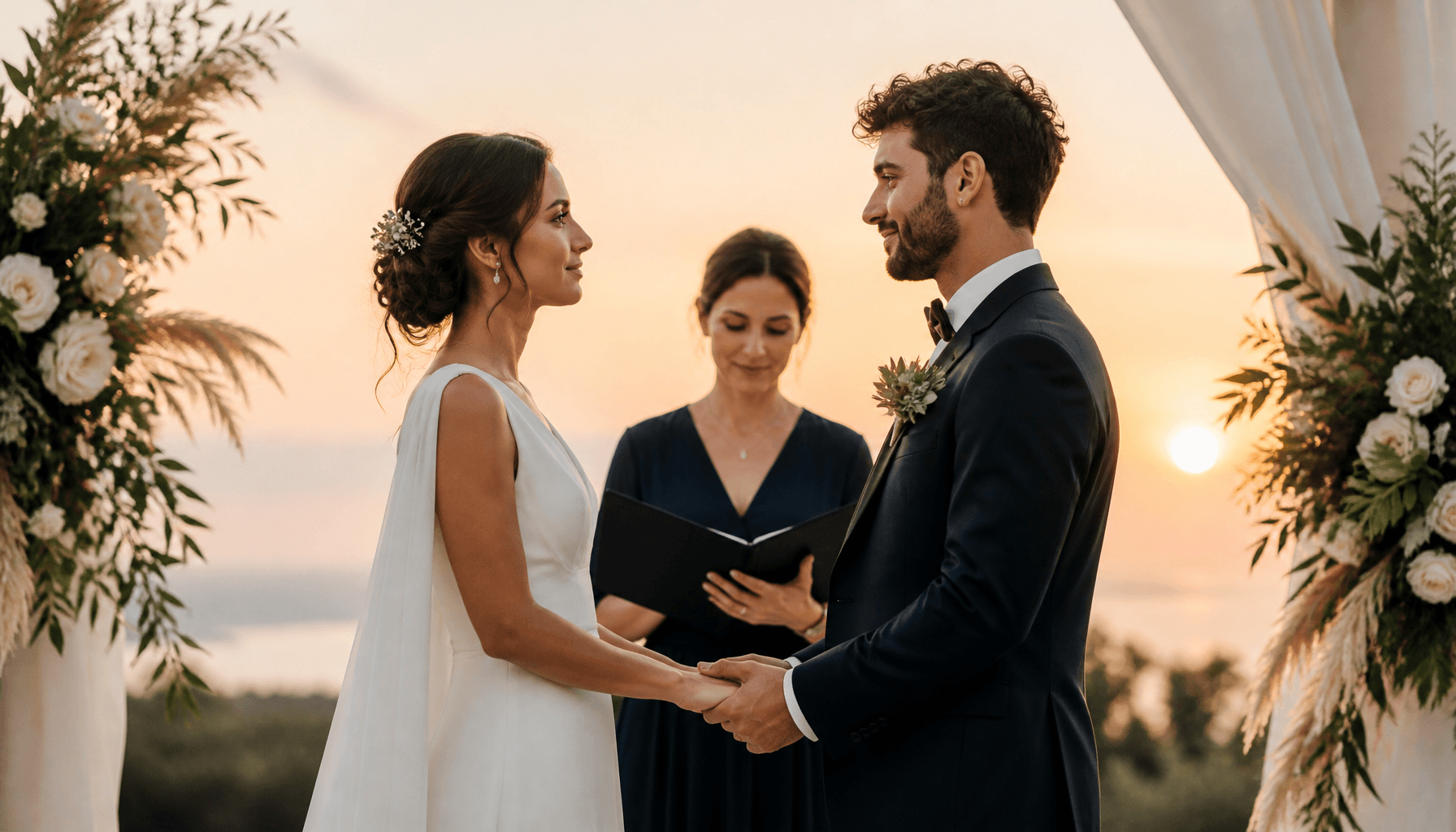
Modern Wedding Vows for Equal Partners: Solemn Promises Beyond “Obey”
You can reject the word “obey” without rejecting the gravity of a wedding vow. The real task is not finding a softer synonym. It is replacing a promise of submission with promises that give both partners equal dignity, responsibility, and voice.
Modern wedding vows for equal partners can sound ceremonial without becoming stiff, and personal without turning into a string of inside jokes. Their strength comes from naming what you will actually do: listen, share decisions, honor boundaries, repair harm, and remain accountable. Here is how to build those commitments into vows that feel worthy of the occasion.
1. Replace the Power Structure, Not Just the Word “Obey”
Simply changing “obey” to “respect” may leave the rest of a vow untouched. If one person still promises to lead while the other promises to follow, the underlying relationship remains unequal. Start by asking what authority each promise gives either partner.
Equal partnership does not mean identical roles or splitting every task precisely in half. It means neither person has a permanent claim to the final word, and both can revisit arrangements as circumstances change. Your vows should protect that flexibility.
Before-and-after vow language
- Instead of “I promise to obey you,” try: “I promise to honor your judgment, speak honestly from my own, and seek our way together.”
- Instead of “I will follow wherever you lead,” try: “I will consider each new direction with you, giving your hopes and mine equal care.”
- Instead of “I will put your needs above my own,” try: “I will take your needs seriously without silencing my own, and work with you toward what sustains us both.”
- Instead of “I will complete you,” try: “I welcome you as a whole person, and promise to support the person you continue to become.”
Check the ceremony wording with your officiant before finalizing it. Religious rites and local marriage requirements may include prescribed language; personalized promises may need to sit alongside it rather than replace it.
2. Give Mutual Promises a Solemn Rhythm
Solemnity comes from deliberate language, not antique vocabulary. “I promise,” “I will,” and “I choose” are plain words with ceremonial weight. Repeating one opening creates a steady rhythm that listeners can follow and gives you a reliable structure when emotion makes reading difficult.
Build your central promises around three different responsibilities. For example:
- Shared decisions: “I promise to make decisions that shape our life with you, never assuming that my voice carries more weight than yours.”
- Care and responsibility: “I promise to share the work of our home, including the work that goes unseen, and to revisit that balance as our lives change.”
- Accountability: “I promise to acknowledge the hurt I cause, listen without rushing to defend myself, and make repair through action.”
Promise conduct you can choose
“I will never hurt you” sounds reassuring but promises an impossible outcome. “When I hurt you, I will take responsibility and work to repair it” commits to behavior you can practice. Likewise, replace “We will never go to bed angry” with “When we need time to settle, I will agree with you on when to return to the conversation.”
For a solemn tone, avoid undercutting every serious line with a joke. One warm detail can make the vow recognizably yours; a punchline after each promise makes commitment sound like something you are reluctant to say plainly.
3. Adapt These Modern Wedding Vow Examples
The following examples offer different ways to express equal partnership. Borrow the structure, but keep only commitments you understand and genuinely intend to practice.
Traditional cadence, mutual authority
“Today, before those we love, I choose you as my spouse and equal partner. I promise to hear you with care, to speak to you with honesty, and to make our decisions with respect for us both. In plenty and in hardship, I will share responsibility for the life we build. I will honor your freedom, cherish your trust, and meet our changing years with a willing heart. These promises I make freely and with love.”
Personal warmth, serious commitments
“You have taught me how much can change when someone truly listens. Today I promise to offer you that same attention. I will not mistake familiarity for knowing everything about you. I will keep asking, keep listening, and make room for your answers to change. I will share the planning as well as the doing, celebrate your ambitions alongside mine, and approach our disagreements as work we face together. I choose a marriage in which we both have room to grow.”
Matching promises with individual openings
If you want coordinated vows without identical speeches, each partner can write a different opening memory and use the same closing commitments:
“I promise to give your voice equal weight in our shared life. I promise to offer care without keeping score, and to speak when our responsibilities need rebalancing. I promise to respect your boundaries and express my own with honesty. I will honor the trust you place in me and take responsibility for how I treat you. Freely and wholeheartedly, I choose you.”
Matching vows work best when both partners approve every line beforehand. Shared wording should reflect a real agreement, not pressure one person to adopt the other's ideal of marriage.
4. Edit Your Vows for Balance and Delivery
Before polishing individual sentences, agree on a broad length and level of intimacy. Around 150–220 words each is a useful starting point for roughly one to two minutes, depending on pace and pauses. You do not need to exchange drafts to agree on those boundaries.
If you are stuck converting your notes into a coherent draft, ToastPal's wedding vow tool can help you get a starting version onto the page. Then use this focused editing pass:
- Audit the agency. Circle language about permission, ownership, leading, or following. Ask whether it preserves both partners' right to speak and choose.
- Check the responsibilities. Include more than admiration. Your partner should hear what you commit to doing, especially when marriage takes effort.
- Protect privacy. Remove references to conflict, health, money, or family matters that your partner has not agreed to share publicly.
- Read for breath. Split any sentence you cannot say comfortably aloud. Place a paragraph break before your final promise so you can pause and look up.
- Test the meaning. Ask, “Could I explain what keeping this promise looks like on an ordinary Tuesday?” If not, make the wording more concrete.
For example, “I will always support you” becomes clearer as “I will make space for your goals when we plan our time, our work, and our resources.” Keep the version that reflects your actual relationship.
5. Make Equality the Substance of Your Vows
The strongest modern wedding vows for equal partners do more than remove “obey.” They replace hierarchy with shared decisions, honest boundaries, practical care, and accountability. A steady rhythm and carefully chosen promises preserve the solemn tone without asking either person to surrender their voice.
Choose a few commitments you can live by, check that they fit your ceremony, and practice saying them aloud. Your closing line can be simple: “With equal voice and shared responsibility, I choose the life we will build together.”