How to Write a Best Man Speech for a Sober Groom Without Making Sobriety the Story
You have years of stories about your best friend. Unfortunately, the first three that come to mind begin, “We’d been at the pub…” Writing a best man speech for a sober groom can make familiar material feel suddenly complicated. Which memories still work? Should you acknowledge his sobriety? And how do you finish a toast without the usual drinking jokes?
The answer starts with a distinction: you’re celebrating a marriage, not explaining someone’s relationship with alcohol. Whether the groom is in recovery, has never drunk, or simply chooses not to drink, your job is the same. Show guests what makes him a good friend and a loving partner. Here’s how to choose stories, find the humor, and deliver a wedding speech that keeps the couple at its center.
1. Agree on Boundaries Without Turning It Into an Interview
Being sober is not automatically an invitation to discuss sobriety publicly. Even if the groom talks openly with friends, he may not want that subject introduced to colleagues, extended family, or his partner’s guests.
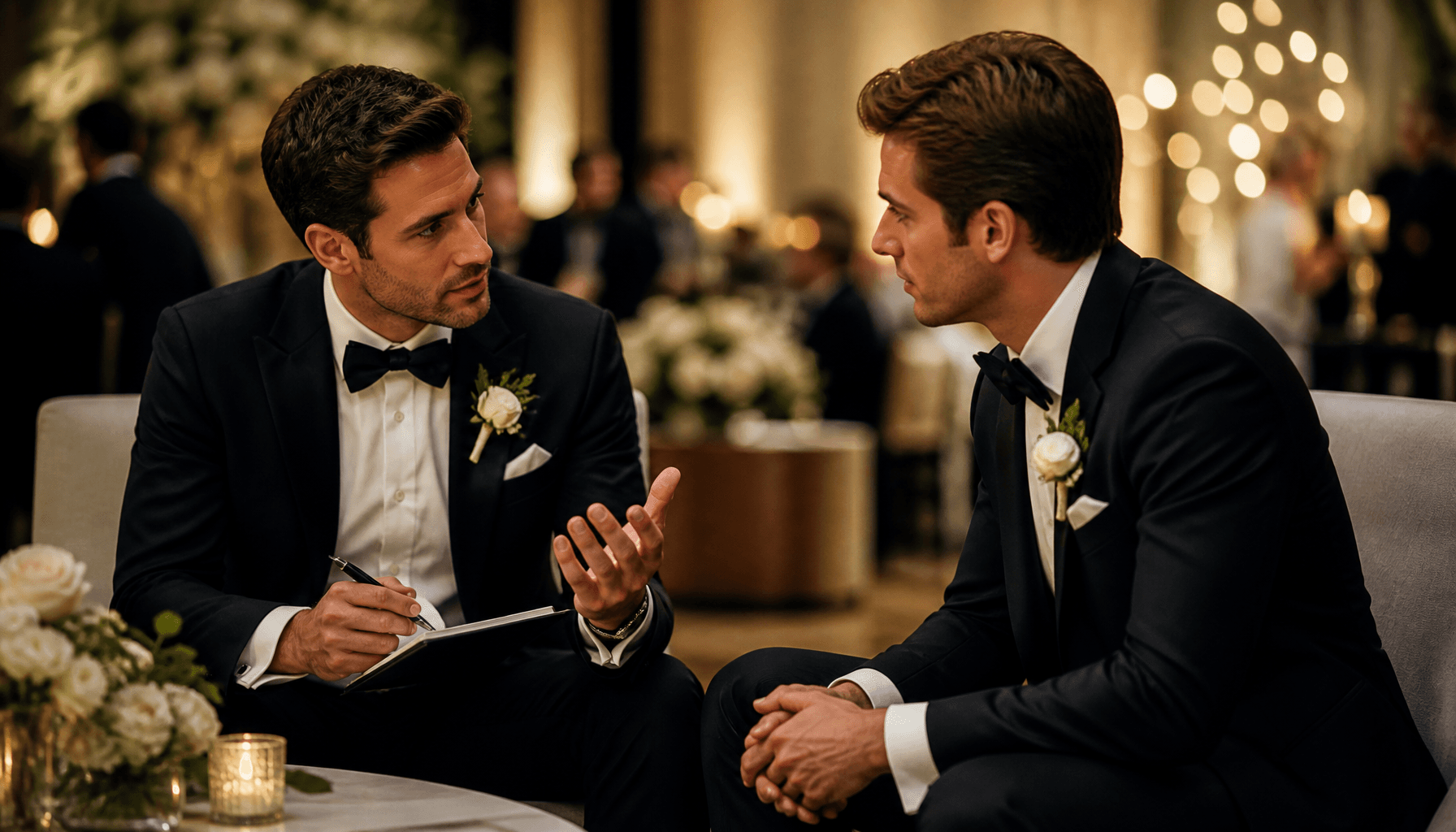
Ask privately, early enough that you can write without guessing: “I’m keeping the speech about our friendship and you two. Are there any stories or subjects you’d rather I leave out? I won’t mention drinking or sobriety unless you specifically want me to.”
That gives him control without asking for an explanation. You don’t need to know why he stopped drinking, whether he attends meetings, or how long he has been sober to write a thoughtful speech.
Get approval for wording, not just a topic
If he requests an acknowledgment, show him the exact sentence and its surrounding lines. “You can mention it” is not blanket permission to share milestones, difficult episodes, or details about other people.
- Avoid coded disclosures such as “After everything he’s overcome…” Guests may start wondering what they’ve missed.
- Don’t cast the partner as a rescuer: “She finally straightened him out” diminishes both people.
- If he wants sobriety left out, don’t announce the omission with “There are some stories I’m not allowed to tell.”
A useful test: would this sentence make anyone ask the groom a personal question after dinner? If so, reconsider whether it belongs.
2. Find the Character Story Inside the Drinking Story
You don’t have to erase your shared history. Instead, identify what makes a memory worth telling. Was it really the drinking, or was it his loyalty, terrible navigation, fierce competitiveness, or commitment to a ridiculous plan?
Write down three qualities you admire, then attach one specific memory to each. “Generous” is an adjective. Turning up with a toolbox at seven on a Sunday morning is a story.
Before-and-after phrasing that changes the focus
- Before: “Nobody could keep up with Ben on a night out.” After: “Ben has never understood doing things halfway. For our five-a-side team, he made a spreadsheet, designed a badge, and appointed himself interim manager.”
- Before: “After six pints, he promised to help me move.” After: “Ben promised to help me move. At eight the next morning, he arrived with a van, breakfast, and deeply unwelcome opinions about my packing.”
- Before: “Marriage has finally tamed him.” After: “With Alex, Ben has found someone who shares his sense of adventure—and checks whether the campsite actually exists.”
Only use a revision if it remains true. Removing irrelevant alcohol details is different from inventing a more flattering event. If intoxication is the entire punchline, choose another memory.
For sober-friendly best man speech humor, aim at harmless habits: his elaborate coffee routine, his loyalty to a terrible football team, or the way he treats choosing a restaurant like a parliamentary inquiry. Then add affection: “It’s exhausting choosing dinner with him. It’s reassuring having him in your corner.”
3. Build the Speech Around Friendship, Partnership, and a Wish
Aim for roughly three to four minutes, unless the couple has requested something else. Around 400–500 words is a useful starting point, but time yourself aloud: laughter and pauses take longer than silent reading suggests.
Use this structure to keep your best man wedding speech moving:
- Introduction: Say who you are and how you know the groom. Add one gentle joke.
- Friendship story: Tell one short incident that reveals a quality worth celebrating.
- Couple connection: Show how that quality appears in their relationship, using something you’ve actually observed.
- Closing wish: Offer a specific hope for their marriage, then invite everyone to join the toast.
If you have the memories but can’t find the transitions, ToastPal’s best man speech tool can help you get a first draft onto the page. Keep your own concrete details; they’re what stop the result from sounding interchangeable.
A short example to adapt
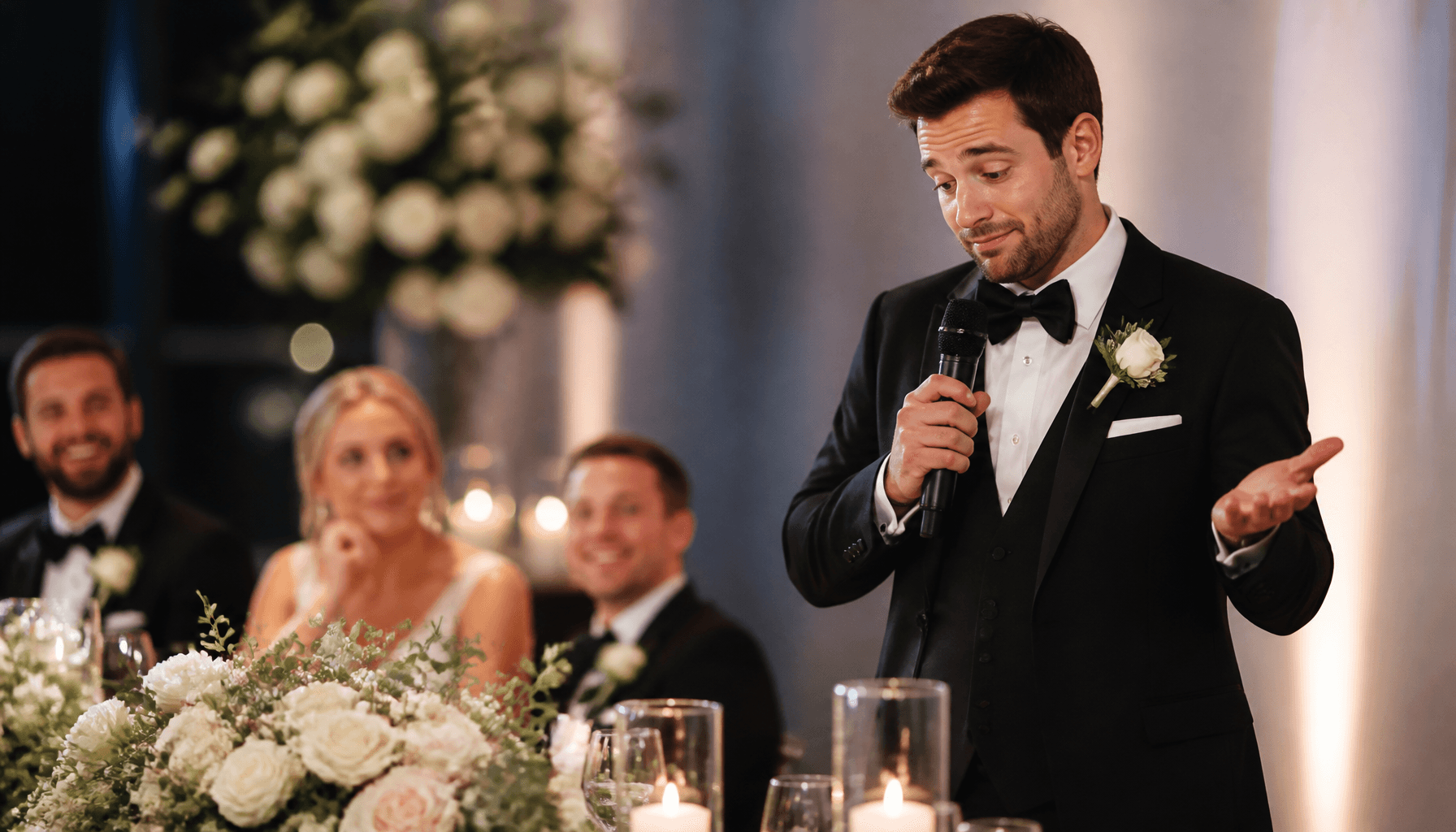
“For anyone I haven’t met, I’m Jamie. I’ve known Ben for fifteen years, which means I remember when his entire cooking repertoire was pasta with a different shape of pasta.
“When I moved into my first flat, Ben arrived carrying a toolbox and two breakfasts. I hadn’t asked for either. He spent the morning building my bed, then quietly fixed the cupboard I’d been pretending wasn’t broken. That’s Ben: he notices what needs doing, and he shows up.
“I saw the same thing when Alex mentioned wanting a garden. Ben spent weeks learning what would grow on their tiny balcony. Alex brought the creativity; Ben brought a suspiciously detailed watering schedule. Together, they made something lovely.
“Ben and Alex, may you keep making room for each other’s ideas, finding reasons to laugh, and growing things together. Please raise your glass to the happy couple.”
This example works because the groom is recognizable through actions, and the partner contributes rather than merely receiving praise. Expand it with one relevant detail—not a second unrelated anecdote.
4. Make the Toast and Delivery Feel Natural
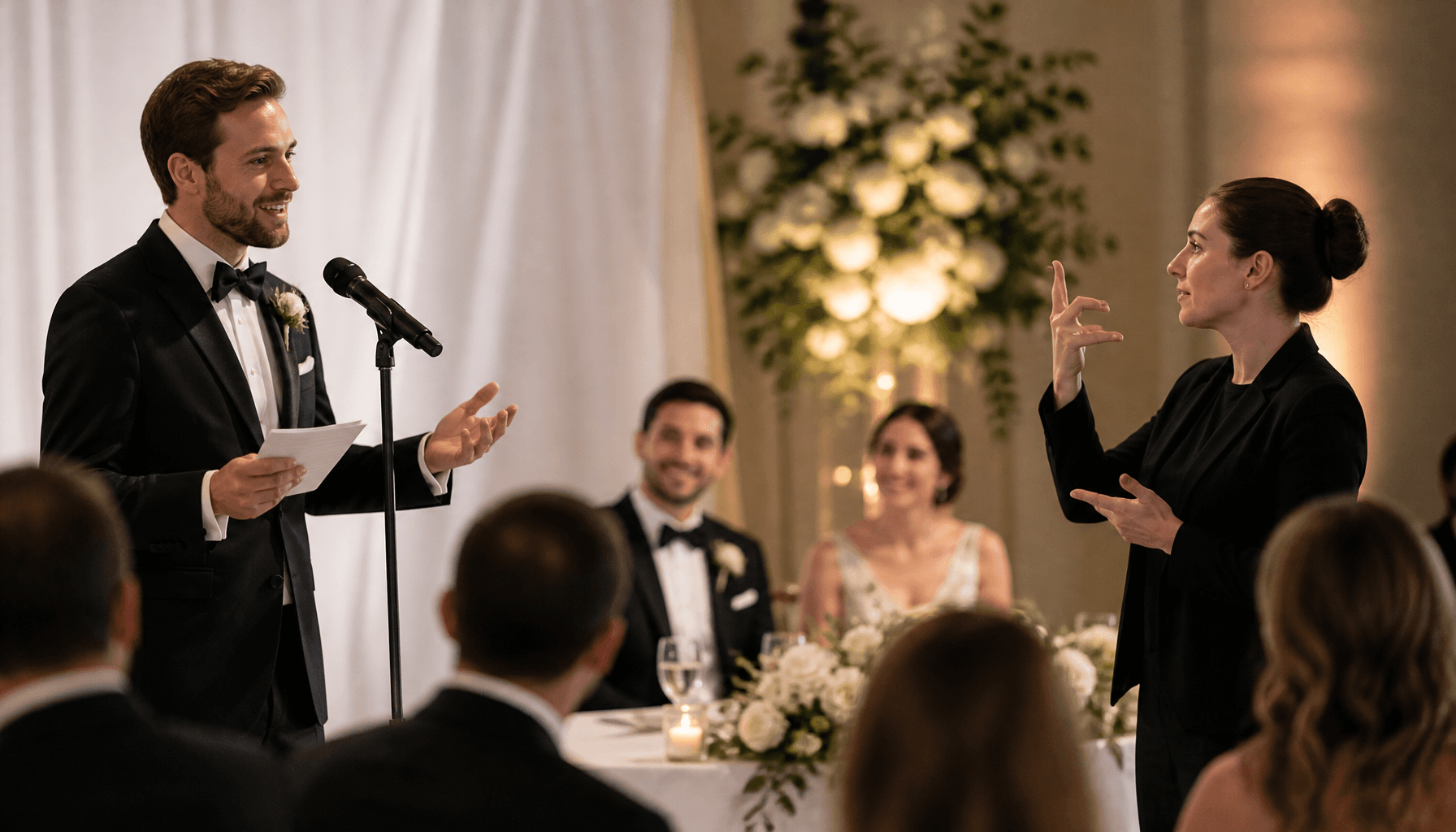
A wedding toast doesn’t require alcohol. “Please raise your glass” includes water, sparkling juice, and anything else guests are holding. There’s no need to identify the groom’s drink or explain why you’re using an inclusive closing.
Try: “To Ben and Alex: a home full of laughter, adventures worth taking, and many happy years together.” Avoid “Everyone take a shot,” “Let’s get him drunk,” or a wink about what is—or isn’t—in his glass.
Before the wedding, run three practical checks:
- Read the speech aloud to someone who understands the agreed boundaries. Ask which lines sound like you’re hinting at a hidden story.
- Mark a pause after each joke. If a joke gets silence, continue; don’t improvise a riskier explanation.
- Check the closing with the MC or coordinator so a drink is ready and your toast flows into the next part of the reception.
Keep your written ending in front of you. A warm, prepared final line beats an improvised “one last story,” especially when the room is encouraging you to keep going.
Celebrate the Person, Not the Absence of Alcohol
A great best man speech for a sober groom respects his boundaries without making those boundaries the subject. Choose one revealing story, keep the jokes affectionate, give the partnership meaningful attention, and close with a toast everyone can join. Guests should leave knowing why you value your friend—and why you’re happy these two people found each other.