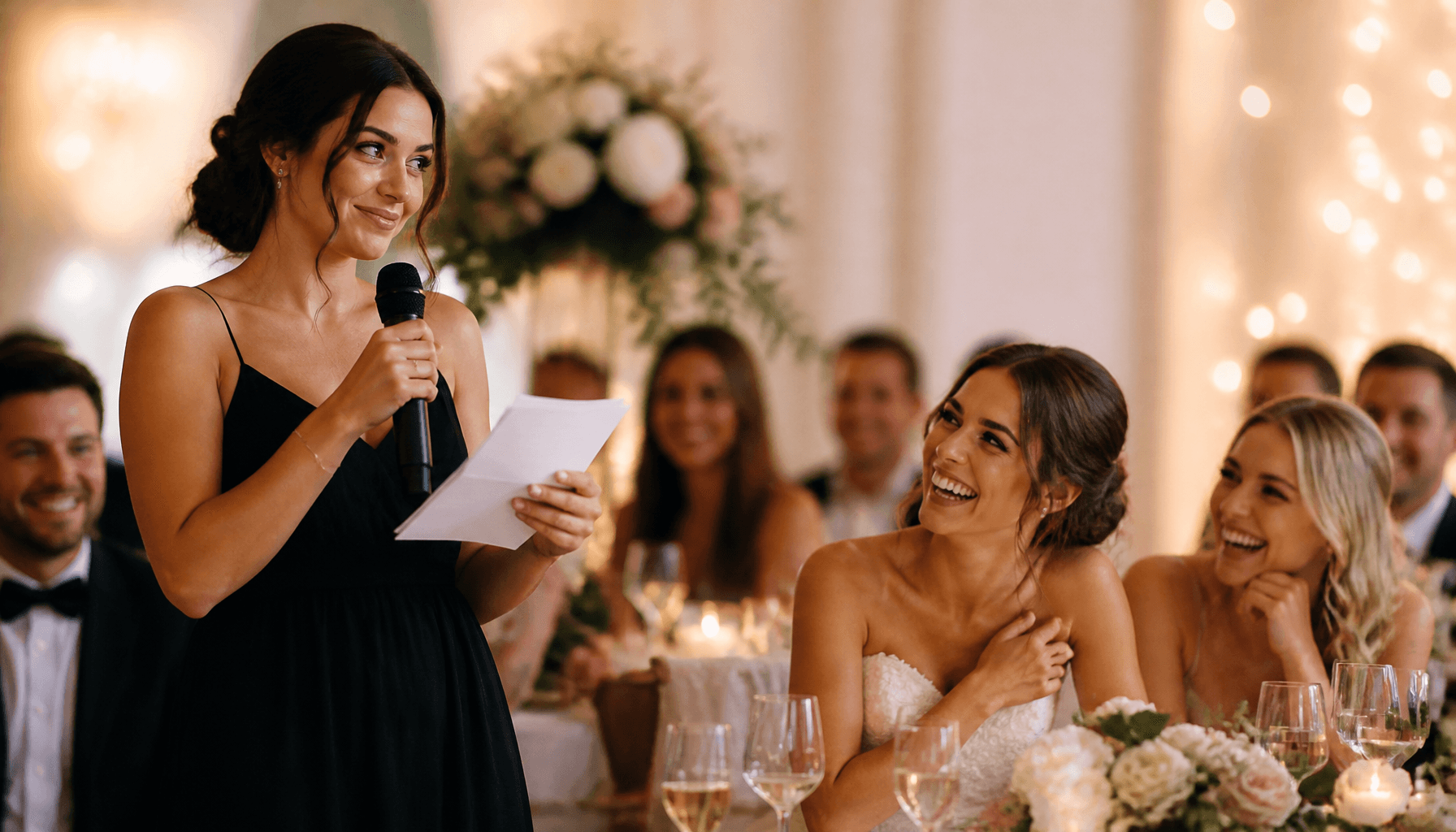
Maid of Honor Speech for a Sarcastic Friendship: Keep the Wit, Mean the Compliments
If your friendship runs on eye rolls, mock complaints, and saying “unfortunately, I love you,” a heartfelt wedding speech can feel suspiciously off-brand. You want the bride to recognize your voice—not wonder who replaced her best friend with a greeting card.
A maid of honor speech for a sarcastic friendship doesn’t need less personality. It needs a clear distinction between affectionate teasing and the moments you genuinely mean. The goal is to let your wit introduce the friendship, then give your compliments enough space to land. Here’s how to write a funny maid of honor speech that stays warm without turning every sincere sentence into a punchline.
1. Translate Your Private Banter for a Wedding Audience
Your best friend knows that “you’re a nightmare” means “I would cross the country for you.” Her grandmother may not. At a wedding, your words need to communicate affection without relying on years of private context.
Before keeping a sarcastic line, ask: would someone who has never met us understand why this is loving? If the answer depends on explaining that the bride “knows I’m kidding,” rewrite it.
Make the target a harmless habit, not her worth
- Instead of: “I honestly never thought anyone would marry her.” Try: “When Maya met someone who also enjoys arriving at the airport three hours early, I suspected this might be serious.”
- Instead of: “She’s controlling, but we love her.” Try: “Maya approaches a weekend away with the preparation most people reserve for a moon landing.”
- Instead of: “Good luck dealing with her.” Try: “Alex, you’ve joined a household where ‘a rough plan’ comes with tabs. I see you’ve already embraced the system.”
The revised jokes describe recognizable behavior without suggesting the bride is difficult to love. Skip exes, sex, appearance, private conflicts, and vulnerable disclosures. A funny story stops being affectionate when the person at its center has to endure it.
2. Stop the Joke Before It Cancels the Compliment
The hardest habit to break isn’t sarcasm. It’s adding an escape hatch after every kind sentence: “You’re my favorite person—though the competition is weak.” The audience laughs, but the compliment disappears beneath the correction.
Use this sequence instead: light joke, specific evidence, sincere meaning. Then stop. You don’t have to make the last sentence funny.
Before and after: let the emotional point survive
Before: “Maya is the most dependable person I know, mostly because she has no life and always answers her phone.”
After: “Maya likes to pretend answering my calls is a major administrative burden. But when my dad was in the hospital, she called every evening. She never made me feel like I had to be cheerful to deserve company.”
The second version keeps the familiar teasing, then earns the compliment through something she actually did. Only use a sensitive story if everyone involved would be comfortable having it shared.
During editing, mark every sincere sentence. Check what follows it. If the next line withdraws, mocks, or minimizes the praise, delete that line. Keep at least one complete passage of appreciation without a comic interruption. You can be funny again later; you don’t need to rescue the room from tenderness.
3. Build a Speech That Moves From Friendship to Marriage
A wedding toast needs somewhere to go beyond “here are her funniest habits.” Start with your friendship, reveal what you admire, then show why you’re happy for the couple. That progression makes the emotional shift feel natural rather than pasted on.
Use this outline for a roughly three-minute draft, then time it aloud:
- Introduction: Say who you are and establish your friendship with one accessible joke.
- Story: Share one short incident that reveals a quality you value.
- Meaning: Name that quality directly, without a sarcastic qualification.
- Couple: Describe something you’ve actually noticed about their relationship.
- Toast: Offer a clear wish and invite guests to raise their glasses.
A short example you can adapt
“For anyone I haven’t met, I’m Jess, Maya’s best friend and longtime recipient of messages beginning, ‘Quick question,’ followed by a situation requiring legal analysis.
“When I moved apartments last year, Maya arrived with coffee, packing tape, and strong opinions about my labeling system. I had said I was fine doing it alone. She knew I wasn’t. She stayed until the bed was assembled because she didn’t want my first night there to feel lonely.
“That’s what I love about her. She pays attention to the things people are trying not to ask for.
“And Alex, I’ve watched you pay that same attention to her. You notice when she’s tired. You ask what she wants before everyone else’s plans take over. Seeing my friend feel so understood has made me happier than I can neatly explain.
“Please raise your glasses to Maya and Alex. May your home be full of laughter, thoughtful little gestures, and the certainty that someone is on your side.”
Replace the details with true observations. If you’re stuck choosing a story, ToastPal’s maid of honor speech tool can help you turn your answers into a draft you can reshape around your friendship.
4. Rehearse the Shift From Deadpan to Direct
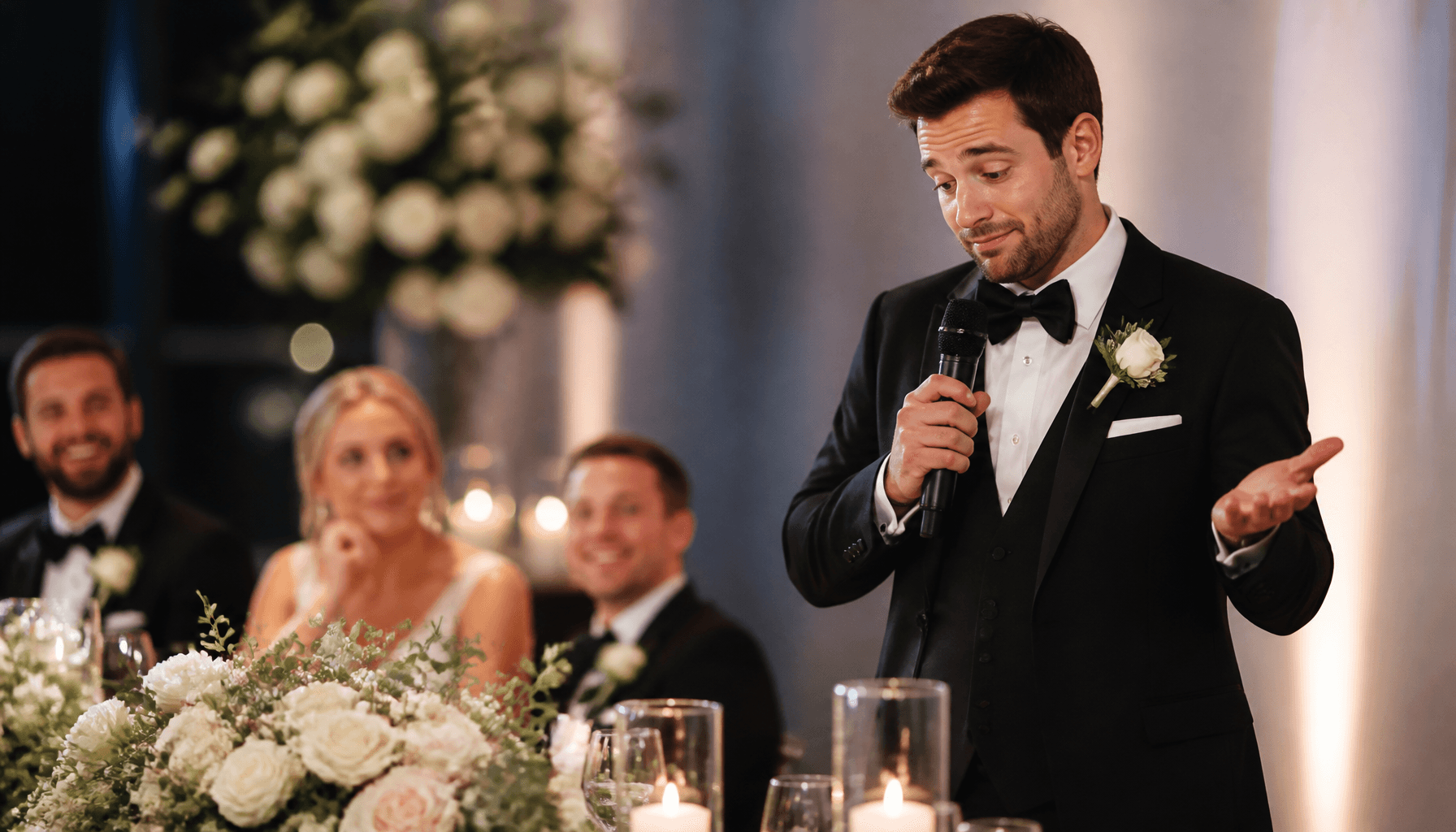
Delivery can undermine even a well-written compliment. If you use the same exaggeratedly solemn voice for “she’s a spreadsheet enthusiast” and “she changed my life,” guests may wait for a punchline that isn’t coming.
You don’t need a dramatic performance. Make the change clear through small choices:
- After a joke, wait for the laughter to settle before starting the meaningful sentence. Don’t make the audience choose between laughing and listening.
- For direct praise, look toward the bride rather than scanning the room for a reaction. Use your normal speaking voice.
- Leave a brief pause after the compliment. Silence is not proof that a heartfelt line failed.
- If a joke gets no laugh, continue. Explaining “that was a joke” only keeps attention on the awkward moment.
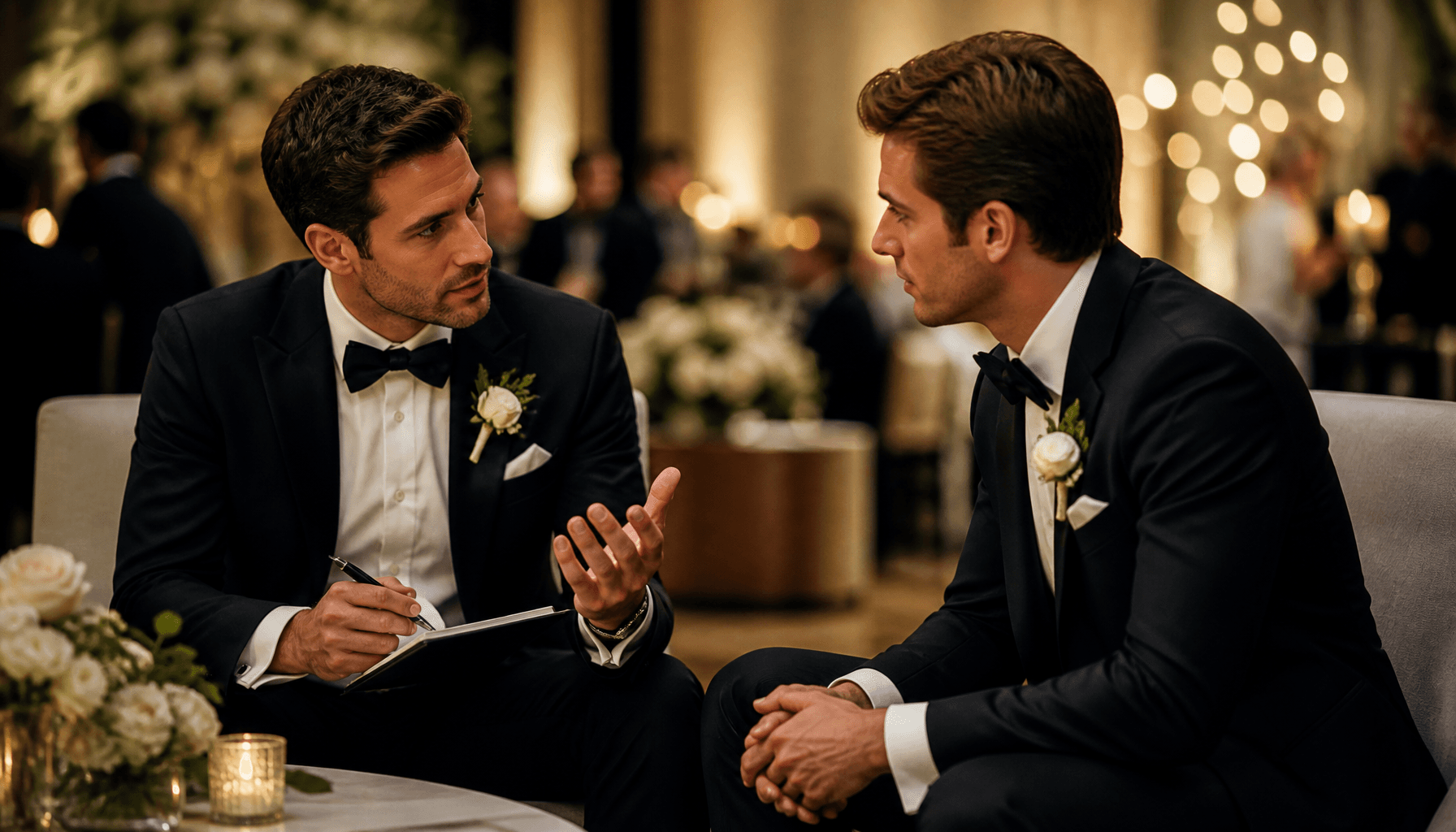
Ask one trusted listener who doesn’t share all your inside jokes to hear the draft. Give them specific questions: “Did any line sound mean?” and “What did you learn that I admire about her?” If they remember the teasing but can’t name a quality you praised, strengthen the story rather than adding more sentimental adjectives.
Keep the Wit—and Let Her Hear the Love
The best maid of honor speech for a sarcastic friendship doesn’t abandon the banter. It makes the affection understandable to everyone, supports compliments with real memories, and includes the person your friend is marrying. Choose gentle jokes, let sincere sentences stand, and rehearse the pauses as carefully as the punchlines. Your friend already knows you can make her laugh. On her wedding day, let her hear exactly why she matters to you.